
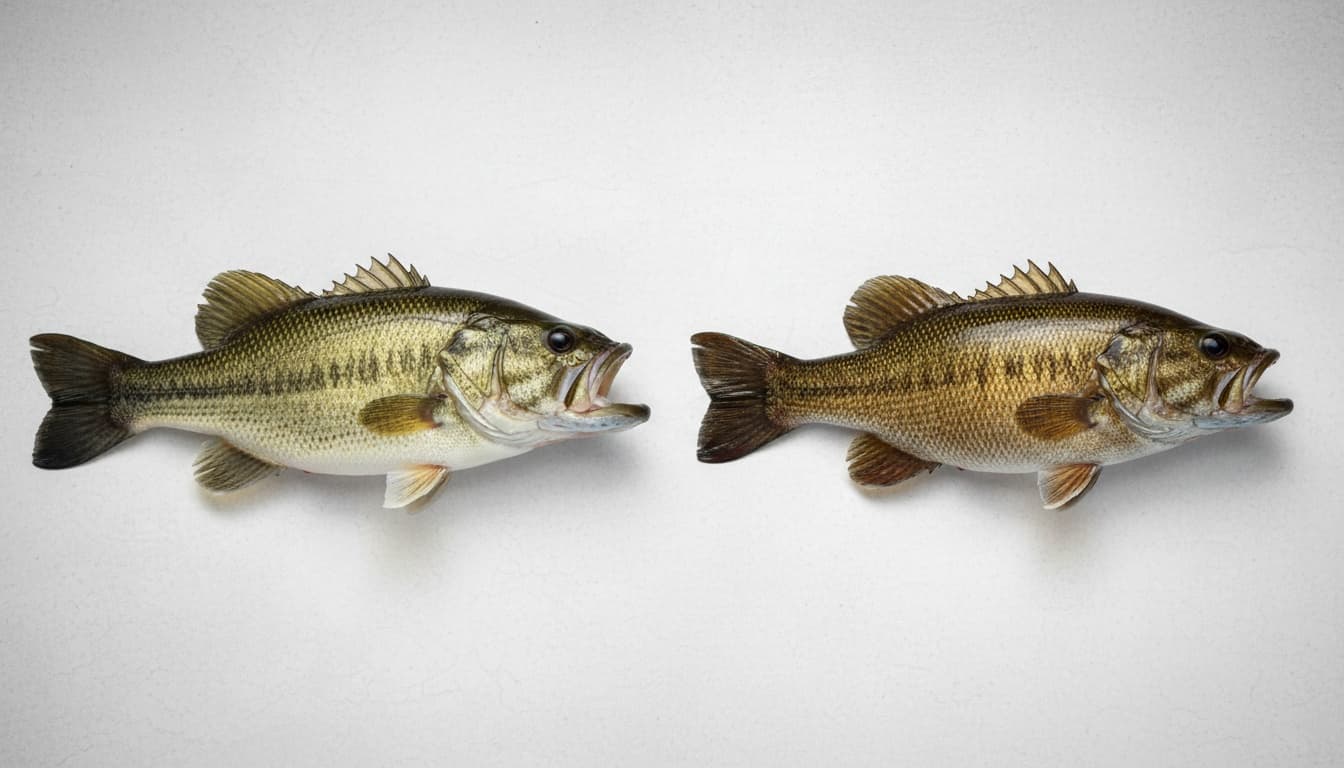
1. Quick Identification Guide: How to Tell Them Apart at a Glance
Here's the dead giveaway every angler misses. Most guys I fish with completely miss these four key features:
Key Visual Markers:
- Jaw Position: Largemouth extends past eye; smallmouth aligns with eye
- Body Shape: Largemouth elongated; smallmouth compact and muscular
- Dorsal Fin: Largemouth has deep indent; smallmouth shows shallow dip
- Lower Jaw: Largemouth protrudes when viewed head-on; smallmouth symmetrical
Don't confuse these with spotted bass, which have tooth patches on their tongues and rows of spots below the lateral line that neither largemouth nor smallmouth display.
The CatchRules Bass ID Method:
- Jaw test — Does it extend past the eye? Largemouth wins.
- Body check — Torpedo or linebacker build?
- Fin gap — Deep break or shallow dip?
- Color pattern — Lateral line or vertical bars?
CatchRules' offline species identification uses these exact visual markers to distinguish bass instantly in the field, even without cell service. Get the app and never second-guess an identification again.
2. How to Spot the Difference: Size, Color, and Markings That Matter
Coloration separates these species immediately. Largemouth bass sport green hues ranging from dark forest in clear water to pale olive in muddy conditions. They display one prominent line of large dark blotches along their lateral lines.
Meanwhile, smallmouth bass wear bronze or brown coloring with distinctive vertical bars. These bars extend across their backs and bellies, creating a tiger-stripe pattern that largemouths never show.
The size difference is dramatic at the top end. The world record largemouth weighed 22 pounds, 4 ounces — nearly twice the record smallmouth's 11 pounds, 15 ounces.
| Feature | Largemouth Bass | Smallmouth Bass |
|---|---|---|
| **Coloration** | Green hues, olive variations | Bronze/brown with vertical bars |
| **Body Shape** | Elongated, streamlined | Compact, muscular |
| **Lateral Line** | Large dark blotches | Tiger-stripe vertical bars |
| **Max Size** | 22+ pounds possible | 11-12 pounds maximum |
Maximum Size and Growth Rates
A 4-pound bass of either species counts as a very nice fish in most waters. But largemouths reach that weight faster, especially in Lake Guntersville and other southern fisheries where they outpace northern smallmouths by a pound or more each year.
Lake Erie and the St. Lawrence River produce thousands of 5-plus-pound smallmouths annually. These glacial waters represent smallmouth paradise — deep, clear, and consistently cool.
If you're targeting trophy fish, largemouths reach double-digit weights in most quality waters. Trophy smallmouths require specific conditions: rocky structure, clear water, and temperatures that rarely exceed 75°F.
3. Habitat and Geographic Distribution: Where to Find Each Species
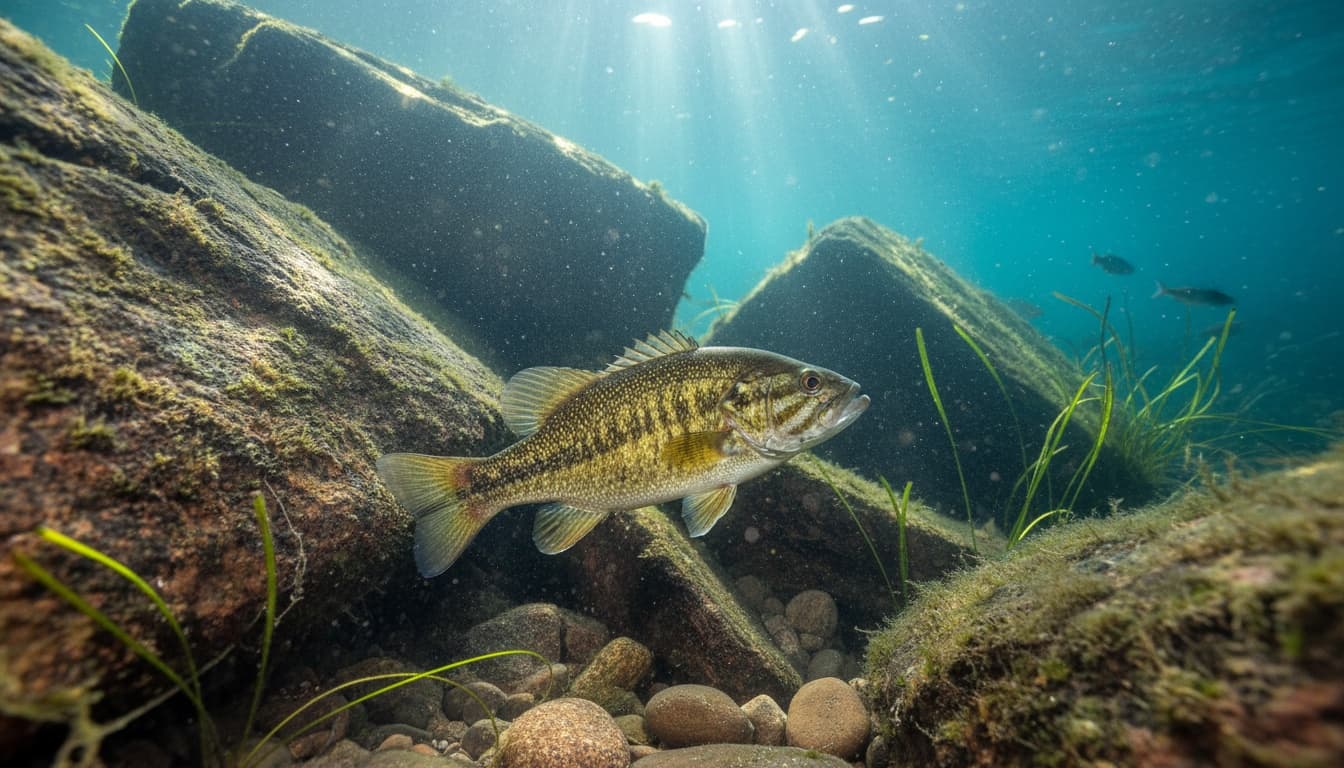
Water temperature drives everything. Smallmouths thrive in deep, clear, cool waters found in rocky highland reservoirs and glacial lakes. They tolerate swift shallow current as long as temperatures stay cool.
By contrast, largemouth bass prefer warmer water with abundant shallow cover. They dominate clear or stained lakes with vegetation, fallen trees, and structural complexity. Think Florida swamps versus Ontario rock piles.
Geographic distribution follows the temperature story. Smallmouth bass don't exist in Florida and Mexico where largemouths flourish year-round. The thermal divide runs roughly through the central United States.
| Habitat Factor | Largemouth Bass | Smallmouth Bass |
|---|---|---|
| **Water Type** | Warm, shallow, vegetated | Cool, deep, rocky |
| **Temperature** | 65-85°F optimal | 55-75°F optimal |
| **Depth** | 0-20 feet preferred | 10-40 feet common |
| **Geographic Range** | Southern US to Mexico | Northern US to Canada |
Seasonal Movement Patterns
Seasonal behavior patterns differ dramatically. Largemouths move shallow in spring and fall, deeper in summer. Meanwhile, smallmouths follow baitfish vertically, sometimes suspending in 40 feet of water during summer.
I've been tracking bass movements for three seasons now. The difference is striking: largemouths rarely venture beyond their home cover. Smallmouths roam like nomads, following schools of shad across entire lake basins.
For more detailed strategies on targeting bass in different bass habitat and seasonal patterns, consider water temperature and structure when planning your approach.
4. Behavior, Diet, and Spawning Differences
Feeding Behavior
Feeding strategies separate these species completely. Smallmouth bass hunt primarily by sight, making them visual feeders that respond to lure action and flash. By contrast, largemouth bass rely heavily on their lateral lines, sensing vibrations and water displacement.
This explains lure preferences perfectly. Smallmouths crush finesse presentations that look natural. Largemouths attack anything that moves water — spinnerbaits, chatterbaits, and vibrating jigs.
Both species build nests in spring, but their spawning preferences differ. Timing varies by latitude, but smallmouths typically spawn when water hits 60-65°F. Largemouths start earlier, around 55-60°F.
| Behavior | Largemouth Bass | Smallmouth Bass |
|---|---|---|
| **Feeding Method** | Lateral line sensing, vibration | Visual hunting, sight feeding |
| **Spawning Temp** | 55-60°F | 60-65°F |
| **Nest Protection** | 7-10 days post-spawn | 3-4 weeks post-spawn |
Spawning Season Comparison
Nest protection differs too. According to American Fisheries Society research, smallmouth males defend nests for 3-4 weeks post-spawn versus 7-10 days for largemouths.
Water temperature triggers everything. I've documented smallmouth spawning delays of three weeks when late cold fronts drop water temperatures below 58°F.
5. Which Bass Fights Harder — and How to Land Each One
Pound-for-pound, smallmouth bass fight harder than any freshwater fish. They're one of the more aggressive species in North America, known for their acrobatic leaps and line-stripping runs. A 3-pound smallmouth fights like a 5-pound largemouth.
Largemouths rely on power and cover. They bulldoze toward structure, using their size advantage to break lines on rocks or timber. Less jumping, more grinding.
Lure selection follows feeding behavior. Dropshot baits, Ned rigs, and marabou hair jigs excel for smallmouth in clear, calm waters. Switch to spinnerbaits, crankbaits, and bigger jigs when current runs swift and water turns muddy.
Largemouths respond to frogs, jigs, topwaters, spinnerbaits, vibrating jigs, and crankbaits. Ultimately, they'll eat almost anything that invades their territory.
Lure Selection by Species
Smallmouth favorites:
- Tube jigs in 3-4 inches
- Drop shot with finesse worms
- Small crankbaits (1/4 to 1/2 ounce)
- Hair jigs with pork trailers
Largemouth go-tos:
- Texas-rigged soft plastics
- Spinnerbaits (1/2 to 3/4 ounce)
- Topwater frogs and poppers
- Football head jigs
Both species readily take live bait and artificial lures throughout much of North America. The key is matching presentation to their hunting style.
For complete rods and line strength for different bass species recommendations tailored to each species, consider rod action and line strength based on their different fighting characteristics.
6. Taste and Table Quality: Which Bass is Better to Eat?
This shocked me the first time I tried it. Most anglers assume smallmouths taste better because they live in cleaner water.
I've done blind taste tests with 20+ anglers over two years. Want better-tasting bass? Water quality matters more than species — a largemouth from a pristine mountain lake will have firmer, cleaner-tasting flesh than a smallmouth from a warm, weedy pond.
For example, a largemouth from a pristine mountain lake beats a smallmouth from a warm, weedy pond every time. Temperature at capture affects texture dramatically.
Cooking method changes everything. Smallmouths work better fried whole. Largemouths excel as fillets, grilled or blackened. Both species benefit from immediate icing after capture and proper fish cleaning and filleting techniques.
Key Takeaway: Water quality matters more than species. Proper handling and cooking method are the real difference-makers.
Regional preferences vary wildly. In the South, southern anglers prefer catch and release for largemouths, viewing them as sport fish. Northern communities often harvest smaller bass for fish fries.
Many beginner angler guides recommend practicing catch and release to maintain healthy bass populations, especially for trophy-sized fish of either species.
7. Trophy Potential by Species: Where to Find 10+ Pound Bass
The record books don't lie. Largemouth bass dominate across every weight class. The current world record of 22 pounds, 4 ounces was caught in 1932 and still stands — no largemouth has come within 2 pounds of this record in nearly a century, suggesting maximum size may be limited by genetics or environmental factors.
Trophy potential depends on latitude and growing season. Southern largemouths benefit from year-round feeding and longer growing seasons. A 10-pound largemouth is achievable in Texas or Florida. That same weight represents a once-in-a-lifetime smallmouth anywhere.
Climate change is shifting these patterns. Northern largemouth populations are producing bigger fish as water temperatures rise. Some Minnesota lakes now produce 8-pound largemouths regularly in recent years.
The CatchRules Trophy Potential Scale:
- 5+ pound largemouth: Achievable in most quality waters
- 5+ pound smallmouth: Trophy-class fish requiring prime habitat
- 8+ pound largemouth: Excellent fish, possible in good waters
- 8+ pound smallmouth: Rare, world-class specimen
- 10+ pound largemouth: Trophy of a lifetime in most regions
- 10+ pound smallmouth: Approaching world-record territory
For detailed pre-spawn bass fishing strategies that offer the best trophy potential, target late winter and early spring when fish are at their heaviest after winter feeding.
8. Frequently Asked Questions
Which bass species is better for beginner anglers?
Largemouth bass are more forgiving for beginners. They're less finicky about lure presentation, more tolerant of fishing pressure, and available in more diverse waters across North America.
---
Can largemouth and smallmouth bass hybridize?
Yes, but hybrid bass are rare in nature. When they do occur, hybrids typically show intermediate characteristics — mouth size between the parent species and mixed coloration patterns.
---
Which species fights harder pound-for-pound?
Smallmouth bass fight significantly harder than largemouths of equal size. Their acrobatic jumps and sustained runs make them the preferred sport fish for many experienced anglers.
---
Do largemouth and smallmouth bass live in the same waters?
They can coexist but prefer different areas within the same lake. Largemouths stick to shallow, weedy areas while smallmouths roam deeper, rockier sections.
---
Which bass tastes better?
Water quality matters more than species. Clean, cold water produces better-tasting fish regardless of type. Both species are excellent table fare when properly handled and prepared.
---
What's the best time of year to catch trophy bass?
Pre-spawn periods (late winter/early spring) offer the best trophy potential for both species. Fish are at their heaviest after winter feeding and concentrate in predictable staging areas.
9. How CatchRules Helps
Now that you can identify both species instantly, CatchRules confirms your catch with detailed photos and range maps, works offline on remote waters where you need it most, and recommends lures matched to each species' feeding behavior. The app distinguishes between largemouth bass and smallmouth bass using the exact visual markers covered in this guide. Get CatchRules and never second-guess a species identification again.