
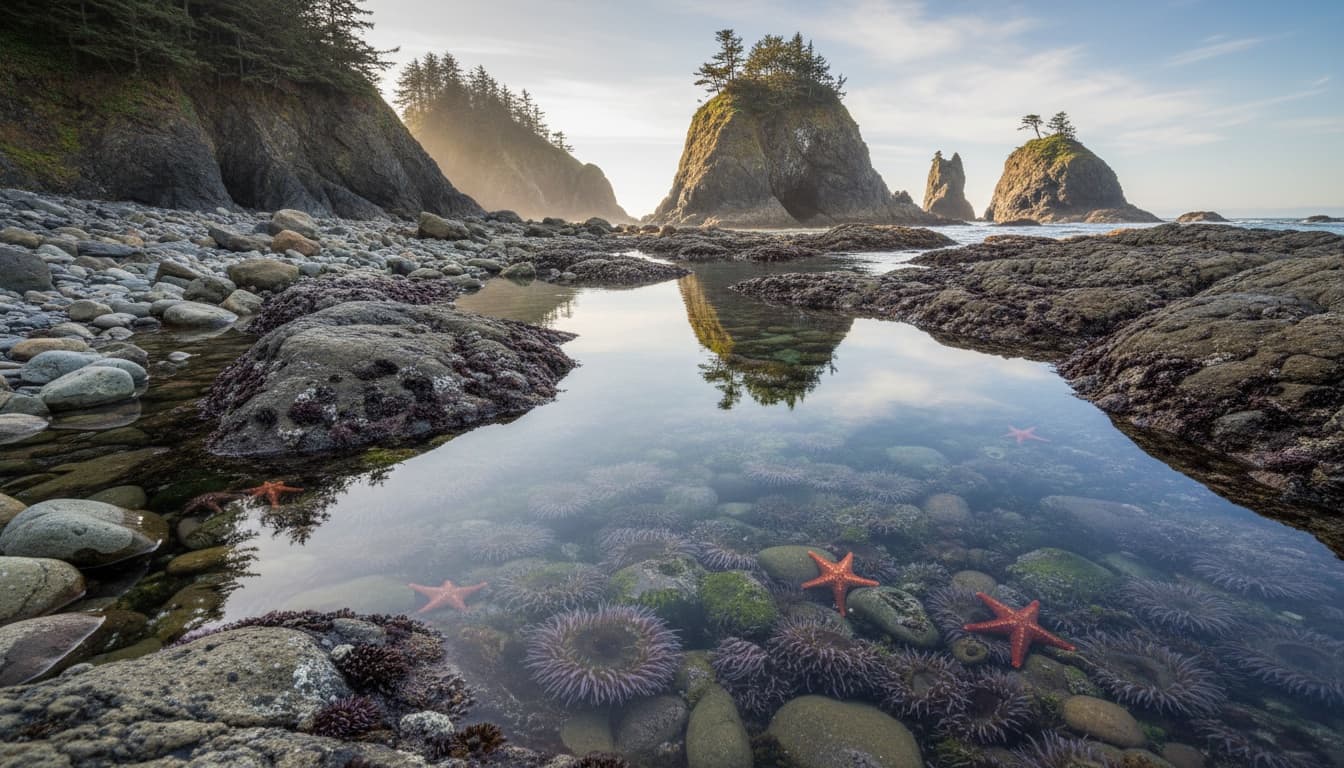
1. Best Tide Pool Locations in Washington: A Regional Guide
Washington's coastline delivers dramatically different experiences. The Pacific Coast? Wild, wave-battered pools teeming with hardy species. Puget Sound? Calmer waters perfect for families (trust me on this).
The regional breakdown matters because each area hosts different species, requires different safety approaches, and offers varying access levels. Pacific Coast locations demand wave awareness but reward you with resilient communities. Puget Sound spots welcome beginners with gentler conditions and diverse delicate species.
Olympic National Park Pacific Coast
Rialto Beach earns its reputation as Washington's premier tide pooling destination. The rocky intertidal zone stretches for miles, creating countless pools filled with ochre sea stars, giant green anemones, and purple sea urchins.
Park at the Rialto Beach parking area (free). The walk takes 10 minutes across sandy beach and rocky outcrops.
Ruby Beach has easier access than Rialto but smaller tide pool areas. You'll find excellent aggregating anemone colonies and diverse mussel beds. The parking area sits right off Highway 101 — Washington's most accessible Pacific Coast spot.
Hole-in-the-Wall requires a two-mile hike north from Rialto Beach. Worth the effort. These pristine pools rarely see crowds, and you'll find species here that are uncommon elsewhere, including impressive gooseneck barnacle clusters.
Here's the thing: According to Olympic National Park's official website, Mora Road often experiences seasonal closures past Mora Campground during summer months, which can affect Rialto Beach access during peak season. Check current road conditions before visiting.
Puget Sound Destinations
Rosario Head at Deception Pass State Park wins for family-friendly tide pooling. The pools sit just a short walk across picnic grounds from the parking lot. Kids love discovering small fish, hermit crabs, sea stars, urchins, and anemones in these protected waters.
Deception Pass State Park extends beyond Rosario Head. Multiple tide pool access points. The calmer Puget Sound waters make this ideal for beginners learning proper tide pool etiquette.
Strait of Juan de Fuca Spots
Salt Creek Recreation Area combines 90 camping sites with excellent tide pooling access. The protected location creates diverse microhabitats where different species thrive.
Griffiths-Priday State Park near Ocean Shores has tide pooling along both ocean and bay sides. The contrast between wave-exposed and protected areas creates unique viewing opportunities.
Long Beach Washington and Ocean Shores
These southern Washington locations have wide sandy beaches with scattered rocky areas. Less dense with marine life than Olympic Peninsula spots, but easier walking and parking access.
The CatchRules Location Assessment Framework:
- Access difficulty (parking to pools)
- Species diversity (number of different taxa)
- Pool density (pools per 100 meters)
- Family suitability (safety and accessibility)
- Seasonal reliability (year-round vs. seasonal access)
Pacific Coast vs. Puget Sound Experiences
Pacific Coast pools face constant wave action. This creates hardy communities dominated by mussels, barnacles, and resilient anemones. The species here have adapted to extreme conditions — you'll see thicker shells and stronger attachment mechanisms.
Puget Sound pools have gentler environments. More delicate species thrive here, including various small fish and soft-bodied invertebrates that couldn't survive ocean wave action.
Safety differs dramatically. Pacific Coast pools require constant wave awareness and quick escape route planning. Puget Sound locations allow relaxed exploration with minimal wave concerns.
2. When's the Best Time to Look at Tide Pools?
Visit an hour before the lowest tide for optimal viewing. This gives you maximum pool exposure before water levels start rising again. Timing is everything for successful tide pooling.
Washington's best low tides occur during daylight hours from May through September. However, winter tides often hit their lowest points after dark — dangerous and difficult.
That said, check tide tables specific to your chosen location. Washington's complex coastline creates significant timing variations. Tide times can vary considerably between Pacific Coast and Puget Sound locations.
Reading Tide Charts for Washington Coast
Look for tides of 0.5 feet or lower. Negative tides (below 0.0 feet) expose the most area but occur less frequently. Plan arrival an hour before the predicted low tide time.
Check NOAA Tides and Currents for Washington coastal stations for accurate local timing.
In fact, spring tides (new and full moon periods) produce the most extreme low tides. These occur roughly every two weeks and create the best tide pooling opportunities.
Monthly Tide Pooling Calendar
Here's how the seasons break down:
May-June: Peak season begins. Water temperatures remain cool but daylight low tides return. Spawning activity increases — look for sea star egg masses and anemone reproduction.
As summer peaks, July-August brings warmest water temperatures. Highest visitor numbers but also most reliable access. Morning low tides work best before afternoon crowds arrive.
By contrast, September-October offers my favorite months. Fewer crowds, stable weather, and excellent low tides. Marine life remains active before winter dormancy.
During winter months, November-April is limited by weather and dark low tides. Only attempt during rare daylight negative tides with calm conditions.
3. What to Bring: Essential Gear and Preparation Checklist
Proper footwear makes or breaks tide pooling trips. I recommend rubber boots with aggressive tread — the kind commercial fishermen wear. Sneakers become death traps on wet algae-covered rocks (learned this the hard way).
Essential Gear List
Safety items: • First aid kit • Emergency whistle • Fully charged phone in waterproof case • Headlamp (even for day trips)
Comfort gear: • Layers for changing weather • Rain jacket • Warm hat • Sunglasses • Sunscreen (reflection off water intensifies UV exposure)
Exploration tools: • Hand lens or magnifying glass • Waterproof camera • Field guide • Small flashlight for peering into crevices
Photography Tips for Tide Pool Wildlife
Get low. Really low. The best shots come from pool level, not standing height. Use natural light when possible — flash photography can stress nocturnal species during day visits.
Macro lenses reveal incredible detail in small creatures. Focus on eyes, feeding behaviors, and defensive postures. Shore crabs make particularly entertaining subjects with their quick movements.
Bring a polarizing filter to cut water surface glare. This reveals underwater details that would otherwise be invisible.
What NOT to Bring
Leave collection containers at home. According to Washington Department of Fish and Wildlife regulations, Washington state prohibits removing most marine life from tide pools without special permits. This includes "temporary" collection for photos.
Pets should stay in the car. Dogs stress marine life and can damage delicate organisms. Most state parks prohibit pets in intertidal areas anyway.
Accessibility Information for Each Location
Rialto Beach: • Parking: Free • Facilities: Vault toilets • Walk: 10 minutes on uneven terrain to pools
Ruby Beach: • Parking: Free directly off Highway 101 • Facilities: Vault toilets • Walk: Minimal walking required
Rosario Head: • Parking: Day-use fees typically apply • Facilities: Flush toilets and picnic facilities • Walk: Wheelchair-accessible paths to viewing areas
Salt Creek: • Parking: Day-use fees typically apply • Facilities: Flush toilets, camping available • Walk: Moderate walking on maintained trails
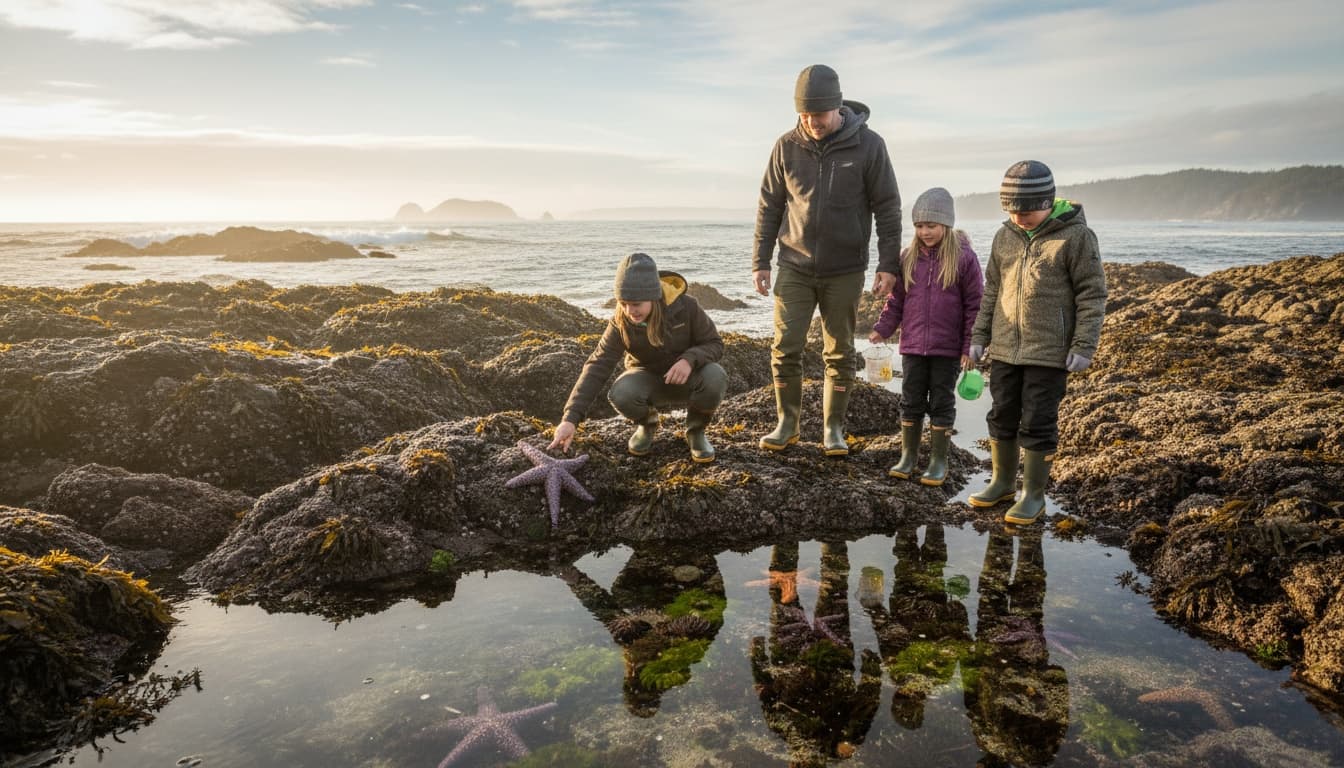
4. Marine Life You'll Encounter: Species Identification Guide
Washington tide pools host remarkable diversity. These waters support hundreds of species across Olympic Peninsula and Puget Sound locations — many of which you can identify in the field with offline species identification tools like CatchRules, which covers Pacific species and works offline.
Sea Stars and Starfish Species
Those orange and purple ochre sea stars you'll see everywhere dominate rocky surfaces. These keystone predators control mussel populations and shape entire tide pool communities.
Adults typically measure 6-14 inches across with five thick arms.
Leather stars appear in tide pools as smaller, smooth-skinned relatives. Their mottled gray-brown coloration creates excellent camouflage against rocky backgrounds.
Six-armed stars occasionally appear in deeper pools. These unusual creatures regenerate lost arms readily — I've found individuals with 3-7 arms in various stages of regrowth.
Anemones and Their Identifying Features
Giant green anemones can grow up to 10 inches in diameter when open. Their bright green coloration comes from symbiotic algae living in their tissues. Look for them in mid to low tide zones.
Aggregating anemones form colorful colonies that can cover entire rock faces. Individual polyps typically reach around 3.5 inches across and display vibrant greens, reds, and purples. Their cloning behavior creates genetic patches of identical colors.
Moonglow anemones typically grow up to 3.5 inches in diameter with translucent white tentacles. Their habitat often ranges from intertidal zones to considerable depths, making them common in deeper tide pools.
Painted anemones often match giant green anemones in size (up to 10 inches diameter) but display more varied coloration patterns. Their habitat typically extends from intertidal zones to significant depths.
Mussels, Barnacles, and Other Shellfish
California mussels form dense beds that create habitat for dozens of other species. Their thick, dark shells can withstand tremendous wave force. Look for small crabs, worms, and other creatures living between mussel shells.
Acorn barnacles carpet rocks in the high tide zone. These filter feeders extend feathery feeding appendages when submerged, creating underwater forests in miniature.
Gooseneck barnacles attach to wave-exposed rocks via flexible stalks. Their prehistoric appearance and clustering behavior make them unmistakable.
Small Fish and Crabs in Tide Pools
Sculpin species hide under rocks and in crevices. These bottom-dwelling fish have large heads and can change color to match their surroundings.
Hermit crabs scurry between pools carrying borrowed shells. Watch them investigate new shells and occasionally fight over prime real estate.
Shore crabs blend perfectly with rocky backgrounds. Their quick movements and defensive postures make them entertaining to observe.
Seaweed and Kelp Varieties
Rockweed dominates high tide zones with its distinctive air-filled bladders. Pop these bladders to understand how the plant stays buoyant during high tide.
Sea lettuce grows in thin, bright green sheets that wave gracefully underwater. This edible seaweed indicates good water quality.
Coralline algae creates pink and purple crusts on rocks. This calcified algae feels rough to the touch and helps build reef-like structures.
5. Tide Pool Safety and Environmental Conservation
Wave awareness prevents most tide pooling accidents. Always maintain visual contact with the ocean and plan escape routes to higher ground.
Hypothermia strikes quickly in Washington's cold waters. Even brief immersion in 50°F water can be dangerous. Dress in layers and bring dry clothes.
Slippery rocks cause more injuries than waves. Test each step and use handholds when available. Wet algae creates ice-like conditions.
The Five Core Tide Pool Etiquette Rules
- Never lift creatures off rocks unless absolutely necessary for identification. Their attachment mechanisms can be permanently damaged. If you must move something, replace it exactly where you found it.
- Replace anything you turn over. Many creatures depend on specific positioning for feeding and protection. A flipped rock can doom dozens of organisms.
- Watch your footing on slick algae. Stepping on living surfaces damages organisms and creates safety hazards. Step only on bare rock or sand when possible.
- Don't bring pets into pools. Dogs stress marine life and can crush delicate organisms. Most locations prohibit pets in intertidal areas.
- Confirm local collection laws before your visit. Most Washington state locations ban removing any tide pool species without special licenses.
Advanced Conservation Practices
Move slowly through pools. Quick movements create pressure waves that stress filter-feeding animals and can dislodge attached organisms.
Avoid touching anemones repeatedly. While they won't hurt you, constant stimulation exhausts these animals and reduces their feeding efficiency.
Don't use flash photography on nocturnal species during day visits. Many tide pool creatures are light-sensitive and can be harmed by bright flashes.
6. Family-Friendly Washington Tide Pool Locations
Rosario Head at Deception Pass State Park tops my list for tide pooling with kids. The short walk from parking to pools eliminates exhausting hikes. Calm Puget Sound waters reduce safety concerns.
The pools here contain perfect starter species: colorful anemones that respond to gentle touch, active hermit crabs, and obvious sea stars. Kids can easily spot and identify these charismatic creatures.
Salt Creek Recreation Area combines camping with tide pooling. Families can explore multiple times during their stay, learning to recognize individual animals and observe behavior patterns.
Age-Appropriate Activities
Preschoolers (3-5 years) enjoy simple observation games. Count sea stars, identify colors, watch hermit crabs move between shells.
Elementary age (6-10 years) can learn basic ecology concepts. Explain predator-prey relationships, adaptation strategies, and habitat requirements.
Middle schoolers (11-13 years) appreciate photography challenges and species identification contests. They can help younger siblings while developing their own interests.
Educational Opportunities
Many Washington state parks feature interpretive programs during summer months. Rangers help with species identification and answer questions about marine ecology.
The CatchRules app enhances family visits by providing instant species identification and local regulation information. Kids enjoy using technology to learn about their discoveries.
7. Location Difficulty Comparison
| Location | Access Difficulty | Family Suitability | Facilities |
|---|---|---|---|
| Rialto Beach | Moderate | Good | Vault toilets |
| Ruby Beach | Easy | Excellent | Vault toilets |
| Rosario Head | Easy | Excellent | Full facilities |
| Salt Creek | Moderate | Good | Full facilities |
| Hole-in-the-Wall | Difficult | Poor | None |
| Deception Pass | Easy | Excellent | Full facilities |
8. Identify Every Species You Find — Even Without Cell Service
When you spot an unfamiliar creature, CatchRules instantly identifies it from a photo — even without cell service. This means you can confidently name what you're seeing in real-time, understand its behavior and habitat, and verify local collection rules before you leave the tide pool. No more "I wonder what that was" moments.
Our database covers Pacific Coast species, including detailed information about the anemones, sea stars, and crabs you'll encounter. Explore the free CatchRules app to turn your tide pool discoveries into learning moments.
Frequently Asked Questions
Q: What time of day is best for tide pooling in Washington? A: Visit an hour before the lowest tide of the day for maximum pool exposure. Check local tide tables since timing varies significantly between Pacific Coast and Puget Sound locations — tide times can vary considerably between different coastal areas.
Q: Can I collect shells and sea creatures from Washington tide pools? A: Most Washington locations prohibit collecting marine life without special permits. This includes temporary collection for photos. Always verify with Washington Department of Fish and Wildlife before keeping or releasing anything.
Q: Are Washington tide pools safe for children? A: Yes, with proper supervision. Puget Sound locations like Rosario Head are very safe for supervised children. Pacific Coast locations require more caution due to waves and slippery rocks. Always maintain close supervision.
Q: What's the difference between Pacific Coast and Puget Sound tide pools? A: Pacific Coast pools face constant wave action and host hardier species like mussels and barnacles. Puget Sound pools are calmer with more diverse, delicate species including various small fish and soft anemones.
Q: When is tide pooling season in Washington? A: May through September delivers the best conditions with daylight low tides and stable weather. Peak season runs June through August, with September-October offering fewer crowds and excellent conditions. Winter tide pooling is limited by dark low tides and dangerous conditions.
Q: Do I need special gear for Washington tide pooling? A: Essential gear includes rubber boots with good tread, waterproof layers, and a first aid kit. Even brief immersion in 50°F water can cause hypothermia, so dress in layers and bring dry clothes. Avoid cotton clothing and smooth-soled shoes which become dangerous when wet.