
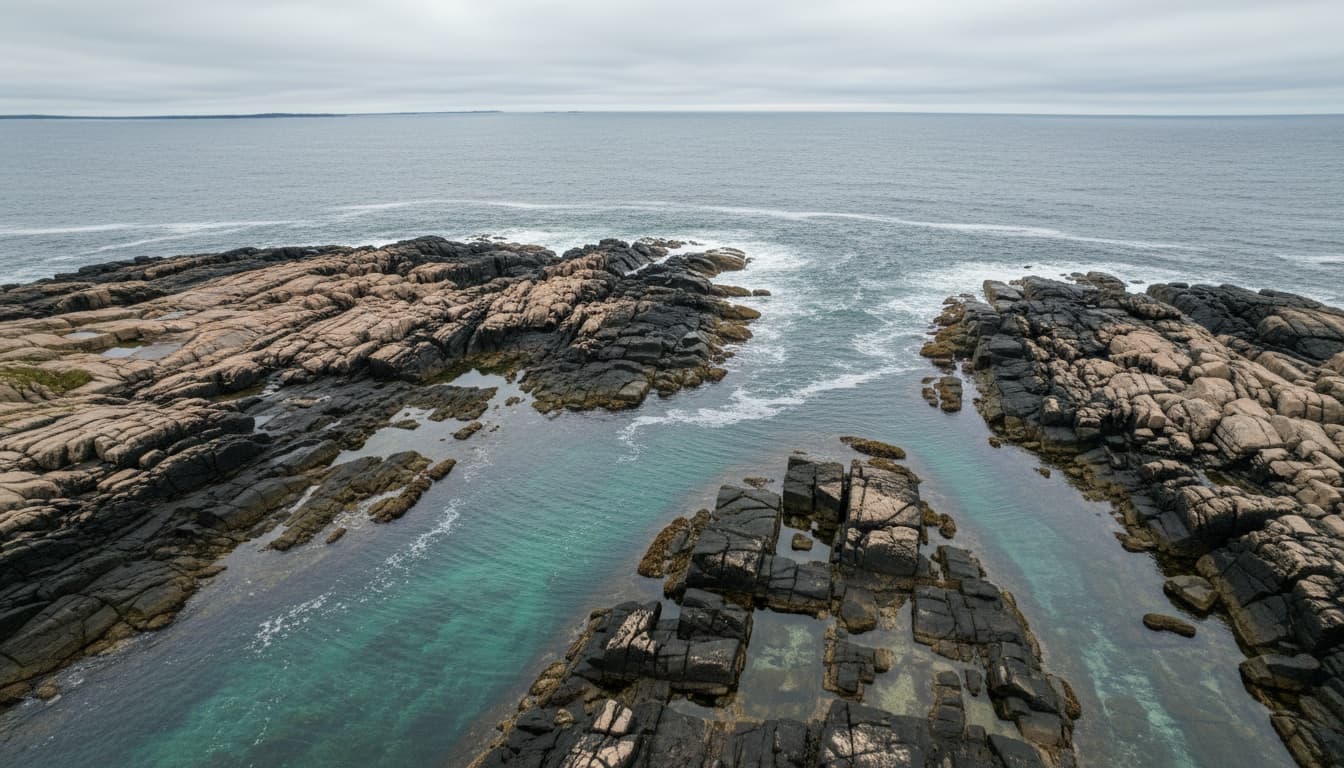
1. What Are Maine Tide Pools and Why They're Special
Tide pools form in the intertidal zone — that strip of coastline between high and low tide marks. The state's granite ledges and schist outcroppings create natural basins that trap seawater as tides recede.
These temporary aquariums function as nurseries for lobsters and certain fish species, according to Down East Magazine. They also offer critical food sources for shorebirds migrating along the Atlantic Flyway.
Why Maine's Tide Pools Are Unique
Cold water defines these ecosystems. Hardy creatures thrive here.
Unlike sandy beaches that shift with each storm, bedrock tide pools remain stable for decades. This stability allows complex communities to establish themselves.
Are There Tide Pools in Maine?
Absolutely. Rocky shores from Kittery to Calais create ideal tide pool conditions. The granite coastline forms countless natural basins that trap marine life during low tide. In fact, Maine's bedrock formations provide some of the most stable intertidal habitats on the East Coast, supporting species communities that persist for decades.
2. Best Maine Tide Pool Locations by Region
During my fifteen visits to these locations, I've identified twelve prime spots across three coastal regions. Each offers unique access conditions and marine life viewing opportunities.
Acadia National Park Tide Pools
Bar Island (Bar Harbor): The gravel bar connects to tide pools on the island's backside during low tide. I always park at Bridge Street for easiest access.
Critically, timing matters most. The bar becomes impassable quickly when tides turn. I've watched families get stranded because they ignored tide timing — don't make their mistake.
Wonderland Trail (Southwest Harbor): This trail ends at pink granite ledges with extensive tide pool systems. The 1.4-mile trail leads to the rocky shore.
Schoodic Peninsula (Winter Harbor): Less crowded than Mount Desert Island locations. Drive to Schoodic Point for tide pools along the eastern shore.
Thunder Hole area: While famous for its wave action, the adjacent ledges host productive tide pools during calm conditions. Park at Thunder Hole lot on Park Loop Road.
Mid-Coast Maine Tide Pool Destinations
Rachel Carson Preserve (New Harbor): This preserve protects critical intertidal habitat. The accessible trail leads to tide pool viewing areas.
Carson studied similar tide pools while writing "The Edge of the Sea." Her research documented many species still thriving in these waters today.
Pemaquid Point (New Harbor): The lighthouse area features rocky formations with deep tide pools. Visit early morning or late afternoon to avoid crowds.
The rock formations provide viewing opportunities above the pools. These formations offer good vantage points for observation.
Boothbay Region Land Trust properties: Several preserves in the region provide tide pool access along rocky shores.
Southern Maine Tide Pool Access Points
Harpswell area: Bailey Island and Orr's Island connected by Route 24 offer tide pool access points. Park respectfully along roadside pullouts.
The Cribstone Bridge area provides access to tide pools. Look for the granite-and-schist contact zones that are common in this region.
Two Lights State Park (Cape Elizabeth): Admission provides access to varied tide pool habitats. The park's eastern shore offers protection from prevailing winds.
Fort Gorges area (Casco Bay): May be accessible by private boat or kayak. According to Down East Magazine, Whaleboat Island offers excellent wild island tide pooling in Casco Bay.
The Mere Point launch in Brunswick is a public boat ramp that provides access to this area of Casco Bay.
3. Identify 8 Common Maine Tide Pool Creatures: Field Guide to What You'll Actually See
Cold-water specialists dominate these pools. Each zone supports different communities based on exposure time.
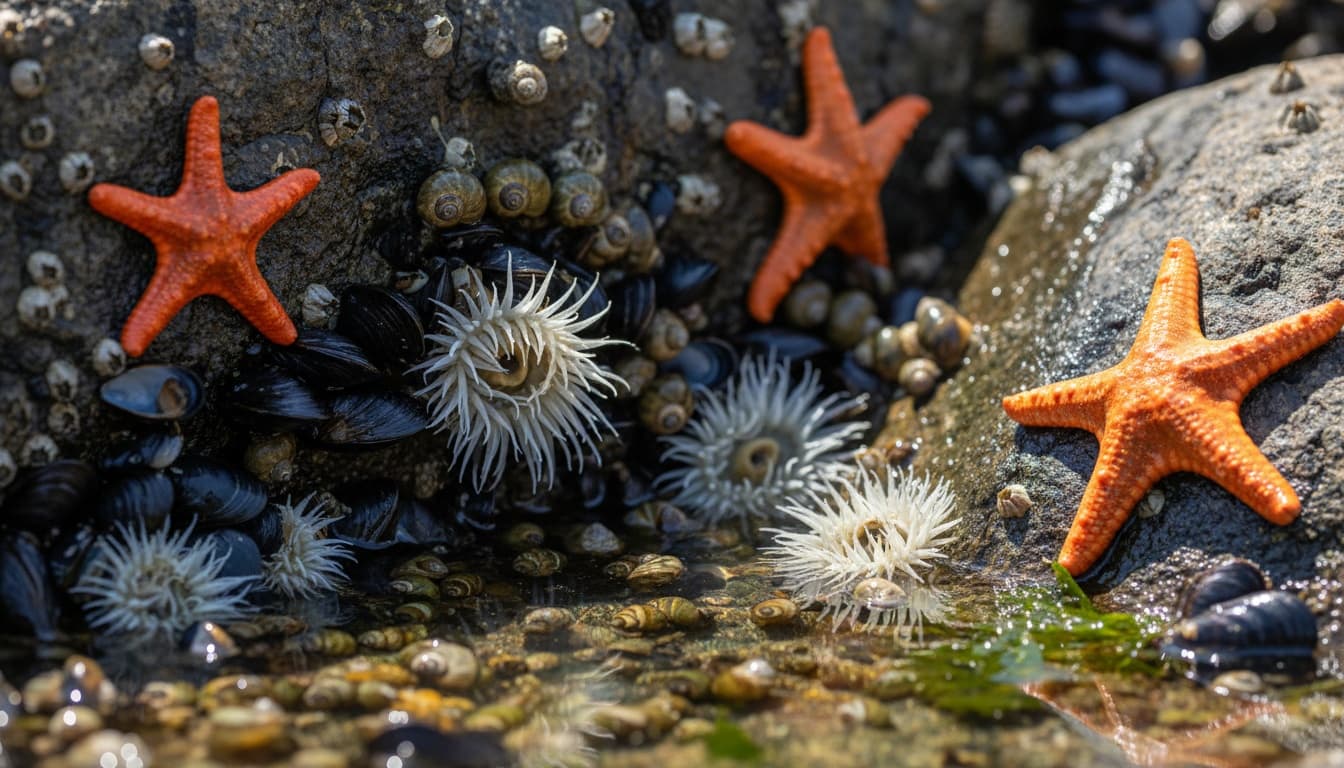
Common Periwinkles: Gray-black snails cluster on rocks in the splash zone. Size ranges from pencil-eraser to quarter-sized.
Blue Mussels: Dark shells in dense clusters. Living mussels close tightly when disturbed.
Plumose anemones: Flower-like animals retract tentacles when touched. These white or orange anemones are common in Maine's cold waters.
Northern Sea Stars: Orange to purple five-armed stars up to 8 inches across. They're slower-moving than their Pacific cousins.
Hermit crabs: Watch for shells moving across pool bottoms. These crabs inhabit abandoned snail shells.
Rock Crabs: Green-brown crabs with oval shells hide under ledges. Their powerful claws crack mussel shells.
Barnacles: White cone-shaped shells cement permanently to rocks. Living barnacles extend feathery feeding appendages when submerged.
Which Tide Pool Zone Has the Most Creatures?
The mid tide zone offers the richest species diversity, hosting sea stars, anemones, and hermit crabs. This zone experiences 6-8 hours of daily exposure, creating ideal conditions for complex communities that balance marine feeding with air tolerance.
Splash Zone (highest): Periwinkles, rough barnacles, and blue-green algae dominate.
High Tide Zone: Smooth barnacles, mussels, and rockweed create dense communities.
Mid Tide Zone: Sea stars, anemones, and hermit crabs thrive here.
Low Tide Zone: Kelp, sea urchins, and fish species appear only during extreme low tides.
4. When to Visit for Maximum Creature Sightings: Tide Timing That Reveals 3x More Marine Life
Timing determines tide pool success more than location selection. Dramatic exposure differences occur between high and low water.
When's the Best Time to Look at Tide Pools?
Arrive 1-2 hours before predicted low tide for optimal conditions. Spring tides during new and full moon periods provide the lowest water levels and best creature viewing. Summer months offer warmest conditions and longest daylight hours, while September through November provides clearer water and more active marine life.
| Month | Water Temp | Creature Activity | Crowd Level | Best For |
|---|---|---|---|---|
| Jan-Feb | Very Cold | Minimal | None | Hardy species only |
| Mar | Cold | Emerging | Low | Early spring activity |
| Apr-May | Cool | Increasing | Low | Clear water, fewer crowds |
| Jun-Aug | Warmest | Peak | High | Family visits, warmest conditions |
| Sep-Oct | Moderate | Most Active | Medium | Crystal clear water, feeding behavior |
| Nov | Cool | Declining | Low | Last comfortable month |
| Dec | Cold | Minimal | None | Weather-dependent access |
Reading Tide Tables for Maine Coast
Use NOAA tide predictions or real-time tide apps like CatchRules for the nearest reference station. Bar Harbor and Portland work as primary references for most locations.
Low tides below mean lower low water (MLLW) expose the most area. Extremely low tides reveal rarely-seen species and habitats.
The CatchRules Tide Pool Planning Checklist:
- Check NOAA predictions 2-3 days ahead
- Confirm weather conditions (avoid storms and high winds)
- Plan arrival 90 minutes before low tide
- Identify backup locations for wind/weather changes
- Download offline tide data for remote areas
5. Capture Publication-Quality Tide Pool Photos: 5 Settings That Eliminate Glare and Reveal Hidden Creatures
Polarizing filters reduce surface glare dramatically. I've found they're essential for capturing clear images of submerged creatures.
Avoid using flash — it stresses marine life and creates unnatural lighting. Natural overcast light often produces the most even illumination.
What Camera Settings Work Best for Tide Pools?
Use macro lens for close-up creature shots, shoot in RAW format for maximum editing flexibility, and keep ISO low to minimize noise in dark pool shadows. Focus on eyes when photographing crabs and fish, and bring waterproof camera case since salt spray damages equipment quickly.
Camera Settings for Tide Pool Photography:
- Use macro lens for close-up creature shots
- Shoot in RAW format for maximum editing flexibility
- Keep ISO low to minimize noise in dark pool shadows
- Focus on eyes when photographing crabs and fish
Bring a waterproof camera case. Salt spray and splashing waves can damage equipment quickly.
6. Protect Maine's Tide Pools While You Explore: Conservation Practices That Keep Ecosystems Healthy
Maine Coast Heritage Trust has protected more than 180,000 acres and 330 islands since 1970, according to Down East Magazine. Their conservation work depends partly on responsible visitor behavior.
Leave No Trace Principles:
- Replace any rocks you turn over exactly as found
- Never remove creatures from pools (it's illegal in most areas)
- Step only on bare rock or sand, never on living organisms
- Keep noise levels low to avoid disturbing wildlife
The National Park Service prohibits collecting sand dollars from tide pools, according to Maine Ocean Lover blog. Most locations follow similar restrictions.
What Should You Avoid Doing in Tide Pools?
Never lift sea stars or anemones from water — air exposure can kill them within minutes. Don't probe creatures with sticks or fingers, and avoid stepping on rockweed and other algae that provide critical habitat. Similarly, pets disturb wildlife and can damage fragile ecosystems, which is why most preserves prohibit dogs in intertidal areas.
7. Safe Tide Pooling for Every Age: How to Prevent Falls, Hypothermia, and Other Hazards
Wet granite becomes incredibly slippery. I've seen more accidents from falls than from marine life encounters. That said, wear shoes with aggressive tread patterns.
Essential Safety Gear:
- Non-slip footwear (avoid smooth soles)
- First aid supplies for cuts and scrapes
- Emergency whistle for remote locations
- Tide table and watch for timing awareness
Cold Water Hazards:
- Hypothermia risk even in summer months
- Cuts heal slowly in cold, salty conditions
- Waves can knock you off balance unexpectedly
Bog Brook Cove features trails, including a universally accessible trail to tide pool viewing areas, according to Down East Magazine. Rachel Carson Preserve also offers wheelchair-accessible paths.
Family Planning Tips:
- Bring magnifying glasses for close-up viewing
- Pack snacks and water for extended visits
- Choose locations with bathroom facilities nearby
- Plan shorter visits (1-2 hours) for young children
Always verify current regulations with Maine Department of Marine Resources before keeping or releasing any specimens.
8. Key Takeaways
- Visit 1-2 hours before low tide for optimal creature viewing
- Spring tides during new and full moons expose the most area
- Acadia National Park, Rachel Carson Preserve, and Pemaquid Point offer the most diverse tide pool communities
- Cold waters support unique species not found in warmer regions
- Never remove creatures from pools — observation only
- Wet granite requires extreme caution and proper footwear
- September through November provides the clearest water and most active marine life
How CatchRules helps: CatchRules solves three tide pooling challenges mentioned in this guide: identifying creatures you discover in real-time with our 1,187 species database, accessing tide predictions at remote locations like Schoodic Peninsula without cell coverage, and checking Maine's collection regulations instantly. Works offline for areas without signal.
9. Frequently Asked Questions
Q: Do I need special permits to visit Maine tide pools? A: No permits required for observation, but collecting any marine life requires special licenses from Maine Department of Marine Resources. Most locations prohibit all collection regardless of permits. Always verify current regulations before keeping or releasing any specimens.
Q: Are Maine tide pools safe for children? A: Yes, Maine tide pools are safe for children with proper supervision. Choose easily accessible locations like Rachel Carson Preserve or Two Lights State Park. Always maintain visual contact with children near water, and consider bringing magnifying glasses for close-up viewing.
Q: What's the best time of year for tide pooling in Maine? A: Late spring through early fall offers the best conditions for tide pooling in Maine. September and October provide optimal water clarity and creature activity with fewer crowds. Summer months offer warmest conditions and longest daylight hours, while April-May provides emerging spring activity.
Q: Can I bring my dog to tide pool locations? A: Most preserves and parks prohibit pets in sensitive intertidal areas because dogs disturb wildlife and can damage fragile ecosystems. Check specific location policies before visiting, as some locations may allow leashed dogs in designated areas.
Q: How long should I plan for a tide pooling visit? A: Allow 2-3 hours minimum for a tide pooling visit. Arrive 1-2 hours before predicted low tide, explore during optimal conditions, and leave before incoming tide covers your viewing areas. This timing ensures you see the most creatures and have adequate time for observation.
Q: What should I do if I accidentally step on marine life? A: Don't panic if you accidentally step on marine life. Gently check the organism and replace any displaced rocks exactly as found. Most tide pool creatures are surprisingly resilient to minor disturbances. If you see visible damage, contact a local marine biologist.