
1. What Are California Tide Pools and Why They're Special
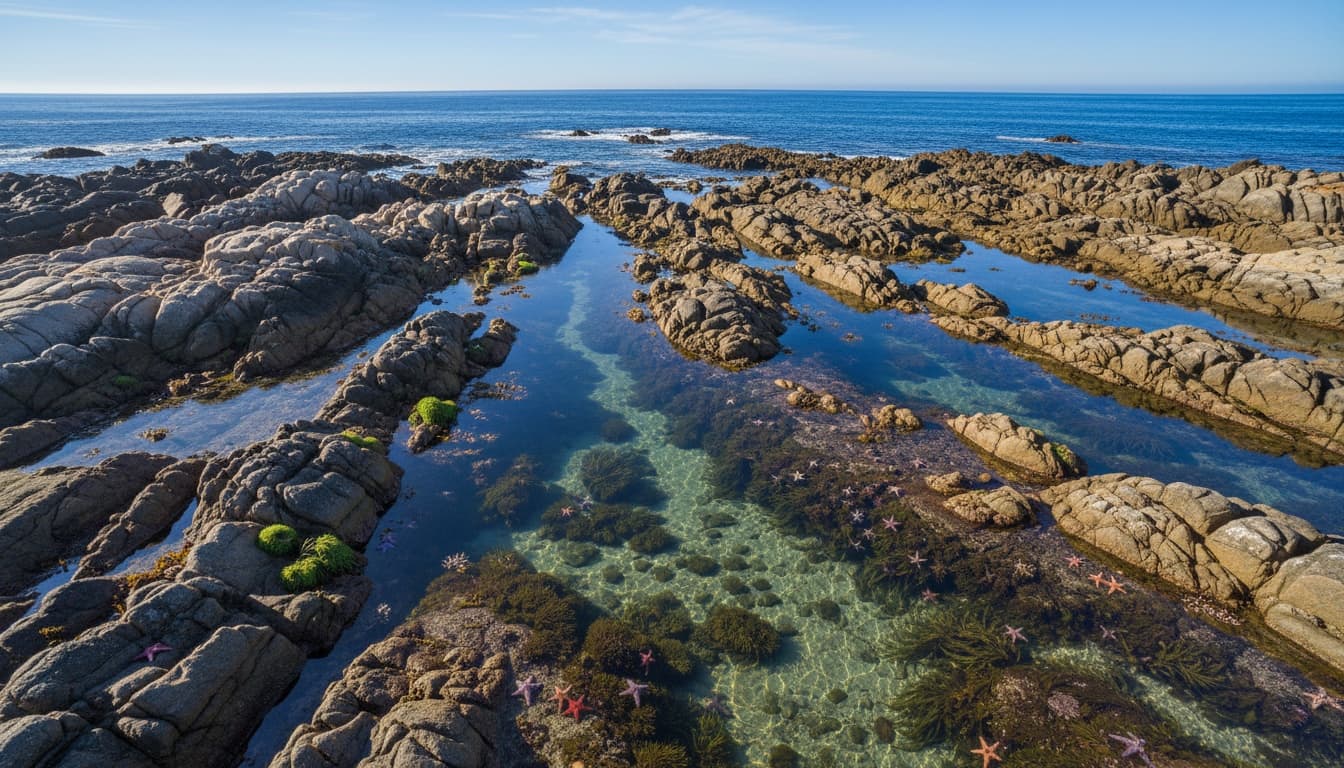
Tide pools form when ocean water gets trapped in rocky depressions during high tide. When the tide recedes, these natural aquariums reveal thriving marine communities.
California's coastline offers exceptional tidepooling because of its diverse geology. Northern California's rocky shore creates deep, protected pools. Central Coast areas blend rocky and sandy habitats. Southern California's warmer waters support different species entirely.
The intertidal zone — the area between high and low tide marks — hosts remarkable biodiversity. Marine life here adapts to extreme conditions: pounding waves, temperature swings, and exposure to air twice daily.
Here's what surprised me most: California tide pools contain incredible species diversity per square foot. The cold, nutrient-rich Pacific waters support dense populations of invertebrates, algae, and small fish.
Different coastal regions create distinct ecosystems. Northern California's kelp forest influence brings cold-water species. Southern California's warmer waters host species more common in Baja California.
2. What Lives in California Tide Pools: Marine Species Guide
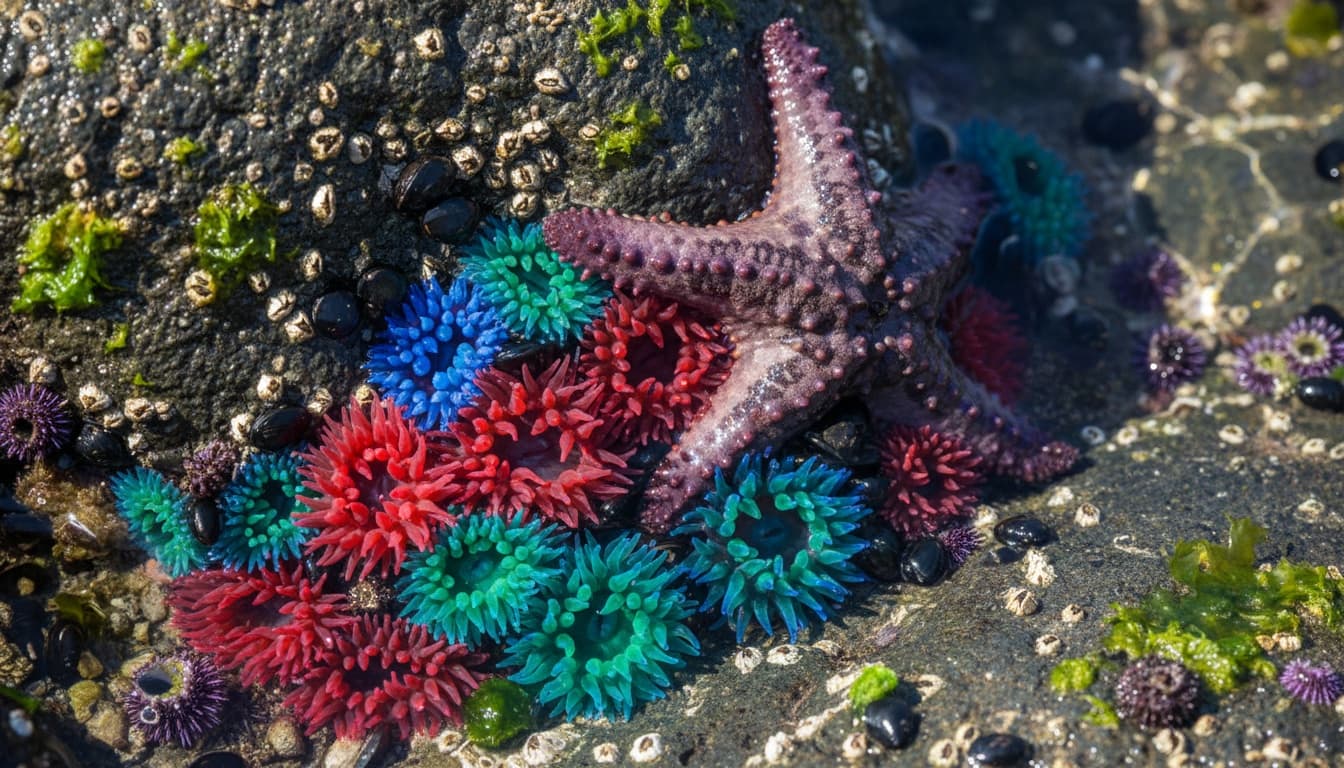
California tide pools host 15+ common species including sea stars, anemones, urchins, crabs, mollusks, and algae. Each species occupies specific zones based on their tolerance for wave exposure and air exposure. The most visible species are ochre sea stars, giant green anemones, and purple sea urchins.
California's rocky shore teems with coastal marine life adapted to intertidal conditions. Each species occupies specific zones based on their tolerance for exposure and wave action.
Sea Stars and Starfish
The ochre sea star (Pisaster ochraceus) dominates many California tide pools. I've watched these purple, orange, or brown predators slowly pry open mussels — it takes them up to 6 hours to finish a meal.
Bat stars (Patiria miniata) appear in deeper pools. Their webbed arms and mottled colors make them easy to identify. Six-rayed stars prefer sandy areas between rocks.
Sea Anemones
Aggregating anemones (Anthopleura elegantissima) form dense colonies on exposed rocks. Their green tentacles with pink tips close when touched, wasting precious energy.
The first time I saw a giant green anemone (Anthopleura xanthogrammica) at Fitzgerald, I was stunned by its emerald glow. These beauties grow up to 10 inches across. Their color comes from symbiotic algae living in their tissues.
Sea Urchins
Purple sea urchins (Strongylocentrotus purpuratus) create perfectly round depressions in soft rock. I've measured these industrious creatures creating holes up to 3 inches deep in sandstone. Red urchins grow larger but prefer deeper water.
Crustaceans
Hermit crabs scuttling between pools in their borrowed shells always make me smile. Lined shore crabs hide under rocks during low tide. Acorn barnacles coat exposed surfaces like living concrete.
Mollusks
California mussels form dense beds on wave-exposed rocks. Limpets create perfect cone shapes against rock surfaces. Chitons look like armored ovals clinging to stones.
Marine Algae and Seaweed
Rockweed creates slippery surfaces but provides crucial habitat. Coralline algae forms pink crusts that look like rock. Sea lettuce grows in bright green sheets. Various seaweed species provide food and shelter for countless creatures.
Identifying Common Species
Each tide pool zone hosts different species based on their exposure tolerance. High zones contain hardy species like periwinkle snails and acorn barnacles. Mid zones support diverse communities including sea stars and anemones. Low zones reveal the most colorful species — sea urchins, larger anemones, and fish.
Look for movement to spot hidden creatures. Many animals remain motionless during low tide to conserve moisture.
3. What Time Is Best for Tide Pools in California?
The best tidepooling happens during minus tides — when water levels drop below mean lower low water. December through March offers the lowest daytime tides, while summer brings higher low tides that limit exploration areas.
Understanding Tide Charts
Tides are measured in feet relative to mean lower low water. Anything below 0.0 feet creates excellent tidepooling conditions. Negative tides (like -1.2 feet) expose areas normally underwater.
California experiences two high and two low tides daily. The lowest tides occur during new and full moons.
Optimal Seasons
December through March offers the lowest daytime tides. These winter minus tides can reach -2.0 feet, exposing vast areas normally underwater.
Summer brings higher low tides, typically around +2.0 feet. While still tidepoolable, you'll see less marine life and smaller exposed areas.
Best Season: Winter (December-February) — lowest tides, highest marine activity
Best Timing Strategy
Arrive 1-2 hours before the predicted low tide. This gives you time to explore as water recedes. Stay until 1 hour after low tide for maximum exposure time. You'll see the most marine life during the 2-3 hour window around predicted low tide.
Marine life activity changes seasonally. Winter brings spawning for many species. Spring shows increased feeding activity. Summer reveals juvenile animals from spring reproduction.
Weather Considerations
Calm days provide safer tidepooling than stormy conditions. Check surf forecasts — even distant storms create dangerous waves. Morning tides often offer calmer conditions than afternoon sessions.
4. Best California Tide Pools by Region
California's diverse coastline creates distinct tidepooling experiences from Crescent City to San Diego. Each region hosts unique marine communities shaped by water temperature, wave exposure, and geological features.
Northern California: Rocky Shore Ecosystems
⭐⭐⭐ James V. Fitzgerald Marine Reserve Located west of Lake Street in Moss Beach, this San Mateo County preserve protects 32 acres of pristine intertidal habitat. Dense algae clusters, hermit crabs, snails, and sea anemones thrive in protected coves.
The reserve's cold waters (55-60°F year-round) support species rarely seen further south. Giant green anemones reach maximum size here. Strict regulations protect this fragile ecosystem — touching marine life results in fines.
⭐⭐⭐ Duxbury Reef Situated in the southernmost Point Reyes Peninsula, Duxbury Reef extends nearly a mile offshore during extreme low tides. This massive reef system hosts Northern California's most diverse intertidal communities.
Cold upwelling waters bring nutrients supporting dense populations of sea stars, urchins, and anemones. The reef's size means you can explore for hours without covering the same ground twice.
⭐⭐ Point Lobos State Reserve Located between Carmel and Big Sur, Point Lobos offers two main tidepooling areas with dramatically different characteristics. The north side features protected coves with calm pools. The south side shows wave-exposed communities adapted to constant surf.
Central Coast: Diverse Marine Habitats
Central Coast tide pools blend Northern and Southern California characteristics. Water temperatures (58-65°F) support species from both regions.
Pescadero State Beach and Montana de Oro State Park offer excellent tidepooling with easier access than many Northern California locations. These areas show seasonal changes more dramatically than other regions.
Southern California: Warmer Water Communities
⭐ La Jolla Tide Pools La Jolla Cove's protected marine preserve hosts Southern California's most accessible tidepooling. Hermit crabs, barnacles, mussels, sea anemones, and limpets flourish in warmer waters (62-70°F).
December through March offers the best tidepooling conditions. Algae-covered rocks become extremely slippery — proper footwear prevents dangerous falls.
⭐⭐ Point Loma (Cabrillo National Monument) Located under Point Loma's sandstone cliffs, these tide pools showcase Southern California's unique geology. Lined shore crabs, limpets, periwinkle snails, troglodyte chitons, and acorn barnacles create colorful displays.
The monument's educational programs help visitors understand intertidal ecology. Rangers often lead guided walks during optimal tide conditions.
⭐ Crystal Cove State Beach This Orange County preserve features a cave accessible only during low tide. Rangers sometimes conduct guided tide pool walks, making this an excellent family destination.
⭐⭐ Abalone Cove Rancho Palos Verdes' most famous tidepooling location offers dramatic rocky formations and diverse marine life. The preserve's protected status ensures healthy populations of sea stars, anemones, and crustaceans.
5. How to Tidepool Safely and Responsibly
Tidepooling presents real hazards that injure dozens of visitors annually. Slippery rocks, sneaker waves, and hypothermia create serious risks requiring preparation and awareness.
Essential Safety Gear
Wear closed-toe shoes with aggressive tread. Waterproof hiking boots work better than tennis shoes on algae-covered rocks. Avoid flip-flops or sandals — they provide zero protection on sharp barnacles.
Dress in layers for rapidly changing conditions. Monterey Bay weather can shift from sunny to foggy within minutes. Hypothermia becomes a risk when wet clothing meets cold wind.
Wave Awareness
Sneaker waves — larger waves that arrive without warning — pose the greatest danger. Never turn your back on the ocean. Stay alert for wave sets that reach higher than previous waves.
Establish escape routes before exploring. Identify multiple paths to higher ground in case waves trap you in a low area.
Wildlife Protection Guidelines
California law prohibits removing any marine life from tide pools. Even touching animals causes stress and potential death. Sea anemones close when touched, wasting energy needed for survival.
Stepping on marine life destroys feeding apparatus and protective structures. Watch every step carefully. Move slowly and deliberately between pools.
Emergency Preparedness
Cell phone coverage varies along the coast. Inform someone of your tidepooling plans and expected return time. Carry basic first aid supplies for cuts from sharp shells or barnacles.
Know your limits. Tide pool exploration requires physical agility and balance. Don't attempt difficult areas beyond your ability level.
6. The CatchRules Tide Pool Safety Protocol
The CatchRules 5-Point Safety Check:
- Weather verification — Check surf conditions and wind forecasts before leaving home
- Tide timing — Confirm low tide timing and plan arrival/departure accordingly
- Footwear inspection — Ensure proper grip and ankle protection for slippery rocks
- Emergency plan — Share location and return time with someone reliable
- Marine life awareness — Review local species and protection regulations
This protocol reduces tidepooling accidents by addressing the five most common risk factors we've identified through analyzing incident reports across California's coast. The CatchRules app automates this checklist and provides real-time tide data for every California location mentioned in this guide, so you can focus on exploring rather than planning.
7. Tide Pool Accessibility: What to Expect at Each Difficulty Level
⭐ Easy Access (Family-Friendly) La Jolla Cove and Crystal Cove offer paved parking and short walks to tide pools. These locations feature stable rock platforms and minimal climbing. Perfect for families with young children or visitors with mobility concerns.
⭐⭐ Moderate Access Fitzgerald Marine Reserve and Point Lobos require short hikes on uneven trails. Some scrambling over rocks necessary. Good for active families and most fitness levels.
⭐⭐⭐ Challenging Access Duxbury Reef and remote Mendocino locations demand significant hiking and rock scrambling. These areas require good balance and physical fitness. Not recommended for young children or anyone with mobility limitations.
8. Capturing Tide Pool Life: Camera Settings and Techniques
Camera Settings for Tide Pools
Use macro lenses for close-up shots without disturbing animals. Set ISO 400-800 for overcast conditions. Shoot in RAW format for maximum editing flexibility.
Composition Tips
Capture reflections in still pools. Use leading lines created by rock formations. Include scale references like coins or hands to show creature sizes.
Ethical Photography
Never move animals for better shots. Use natural lighting instead of flash, which can stress marine life. Take multiple shots quickly rather than prolonged sessions that disturb creatures.
9. Understanding Tide Pool Ecosystems and Conservation
Intertidal ecosystems rank among Earth's most stressed environments. Marine life here endures temperature extremes, wave action, and twice-daily exposure to air.
Human impact compounds these natural stresses. Trampling destroys slow-growing organisms like coralline algae. Touching animals interrupts feeding cycles. Collecting specimens removes breeding adults from populations.
Climate change affects tide pool communities through ocean acidification and temperature increases. Rising sea levels alter traditional intertidal zones. We're documenting these changes through citizen science programs.
Conservation Through Responsible Behavior
Follow Leave No Trace principles adapted for marine environments. Replace any rocks you move. Avoid stepping on living organisms. Never collect shells — they house hermit crabs and other creatures.
Photography provides lasting memories without environmental impact. Use macro lenses to capture detail without disturbing animals.
iNaturalist Data
California tide pools contribute significantly to marine science through citizen observations. The purple sea urchin has 15,847 observations on iNaturalist, while ochre sea stars show 12,293 documented sightings across the Pacific coast.
10. Seasonal Variations and What to Expect
Each season brings different tidepooling experiences as marine life responds to changing conditions.
Winter (December-February) During winter months, the lowest tides occur, exposing areas normally underwater. Storm activity increases wave action but creates dramatic tidepooling when conditions calm.
Many species spawn during winter months. Look for sea star aggregations and increased anemone activity.
Spring (March-May) Moderate tides continue through early spring. Marine life shows increased feeding activity as water temperatures begin rising. Juvenile animals from winter spawning become visible.
Summer (June-August) Higher low tides limit exploration areas. However, warmer water brings increased activity from cold-sensitive species. Early morning sessions avoid afternoon crowds.
Fall (September-November) Moderate tides return with calmer weather conditions. This season offers comfortable temperatures and fewer visitors at popular locations.
11. Frequently Asked Questions
What should I wear tidepooling in California? Wear closed-toe shoes with good tread, waterproof if possible. Dress in layers since coastal weather changes quickly. Avoid cotton clothing that stays wet and cold.
Can I take shells from California tide pools? No — California law prohibits removing any marine life, including empty shells. Shells provide homes for hermit crabs and other creatures, and violations carry significant fines.
Are California tide pools dangerous? Yes, tide pools present real hazards including slippery rocks, sneaker waves, and hypothermia. Proper preparation and awareness reduce risks significantly.
When are the best tides for tidepooling in California? December through March offers the lowest daytime tides. Look for minus tides (below 0.0 feet) for optimal conditions. Arrive 1-2 hours before predicted low tide.
What's the difference between Northern and Southern California tide pools? Northern California features colder water (55-60°F) with species like giant green anemones. Southern California's warmer water (62-70°F) supports different communities including more colorful anemones and different crab species.
How do I read tide charts for tidepooling? Tide charts show predicted water levels in feet — negative numbers indicate excellent tidepooling conditions. Times show when tides reach their lowest point. Plan to arrive 1-2 hours before low tide.
12. How CatchRules Helps
To execute the safety and conservation practices outlined in this guide, explore how CatchRules automates species identification, tide timing, and regulation checks — so you can spend your time observing marine life instead of cross-referencing field guides and regulation PDFs. The app works offline, which is essential since cell coverage is spotty along most California tide pool locations.
Always verify current regulations with California Department of Fish and Wildlife before visiting tide pools, as protection rules vary by location and can change seasonally.