
Species profile
Largemouth Bass
Micropterus nigricans
Identify Largemouth Bass (Micropterus nigricans) from a photo: try it free in your browser, or get unlimited IDs, no sign-up, with the CatchRules app. Plus current fishing rules across 44 jurisdictions.
At a glance
Largemouth Bass (Micropterus nigricans) is a bony-fish species regulated in 41 of 66 jurisdictions tracked by CatchRules across the U.S. and Canada.
The strictest bag limit is 1 (Ontario); the most generous is 30 (Mississippi).
Across 28 jurisdictions with stated minimum sizes, the average minimum is 14.2 in (≈ 1 ft 2 in).
Confirmed by 32,452 research-grade iNaturalist observations, with Texas, California, and Ontario the top jurisdictions by observation count.
Notable details
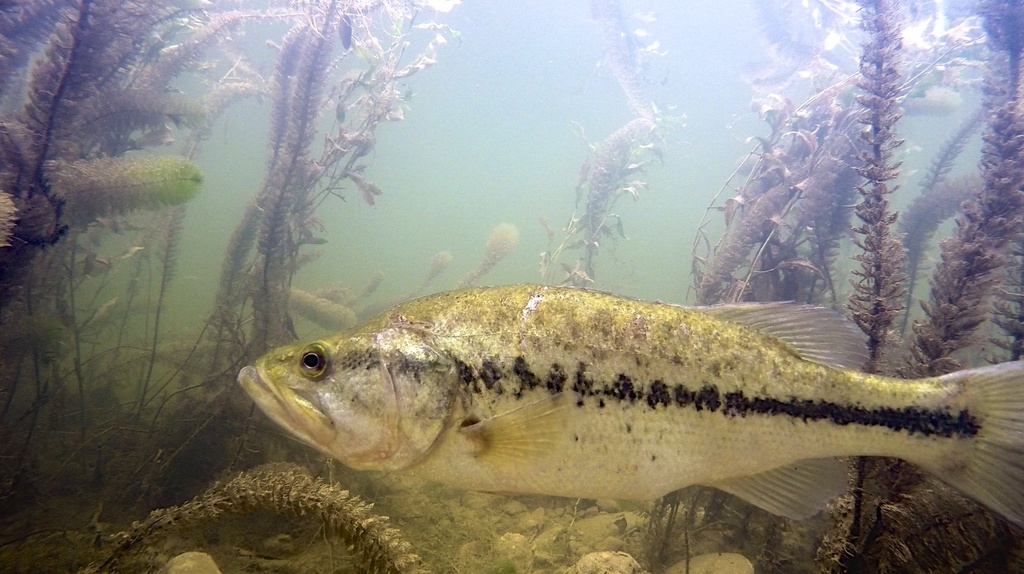
- Its upper jaw extends past the eye, distinguishing it from smallmouth bass in the field.
- An apex freshwater predator that eats fish, frogs, crayfish, and occasionally small birds.
- Ambushes prey from dense cover such as weeds, submerged logs, and dock structures.
- Can exceed 10 pounds in fertile northern lakes and reservoirs.
- Introduced across North America and worldwide as a premier sport fish.
Where Largemouth Bass are seen
Jurisdictions with rules for Largemouth Bass
Background
The largemouth bass is a carnivorous, freshwater, ray-finned fish in the Centrarchidae (sunfish) family, native to the eastern and central United States, southeastern Canada and northern Mexico. It is known by a variety of regional names, such as the widemouth bass, bigmouth bass, black bass, largie, potter's fish, Florida bass or Florida largemouth, green bass, bucketmouth bass, green trout,…
Background excerpt adapted from Wikipedia's Largemouth Bass article (CC BY-SA). Visit Wikipedia for the full entry.
Other bony fish on CatchRules
Frequently asked questions
What is Largemouth Bass?
Largemouth Bass (Micropterus nigricans) is a bony-fish species regulated in 41 of 66 jurisdictions tracked by CatchRules across the U.S. and Canada.
What is the scientific name for Largemouth Bass?
Largemouth Bass is Micropterus nigricans.
Is Largemouth Bass regulated for fishing?
Yes — Largemouth Bass has fishing regulations in 44 U.S. states and/or Canadian provinces tracked by CatchRules. See the "Jurisdictions with rules" section above for the binding-source links.
How can I identify Largemouth Bass?
Take a photo with the free CatchRules app for iPhone or Android — on-device identification recognizes Largemouth Bass along with ~1,500 other species. No sign-up, unlimited use.
Photo credit: iNaturalist / Wikipedia. Identification reference only — verify regulations with the issuing wildlife agency before retaining a catch.