
Species profile
Bluegill
Lepomis macrochirus
Identify Bluegill (Lepomis macrochirus) from a photo: try it free in your browser, or get unlimited IDs, no sign-up, with the CatchRules app. Plus current fishing rules across 36 jurisdictions.
At a glance
Bluegill (Lepomis macrochirus) is an IUCN Least Concern bony-fish species regulated in 42 of 66 jurisdictions tracked by CatchRules across the U.S. and Canada.
The strictest bag limit is 1 (South Dakota); the most generous is 300 (Ontario).
Across 14 jurisdictions with stated minimum sizes, the average minimum is 8.1 in.
Confirmed by 51,107 research-grade iNaturalist observations, with Texas, Ohio, and Florida the top jurisdictions by observation count.
Notable details
- The world-record bluegill weighed 4 lbs 12 oz, caught in Alabama in 1950.
- Males fan out nest depressions in sand or gravel and guard eggs aggressively.
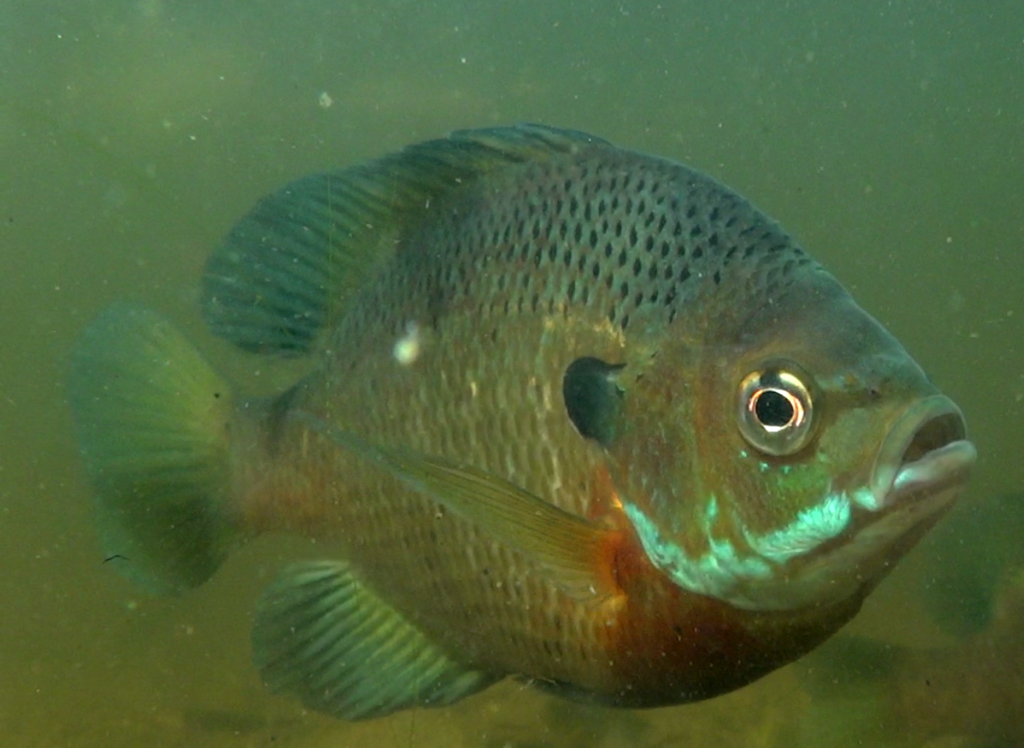
- Named for the distinctive blue-black coloring on the lower jaw and gill cover.
- A single nest can contain up to 60,000 eggs.
- Lifespan is typically 5–8 years, occasionally reaching 11 years.
Where Bluegill are seen
Jurisdictions with rules for Bluegill
Background
The bluegill (Lepomis macrochirus) is a species of freshwater fish sometimes referred to as bream, brim, or copper nose. It is a member of the sunfish family Centrarchidae of the order Perciformes. It is native to North America and lives in streams, rivers, lakes, and ponds. It is commonly found east of the Rockies. It usually hides around, and inside, old tree stumps and other underwater…
Background excerpt adapted from Wikipedia's Bluegill article (CC BY-SA). Visit Wikipedia for the full entry.
Other bony fish on CatchRules
Frequently asked questions
What is Bluegill?
Bluegill (Lepomis macrochirus) is an IUCN Least Concern bony-fish species regulated in 42 of 66 jurisdictions tracked by CatchRules across the U.S. and Canada.
What is the scientific name for Bluegill?
Bluegill is Lepomis macrochirus.
Is Bluegill regulated for fishing?
Yes — Bluegill has fishing regulations in 36 U.S. states and/or Canadian provinces tracked by CatchRules. See the "Jurisdictions with rules" section above for the binding-source links.
How can I identify Bluegill?
Take a photo with the free CatchRules app for iPhone or Android — on-device identification recognizes Bluegill along with ~1,500 other species. No sign-up, unlimited use.
Photo credit: iNaturalist / Wikipedia. Identification reference only — verify regulations with the issuing wildlife agency before retaining a catch.