
1. Why Is Acadia Perfect for Tide Pool Exploration?
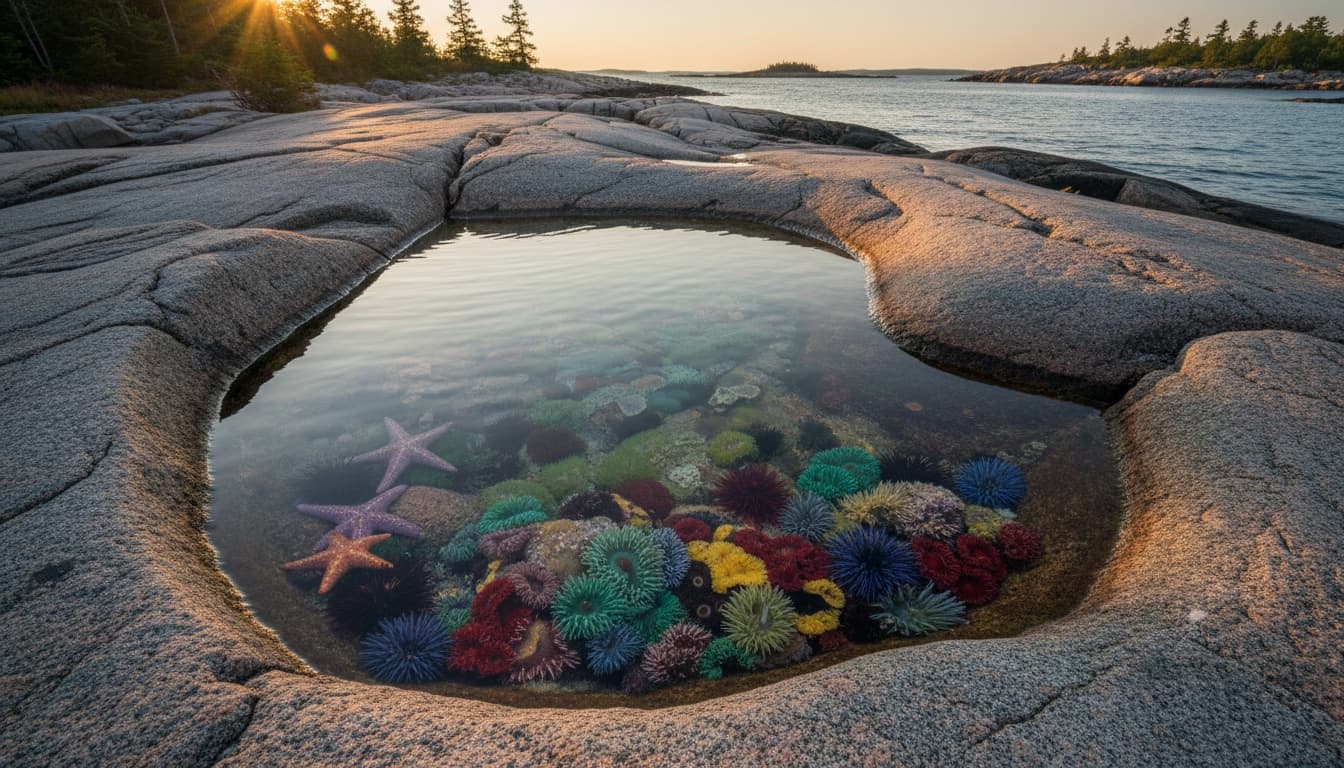
Acadia's granite coastline creates ideal conditions with a 10-11 foot tidal range (up to 12-13 feet during new/full moons), exposing extensive intertidal zones twice daily. The rocky shores stretch for miles, offering more tide pooling opportunities than most East Coast locations.
Tide pools form when ocean water retreats during low tide, leaving behind temporary pools in rocky depressions. Mount Desert Island's granite coastline creates ideal conditions — the hard rock resists erosion while forming countless crevices and basins.
According to Moon Travel Guides, this dramatic water movement exposes extensive intertidal zones twice daily. Maine's cold, nutrient-rich waters support thriving marine communities. The hermit crab populations here are particularly robust, with these crustaceans scuttling between pools in borrowed shells throughout the tidal zone.
2. The Seven Best Acadia Tide Pool Locations
| Location | Difficulty | Parking | Restrooms | Best For | Wheelchair Access |
|---|---|---|---|---|---|
| Wonderland Trail | Beginner | Limited | No | Families | Partial |
| Seawall | Beginner | Ample | Yes | First-timers | Good |
| Bar Island | Intermediate | Street | No | Adventure | No |
| Tidal Falls | Intermediate | Small lot | No | Solitude | No |
| Schoodic | Advanced | Good | Yes | Photography | Limited |
| Great Head | Intermediate | Fills early | At Sand Beach | Hiking + pools | No |
| Thunder Hole | Beginner | Large | Yes | Education | Excellent |
Wonderland Trail (Easiest Access)
GPS: 44.2397°N, 68.3156°W View on Google Maps
From Southwest Harbor, take Route 102A southeast for 2.3 miles. The small parking area sits on your left, marked only by a wooden trail sign. I've walked this trail dozens of times with my kids — the relatively flat terrain means even my 5-year-old can make it to the tide pools without complaint.
The trail leads to a cobble beach with extensive tide pools perfect for beginners. During peak summer, arrive early or late to avoid crowds. We've learned that afternoon visits often provide better wildlife observation with fewer families around.
Accessibility Rating: Beginner | Family-Friendly: Excellent
Seawall Picnic Area (Family Headquarters)
GPS: 44.2364°N, 68.3175°W View on Google Maps
Located along Route 102A, Seawall provides the most convenient base for coastal exploration. The picnic area offers restrooms, ample parking, and direct beach access. Rocky ledges extend both directions from the main beach, creating protected tide pools ideal for nervous first-timers.
I always recommend this spot for families new to tide pooling. The calmer waters mean you can focus on teaching kids about marine life rather than worrying about dangerous surf. Common periwinkles cluster here in impressive numbers during summer activities.
Accessibility Rating: Beginner | Family-Friendly: Excellent
Bar Island (Timing Critical)
GPS: 44.3906°N, 68.2042°W View on Google Maps
Park on West Street in Bar Harbor and walk to the shore. According to Five Happy Campers, Bar Island becomes accessible by foot for approximately 1.5 hours on either side of low tide. The causeway walk takes careful timing — check tide tables religiously.
Getting stranded means a long wait for the next crossing window. The island's backside offers the most productive tide pools, but plan your exploration carefully. I've seen too many visitors get caught by rising water.
Accessibility Rating: Intermediate | Family-Friendly: Good (with planning)
Tidal Falls Preserve (Hidden Gem)
GPS: 44.5167°N, 68.2833°W View on Google Maps
Most visitors miss this spot entirely. Located off Route 1 near Hancock, Tidal Falls offers a unique reversing falls phenomenon plus excellent tide pools downstream. The preserve requires a short hike through woods before reaching the rocky shores.
Fewer crowds mean better wildlife observation opportunities. I've spotted green sea urchin colonies here that rarely appear at busier locations. The remoteness adds to the adventure.
Accessibility Rating: Intermediate | Family-Friendly: Good
Schoodic Peninsula (Advanced Exploration)
GPS: 44.3397°N, 68.0575°W View on Google Maps
The drive from Bar Harbor takes about 45 minutes, but the effort pays off with pristine pools and diverse marine life. Schoodic offers Acadia's most dramatic coastline and extensive tide pooling opportunities for serious explorers.
Strong surf and slippery rocks require extra caution. Cell service is spotty — download offline tide apps before visiting. Blue mussels form massive beds along the exposed headlands, creating habitat for dozens of other species.
Accessibility Rating: Advanced | Family-Friendly: Fair
Great Head Trail Tide Pools (Hike Required)
GPS: 44.3275°N, 68.1886°W View on Google Maps
The Great Head loop includes spectacular tide pools at the trail's eastern end. Rocky shelves extend into deep water, creating diverse microhabitats perfect for photography. The moderate hike rewards explorers with some of Acadia's best northern red anemone colonies.
Parking at Sand Beach fills early — consider the Island Explorer shuttle system. I've found early morning visits provide the best lighting for tide pool photography.
Accessibility Rating: Intermediate | Family-Friendly: Good
Thunder Hole Area (Educational Value)
GPS: 44.3194°N, 68.1875°W View on Google Maps
While Thunder Hole itself offers limited tide pooling, nearby rocky areas provide educational opportunities. The heavy foot traffic means disturbed pools, but interpretive signs help identify common species.
Best used as an introduction before visiting more pristine locations. The paved access makes it one of the few wheelchair-accessible tide pool areas in Acadia.
Accessibility Rating: Beginner | Family-Friendly: Excellent
3. When Is the Best Time to Visit Acadia Tide Pools?
According to NOAA tide pool guidelines, the optimal exploration window is 2-3 hours before or after low tide when marine life is most active. Maine tides shift every six hours, creating two low tide opportunities daily.
The best shoreline exploration happens during new-moon or full-moon periods when tides are most extreme. Summer offers excellent conditions for tide pooling in Acadia. Marine life shows peak activity during warmer months. July and August bring the most active common periwinkles and feeding northern sea star populations.
Monthly Tide Pool Calendar:
- June: Fewer crowds, emerging summer species, comfortable weather
- July-August: Peak season, maximum diversity, warmest water
- September: Excellent conditions, fewer families, stable weather patterns
- October: Stormy weather increases, but dedicated explorers find great conditions
Moon Travel Guides notes that tides are smallest during the moon's first and third quarters — skip these periods for serious exploration. Arrive early during peak summer to secure parking and enjoy calmer conditions.
4. **The CatchRules Acadia Tide Pool Planning System:**
- Check moon phases — new and full moons create the most extreme low tides
- Plan 3-hour windows — arrive 1.5 hours before low tide, stay 1.5 hours after
- Match location to skill level — beginners start at Seawall, advanced explorers try Schoodic
- Download offline apps — cell service fails at remote locations
- Pack backup plans — weather changes quickly along Maine's coast
5. What Marine Life Will I Find in Acadia's Tide Pools?
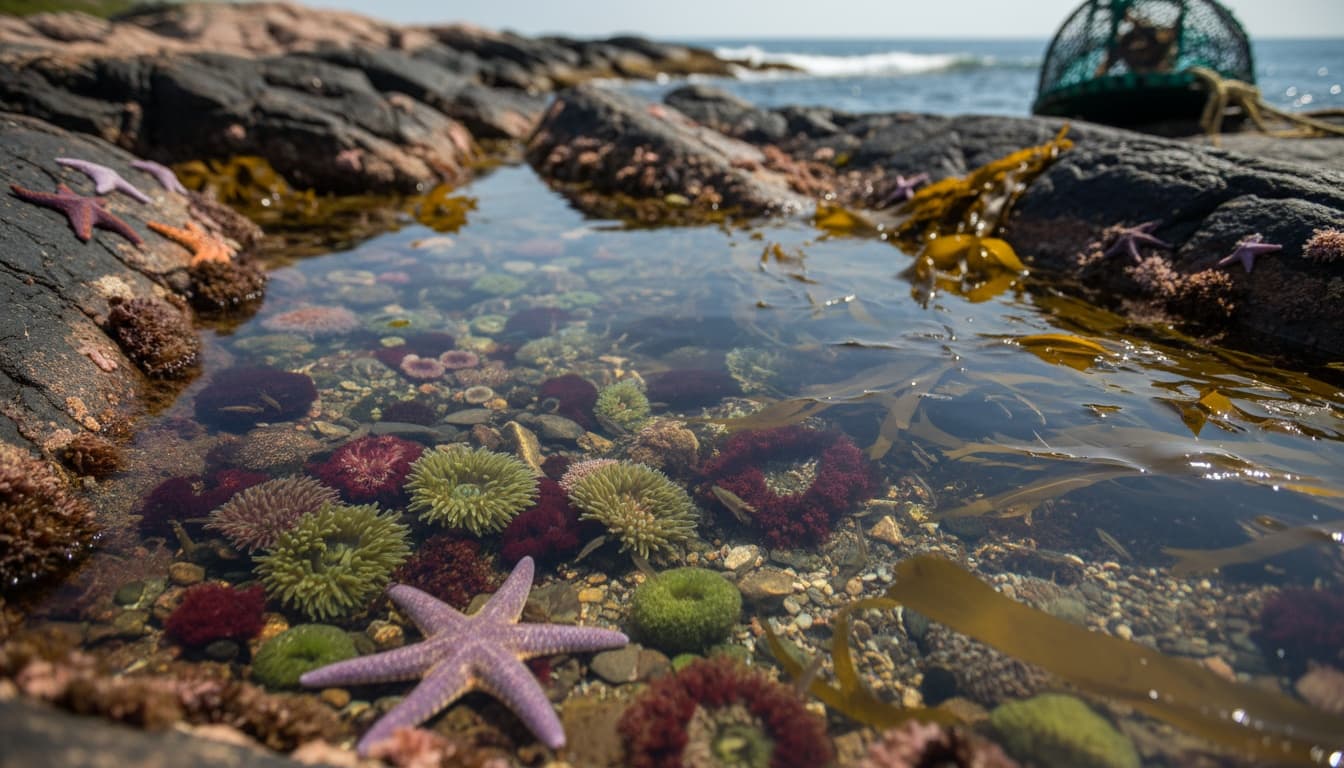
Acadia's tide pools host mussels, sea urchins, sea cucumbers, sea stars, periwinkles, and hermit crabs. Each species occupies distinct zones based on exposure levels: periwinkles in high zones, mussels in mid zones, and sea urchins in deep pools.
Common Species Quick-ID Guide: • Periwinkles — small spiral shells, various colors, high zones • Mussels — dark blue-black shells, form dense clusters • Sea stars — five arms, orange or purple, move slowly • Sea urchins — spiny green balls, deeper pools only • Hermit crabs — borrowed shells, quick movements • Anemones — tentacled when submerged, blob-like when exposed
Each zone supports distinct communities adapted to varying exposure levels.
High Tide Zone Species
Common periwinkles dominate the splash zone, clustering in cracks and crevices. The first time I noticed their incredible color variation — from dark brown to bright orange — I was amazed. I spent an hour photographing different shells.
Mid Tide Zone Diversity
Moving deeper into the intertidal zone, you'll find blue mussels forming dense beds that provide habitat for dozens of other species. Look for small crabs, marine worms, and juvenile fish hiding among the shells. These filter feeders create the foundation for entire tide pool communities.
Beyond the mussel beds, you'll encounter the northern sea star moving slowly through these zones, hunting for prey. Unlike their Pacific coast cousins, these stars rarely cluster in large groups.
Learning to identify them quickly in the field makes the experience far richer. CatchRules' offline species identification helps you name what you're seeing in real-time, even without cell service.
Low Tide Zone Treasures
In the deepest pools, green sea urchins prefer areas with good water circulation. I've watched their populations recover significantly over my years of coastal exploration — they now appear regularly at Schoodic and Bar Island.
Northern red anemones attach to vertical rock faces in the lowest zones. The first time I found one, I thought it was just a red blob stuck to the rock. Then the tide came in, and suddenly this gorgeous flower-like creature emerged with dozens of waving tentacles.
6. What Gear Do I Need for Tide Pool Exploration?
Essential items include non-slip shoes, waterproof phone case, small bucket, magnifying glass, offline field guide, and first aid supplies. Proper footwear is critical—wet rocks covered in algae create treacherous conditions.
Before you head out, consider proper footwear makes the difference between safe exploration and dangerous slipping. Never wear flip-flops.
Essential Gear Checklist:
- Non-slip shoes with good grip
- Waterproof phone case
- Small bucket for temporary observation
- Magnifying glass for detail work
- Field guide (download offline versions) — A mobile field guide like CatchRules works better than paper guides for tide pooling — it's waterproof, searchable, and works without signal
- First aid supplies
- Extra layers for Maine's changeable weather
Photography Tips for Tide Pool Wildlife:
- Camera Settings: Use macro mode or close-focus setting
- Lighting: Early morning provides clearest water and best natural light
- Composition: Get low to water level for dramatic angles
- Patience: Wait for animals to emerge from hiding
- Polarizing Filter: Reduces glare and improves underwater visibility
The Five Core Tide Pool Rules:
- Never lift creatures off rocks — many can't survive air exposure
- Replace any rocks you turn over — preserve shelter for hidden animals
- Watch your footing — slick algae causes most tide pool injuries
- Don't bring pets — dogs stress wildlife and trample delicate areas
- Confirm collection laws — Maine prohibits removing most intertidal species
Photography works best with natural light and patience. Marine animals often hide when shadows fall across pools. I've learned that moving slowly and waiting quietly reveals far more wildlife than rushing between pools.
7. How Do Seasonal Changes Affect Tide Pool Wildlife in Acadia?
Summer brings peak diversity and feeding activity. Winter tide pooling can be spectacular with hardy species like blue mussels remaining active and fewer crowds disturbing ecosystems.
Acadia's intertidal zones face increasing pressure from climate change and visitor impact. Warmer water temperatures are shifting species distributions northward — some southern species now appear regularly in Maine tides.
The park's tide pool ecosystems support diverse marine communities across multiple tidal zones. This diversity depends on maintaining water quality and minimizing human disturbance during wildlife observation.
Seasonal Wildlife Activity:
- Spring: Spawning activity increases, new juveniles appear
- Summer: Peak diversity, most active feeding and growth
- Fall: Preparation for winter, some species migrate to deeper water
- Winter: Reduced activity, hardy species dominate
Contrary to popular belief, winter tide pooling can be spectacular. Hardy species like blue mussels remain active, and the lack of crowds means undisturbed wildlife observation. Just dress appropriately for Maine's coastal winter conditions.
8. How Should I Plan My Acadia Tide Pool Visit?
Start with tide tables and moon phases. Visit during spring tides (new/full moons) for extreme low tides. Match your location to skill level: beginners at Seawall, advanced explorers at Schoodic.
Research shows the most productive visits happen during spring tides (new and full moons) when water retreats furthest.
Location Selection Strategy:
- First visit: Seawall Picnic Area for orientation
- Family groups: Wonderland Trail for easy access
- Serious exploration: Schoodic Peninsula for diversity
- Photography focus: Great Head Trail for dramatic settings
Families with children should start at Seawall or Wonderland Trail. The protected waters and easier access allow parents to focus on teaching rather than worrying about safety. Advanced photographers will prefer Schoodic's dramatic settings and diverse wildlife.
Always verify with Maine Department of Marine Resources before keeping or releasing any marine life. Most visitors stick to observation and photography — the memories last longer than any collected specimen.
Join 500,000+ outdoor enthusiasts using CatchRules to identify the marine life you'll encounter in Acadia's tide pools. The app works offline — essential when cell towers can't reach remote coastlines. Its identification features help distinguish between similar-looking species in Maine's rocky intertidal zones.
9. Frequently Asked Questions
When is the best time of day for tide pooling in Acadia? Visit 2-3 hours before or after low tide for optimal exploration. Morning low tides typically offer calmer conditions and clearer water before afternoon winds pick up.
Do I need special permits for tide pooling in Acadia? No permits are required for observation and photography. However, collecting any marine life requires Maine Department of Marine Resources licenses. Most visitors stick to looking and learning.
Which location is best for families with young children? Seawall Picnic Area offers the safest introduction with restrooms, parking, and protected waters. The rocky ledges provide excellent tide pools without dangerous surf exposure.
What should I do if I get caught by rising tide? Stay calm and move to higher ground immediately. Never turn your back on the ocean — waves can surge unexpectedly. At Bar Island, wait for the next low tide rather than attempting a dangerous crossing.
Can I visit Acadia tide pools year-round? Yes, though winter requires proper cold-weather gear and extra caution on icy rocks. Some of the best tide pooling happens during winter storms when extreme low tides expose rarely seen areas.
How do I avoid damaging tide pool ecosystems? Follow the "look but don't touch" principle. Step carefully on bare rock rather than in pools or on marine life. Replace any rocks you move and never collect living creatures.