
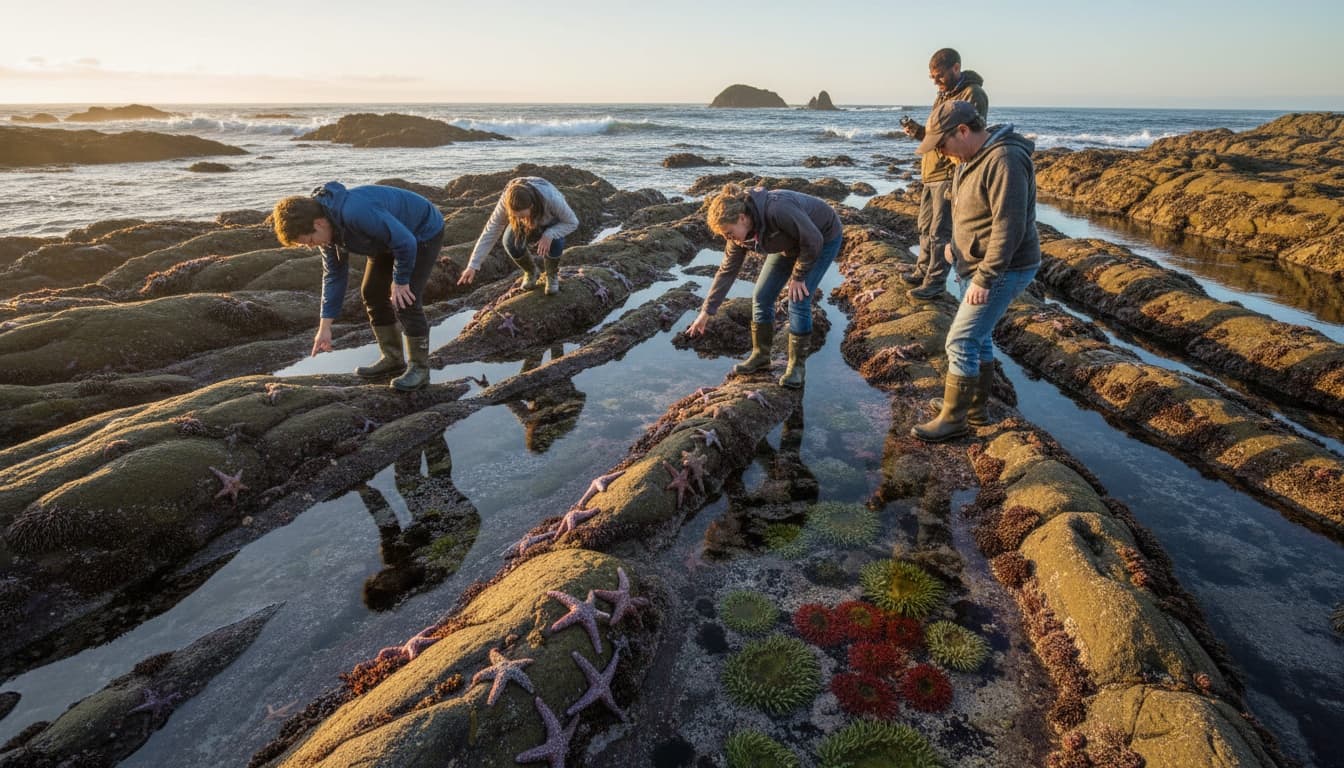
1. How to Stay Safe While Tide Pooling
Tide pooling success depends on timing, safety awareness, and respectful observation practices. Oregon's dynamic wave action creates both incredible biodiversity and serious hazards.
Understanding Tidal Cycles
Negative numbers on tide charts represent your best opportunities. For example, a -1.0 foot tide exposes tide pools that remain submerged during typical low tides. We aim to reach locations 1-2 hours before the predicted low for maximum exploration time.
Safety First: Ocean Awareness
Never turn your back on the ocean. To protect yourself, Oregon's waves are unpredictable, and sneaker waves can appear without warning even on calm days.
Position yourself where you can quickly retreat to higher ground. Wet basalt becomes glass-slick — we've seen experienced tide poolers take serious falls on seemingly stable surfaces.
We once watched a photographer in hiking boots slide 10 feet down wet basalt at Devil's Punchbowl. He wasn't seriously hurt, but it could've been much worse.
Wear shoes with aggressive tread patterns. Vibram soles work well, but avoid smooth hiking boots. Neoprene booties provide excellent grip and warmth during extended exploration.
Check weather conditions before heading out. Storm swells can persist 2-3 days after offshore weather events, creating dangerous wave conditions even under clear skies.
2. **Essential Tide Pool Safety Protocol:**
- Wave Watch Rule: Designate one person to monitor waves continuously
- Escape Route Check: Identify your path to safety before entering any pool area
- Grip Test: Test footing on wet rocks before committing your full weight
- Time Awareness: Set phone alarms for tide turn — rising water happens fast
- Weather Verification: Check marine forecasts, not just local weather
Basic Tide Pool Etiquette
Look, don't touch. Here's why: Most Oregon tide pool creatures are more fragile than they appear. The oils on human skin can damage their protective coatings.
Replace any rocks you lift immediately and in the same orientation. Creatures underneath rely on specific moisture and light conditions for survival.
Step only on bare rock or sand. Avoid walking on algae-covered surfaces — they're both slippery and home to microscopic life.
Don't bring pets into tide pool areas. Dogs disturb wildlife and can damage fragile organisms with their claws and enthusiasm.
Oregon state parks and many protected areas prohibit removing any marine life. Always verify current regulations with Oregon Parks and Recreation Department before keeping or releasing.
3. Best Oregon Coast Tide Pool Locations with Maps
We've ranked these 12 locations based on creature diversity, accessibility, and safety considerations. Each offers unique species assemblages shaped by local wave exposure and substrate types.
Northern Coast Highlights
Cannon Beach - Haystack Rock Located at Cannon Beach's main beach area
Haystack Rock stands 235 feet tall and hosts Oregon's most famous tide pools.
Parking fills early during summer weekends. Arrive before 8 AM or after 4 PM for better availability. Parking fees vary by location and season — check current rates with the city of Cannon Beach.
The south side offers calmer conditions and easier access for families. Look for giant green anemones in the deeper pools and purple sea urchins clustered in rocky crevices. Tufted puffins nest on Haystack Rock from late spring through early summer.
Hug Point State Recreation Site Check current access status before visiting due to ongoing beach erosion issues
When accessible, Hug Point features tide pools around the historic roadway carved into the headland in the early 1900s. The old road allowed carriages and early automobiles to pass around the point at low tide.
During extreme low tides, you can walk from Hug Point to Arcadia Beach on the remnants of this old coastal highway. The journey reveals aggregating anemones and extensive mussel beds.
Ecola State Park Located north of Cannon Beach
The 1.25-mile hike from Ecola Point to Crescent Beach rewards visitors with some of Oregon's most pristine tide pools. Oregon State Park day passes are required — check current rates with Oregon Parks and Recreation Department.
Crescent Beach's protected position creates gentler wave action. We consistently find leather stars and six-rayed stars here that are rare at more exposed locations.
The trail involves steep sections and can be muddy. Allow 45 minutes each direction and wear appropriate hiking footwear.
Central Coast Gems
Yaquina Head Outstanding Natural Area Located north of Newport
Managed by the Bureau of Land Management, Yaquina Head provides excellent tide pooling opportunities. The fee includes access to the lighthouse, interpretive center, and tide pool areas.
Paved paths lead to viewing areas, and interpretive signs help identify common species. The environment supports different species assemblages than rocky platforms.
Look for hermit crabs and various chiton species among the rounded stones.
Devil's Punchbowl State Natural Area Located near Otter Rock
Best accessed from the north side during low tide. Rocky benches extend seaward, creating multiple pool zones.
The outer areas require careful navigation but host larger ochre sea stars and more diverse invertebrate communities. Free parking, but spaces are limited.
The area gets extremely crowded during summer weekends.
Cape Kiwanda State Natural Area Located near Pacific City
Cape Kiwanda's sandstone formations create unique tide pool environments. Day-use fees are required — check current rates at the self-service station.
The tide pools here differ from typical basalt environments. Sandstone erosion creates smoother surfaces and different microhabitats.
Strong currents and large waves make this location suitable for experienced tide poolers only. The dory boat launches create additional hazards during busy periods.
Southern Coast Treasures
Shore Acres State Park Located near Coos Bay
Shore Acres combines spectacular wave watching with excellent tide pooling. The botanical garden and visitor center provide context for the marine ecosystems below.
Protected coves on the south side offer calmer conditions. The park's elevated viewing areas let you scout conditions before descending to pool level.
Winter storm watching draws crowds, but tide pooling remains excellent during calmer periods.
Gold Beach Area Tide Pools Located along Gold Beach's coastline
Multiple access points along Gold Beach provide tide pooling opportunities. The Rogue River mouth creates unique conditions that can influence nearby pools.
Park at the Myers Creek Wayside and walk north along the beach to reach the best pools. Less crowded than northern locations, Gold Beach provides excellent opportunities for photography and extended observation periods.
Brookings Area - Harris Beach State Park Located near Brookings
Multiple access points accommodate different skill levels. The main beach area works well for families, while more adventurous explorers can reach isolated pools via scrambling routes.
Camping available on-site makes this an excellent base for multi-day tide pooling expeditions in Brookings.
⚠️ Conditions change seasonally. Always verify current status with Oregon Parks and Recreation Department before your visit.
4. Marine Life You'll Find in Tide Pools
We've photographed and catalogued the most commonly encountered organisms across three major habitat zones. Each tidal zone supports different species adapted to varying exposure levels. Identify species instantly with CatchRules — mobile apps can help with species identification and often work offline.
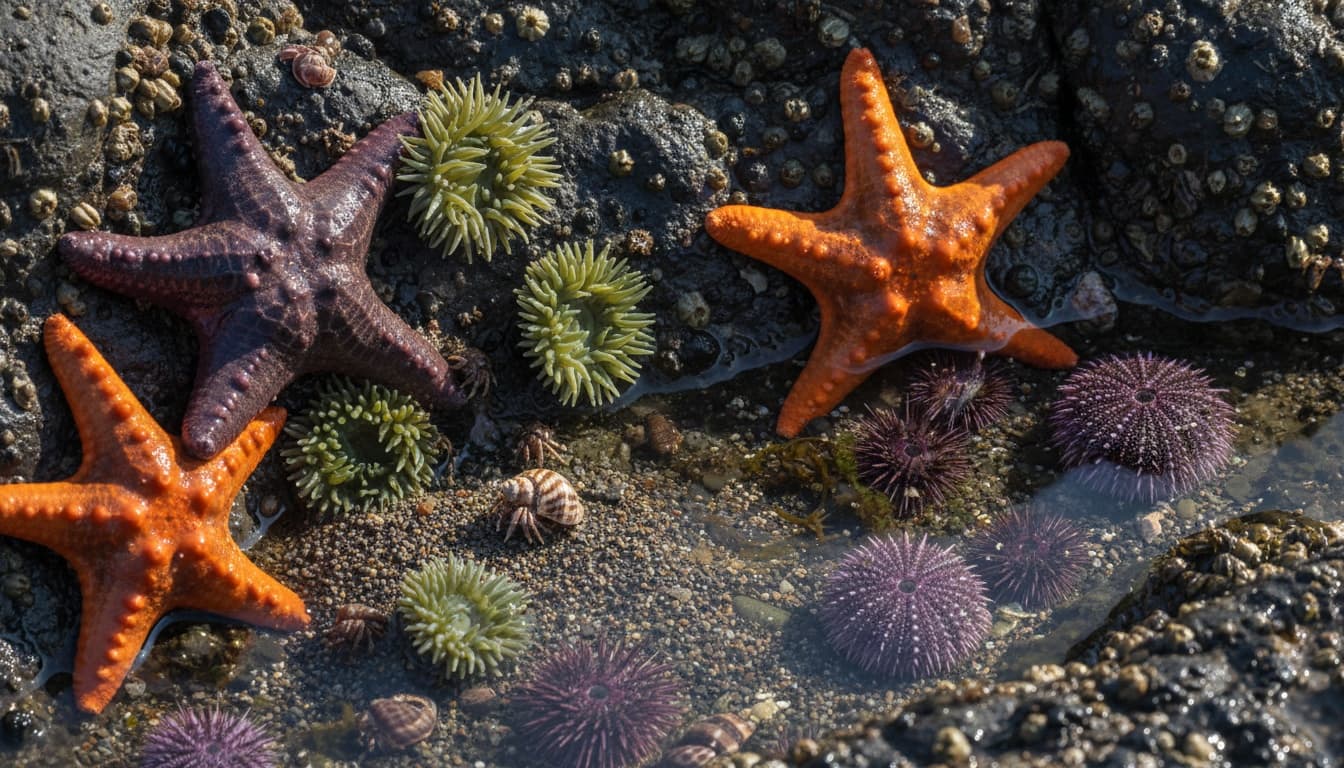
Sea Stars and Urchins (Starfish)
Ochre Sea Stars (Pisaster ochraceus) Oregon's signature tide pool species comes in purple, orange, and brown color variations. These keystone predators control mussel populations and shape entire intertidal ecosystems.
Sea star wasting syndrome has historically affected Oregon populations, with recovery patterns varying by location and year.
Purple Sea Urchins These spiny echinoderms cluster in rock crevices and pools. Their purple spines provide both protection and camouflage among coralline algae.
Purple sea urchins (trust me, those spines hurt) graze constantly on algae and small organisms. Handle with extreme care if necessary. Their spines break off easily and can cause painful wounds that are slow to heal.
Leather Stars and Six-Rayed Stars Less common than ochre stars but equally fascinating. We typically find—well, when conditions are right—leather stars in the deeper pools during extreme low tides.
Both species prefer deeper water environments. Finding either represents a successful tide pooling expedition.
Anemones and Soft-Bodied Creatures
Giant Green Anemones These spectacular cnidarians can live singly in a tidepool or with many others. When the tide recedes, they retract into compact, jelly-like masses that resist desiccation.
We've honestly been surprised by how well they tolerate handling during research. Still, their stinging cells can cause mild irritation to human skin.
Aggregating Anemones Smaller than giant greens but more numerous, aggregating anemones almost always appear in groups in protected areas. These colonies caught us off guard during our first surveys — they're much more organized than we expected.
Individual polyps cluster together for protection and feeding efficiency.
Crustaceans and Mollusks
Hermit Crabs Oregon's tide pools host several hermit crab species. These active scavengers occupy empty snail shells for protection.
Watch for shell-swapping behavior during low tide. Their movements help identify them from a distance — unlike true crabs, hermit crabs drag their shell homes behind them in characteristic jerky motions.
Gooseneck Barnacles These unusual creatures attach to rocks via flexible stalks and filter-feed with feathery appendages. Their distinctive appearance has captured naturalists' attention for centuries.
Gooseneck barnacles cluster on wave-exposed rocks where constant water motion brings them food particles and oxygen. Collection regulations vary, so always verify with Oregon Parks and Recreation Department before keeping or releasing.
California Mussels Among the larger mussels found in Oregon tidepools, California mussels attach to wave-exposed rocks with strong byssal threads. These filter-feeders play crucial roles in intertidal ecosystems.
Small crabs, worms, and juvenile fish shelter among the shells.
Chitons and Limpets These often-overlooked mollusks demonstrate remarkable adaptations to intertidal life. Mossy chitons have a distinctive girdle around their oval shells.
Limpets use their muscular foot to create watertight seals against rocks. Both groups graze on algae using specialized feeding structures.
5. Seasonal Timing and Monthly Planning Guide
Oregon's tide pooling conditions vary dramatically throughout the year. Weather patterns, creature activity cycles, and tourist seasons all influence optimal timing.
Spring Tide Pooling (March-May)
Starting in March, spring brings Oregon's most productive tide pooling conditions. Storm systems have cleaned debris from pools. Marine life activity increases with warming water temperatures.
March often offers excellent negative tides with fewer crowds than summer months. Weather remains unpredictable — pack layers and waterproof gear.
We've experienced everything from snow to 70-degree sunshine during March tide pooling trips.
April and May provide the year's best combination of low tides and stable weather. Breeding activity peaks for many species, increasing both visibility and interesting behaviors.
Summer Peak Season (June-August)
Summer brings Oregon's most reliable weather but also peak tourist crowds. Popular locations like Cannon Beach can become uncomfortably crowded during weekend low tides.
June offers the best balance of weather and manageable crowds. Morning low tides occur before most tourists arrive, providing peaceful exploration opportunities.
July and August feature the warmest water temperatures and highest creature activity levels. However, parking becomes challenging at popular locations.
Consider less-visited locations during peak summer months. Gold Beach and Brookings offer excellent tide pooling with significantly fewer visitors.
Fall Exploration (September-November)
Fall provides Oregon's hidden tide pooling season. Tourist crowds diminish dramatically after Labor Day. Conditions remain excellent through October.
September often offers favorable weather with fewer crowds than summer months. Many experienced tide poolers prefer this time of year for exploration.
October brings the first significant storms, which can create dangerous wave conditions but also expose new areas. November weather becomes increasingly unpredictable.
Winter Considerations (December-February)
Winter tide pooling requires careful planning and weather monitoring. Storm systems create dangerous conditions. Calm periods between storms can offer spectacular experiences.
December and January feature some of the year's lowest tides. Accessing them safely requires excellent weather timing.
February begins the transition toward spring conditions. Late February often provides the first consistently safe tide pooling opportunities after winter storm season.
Coordinate trips with extreme tide series — periods when multiple consecutive days feature very low tides. Check real-time NOAA tide predictions to plan your expedition.
6. What to Pack and How to Prepare
Successful tide pooling requires more preparation than casual beach visits. Oregon's dynamic conditions demand specific gear and careful logistical planning.
Essential Gear Checklist
Footwear: Non-slip soles essential. Specialized water shoes work best. Avoid smooth hiking boots or athletic shoes.
Clothing: Layers required. Ocean temperatures remain cool year-round. Wind conditions change rapidly. Quick-dry fabrics work better than cotton.
Safety Items: Headlamp for early trips, first aid supplies, emergency whistle. Cell phone service is spotty at many locations.
Documentation Tools: Waterproof camera case, field guides, observation notebook. Mobile apps can provide offline species identification and local tide data.
Comfort Items: Folding chair for extended viewing, snacks, plenty of water. Tide pooling can be physically demanding.
Visitor Information by Location
Parking Costs and Availability (as of 2026) • Cannon Beach: Varies by location and season • Cape Kiwanda: Day-use fee required • Ecola State Park: Oregon State Park pass required
Most locations offer vault toilets but limited amenities. Bring supplies from nearby towns rather than relying on on-site facilities.
Accessibility Features Some locations provide paved paths to viewing areas. Cannon Beach offers relatively easy beach access but requires walking on sand and uneven surfaces.
Most other locations involve hiking on uneven trails and scrambling over rocks. Mobility-impaired visitors should contact individual parks for specific accessibility information.
Interactive Tide Pool Maps and Navigation
Modern tide pool exploration benefits from digital tools. GPS coordinates help locate specific formations during varying tide conditions.
Smartphone apps can overlay tidal zone information onto satellite imagery. This helps identify the best exploration routes before descending to beach level.
Download offline maps before your trip. Cell service remains unreliable at many coastal locations, especially during early morning low tides.
Family-Friendly Tips
Children under 8 need constant supervision near tide pools. The combination of slippery surfaces and unpredictable waves creates serious safety risks.
Start with easier locations like Cannon Beach before attempting more challenging spots. Build experience gradually rather than attempting advanced locations immediately.
Bring entertainment for periods when tides aren't optimal. Beach combing, lighthouse visits, and interpretive center exploration can fill time between tide pool sessions.
7. **Tide Pool Planning Checklist:**
- Tide Verification: Check NOAA tide predictions for negative tides (-1.0 feet or lower)
- Weather Assessment: Confirm marine forecasts show manageable wave heights
- Location Selection: Match site difficulty to group experience level
- Gear Preparation: Pack safety equipment, appropriate footwear, and documentation tools
- Timing Coordination: Arrive 1-2 hours before predicted low tide
- Backup Planning: Identify alternative activities if conditions deteriorate
8. Photographing Tide Pools Responsibly
Tide pool photography presents unique technical challenges while requiring careful attention to conservation ethics. Oregon's marine environments are both photogenic and fragile.
Photography Techniques
Camera Settings: Specifically, use fast shutter speeds (1/250s or faster) to freeze wave action. Higher ISOs (800-1600) often necessary in shaded pool environments.
Polarizing filters reduce glare from wet surfaces and enhance color saturation in shallow water. Circular polarizers work better than linear types with autofocus cameras.
Lighting Strategies: Early morning provides the best natural lighting with fewer harsh shadows. Overcast conditions often work better than bright sunshine for even illumination.
Avoid using flash directly on marine life. The bright light can stress creatures and create unnatural-looking images. Reflectors or diffused natural light produce better results.
Composition Tips: Get low to emphasize the three-dimensional nature of tide pool environments. Include context shots showing the broader intertidal landscape.
Focus stacking techniques help achieve sharp focus throughout complex three-dimensional subjects. Take multiple images at different focus points and blend them in post-processing.
Conservation and Respect
Leave No Trace principles apply especially strongly in tide pool environments. These fragile ecosystems can take years to recover from seemingly minor disturbances.
Never remove creatures from pools for better photography angles. Work with natural compositions rather than arranging subjects artificially.
Limit time spent photographing individual organisms. Extended exposure to air and bright lights can stress marine life significantly.
Share your images responsibly. Avoid posting specific location details that might lead to overcrowding at sensitive sites.
Citizen Science Opportunities
Contributing observations helps improve species identification and distribution mapping. Local marine science centers often support citizen science programs focused on intertidal monitoring.
Check with Oregon Sea Grant for potential volunteer opportunities in research projects.
9. Tide Pool Exploration Beyond the Basics
Advanced tide pooling involves understanding ecological relationships, participating in research activities, and exploring less-visited locations safely.
You spot an unfamiliar sea star. With mobile identification apps, you can often identify it without waiting for cell service to load a web page.
Advanced Techniques and Timing
Experienced tide poolers learn to read subtle environmental cues that indicate optimal conditions. Marine weather forecasts provide more accurate information than general weather reports.
Extreme low tides expose communities rarely seen by casual visitors. These events require careful planning but offer unique exploration opportunities.
Night tide pooling during full moons reveals different creature behaviors. Many marine organisms are more active during darkness. Safety considerations multiply significantly during night exploration.
Naturalist Programs and Educational Opportunities
Oregon State Parks offers interpretive programs at several coastal locations. Local marine science centers host workshops and ecology courses.
Research programs offer volunteer opportunities for dedicated participants. These programs provide different perspectives on intertidal ecology.
Some local Audubon chapters may organize field trips focused on bird-marine ecosystem interactions.
Multi-Day Oregon Coast Tide Pooling Expeditions
Planning extended trips allows exploration of multiple locations and tide cycles. Oregon's diverse coastal geology creates distinct intertidal communities every few miles.
Base camps in Newport, Cannon Beach, or Brookings provide access to multiple tide pooling locations within short driving distances. State park camping offers affordable accommodation options.
Consider seasonal factors when planning extended trips. Spring and fall offer the best combination of favorable weather and extreme tides.
10. Key Takeaways
- Visit during negative tides (-1.0 feet or lower) for optimal creature viewing
- Arrive 1-2 hours before low tide for maximum exploration time
- Prioritize safety with proper footwear and constant wave awareness
- Respect marine life by observing without touching or removing creatures
- Spring and fall provide the best balance of conditions and manageable crowds
- Each location offers unique species assemblages shaped by local wave exposure
- Photography requires specialized techniques but rewards patience with stunning results
Before You Go: Many tide poolers use mobile apps to identify species and check regulations before their trips. These apps can identify marine species (so you know what you're looking at), help measure fish size (so you know if it's legal to keep), and check regulations for various locations (so you never accidentally break the law). Since cell service is limited at coastal locations, download identification apps before your trip — many work completely offline.
11. Frequently Asked Questions
What's the best time of year for Oregon Coast tide pooling? Spring (March-May) and fall (September-November) offer optimal conditions with extreme low tides, manageable weather, and fewer crowds. Summer provides the most reliable weather but significantly more visitors at popular locations.
Do I need special permits for tide pooling in Oregon? No permits are required for observation and photography. However, removing any marine life requires fishing licenses and adherence to specific regulations. Most Oregon beaches prohibit collecting any intertidal organisms.
How dangerous are Oregon Coast tide pools? Tide pooling involves real risks from unpredictable waves, slippery surfaces, and rapidly changing conditions. Always maintain wave awareness, wear appropriate footwear, and never explore alone. Sneaker waves can appear without warning even during calm conditions.
What should I do if I accidentally step on marine life? Most tide pool creatures are more resilient than they appear. Gently move the organism to an appropriate nearby location if it's been displaced, then avoid handling it further.
Can I bring my dog tide pooling? Most Oregon beaches allow leashed dogs, but tide pool areas are inappropriate for pets. Dogs can damage fragile organisms, disturb wildlife, and create safety hazards on slippery surfaces. Leave pets at home or in the car during tide pool exploration.
What's the difference between spring tides and neap tides? Spring tides occur during new and full moons, producing the most extreme high and low water levels. Neap tides happen during quarter moons and feature less dramatic tidal ranges. Spring tides provide the best tide pooling opportunities regardless of the season.