
Species profile
Blue Mussel
Mytilus edulis
Identify Blue Mussel (Mytilus edulis) from a photo: try it free in your browser, or get unlimited IDs, no sign-up, with the CatchRules app. Plus current fishing rules across 13 jurisdictions.
At a glance
Blue Mussel (Mytilus edulis) is a bivalve mollusk regulated in 19 of 66 jurisdictions tracked by CatchRules across the U.S. and Canada.
The strictest bag limit is 0.5 (New York); the most generous is 300 (Federal Waters (DFO)).
Confirmed by 4,761 research-grade iNaturalist observations, with Massachusetts, Maine, and New Jersey the top jurisdictions by observation count.
Notable details
- Blue Mussels are one of the world's most widely farmed shellfish, grown on suspended ropes.
- They can live up to 18 years and filter roughly one liter of water per hour.
- Blue Mussels tolerate a wide range of salinities, allowing them to thrive in estuaries and bays.
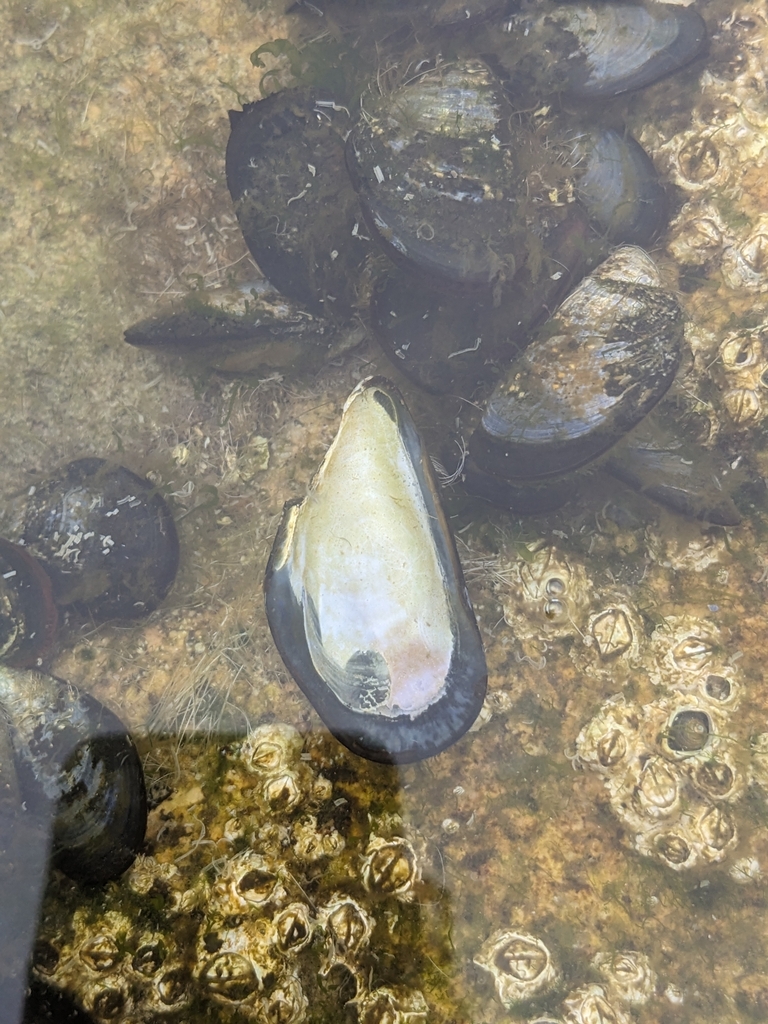
- Their shell exterior ranges from dark blue to purple, with a pearly white interior.
- A single mussel can produce millions of eggs in one spawning event.
Where Blue Mussel are seen
Jurisdictions with rules for Blue Mussel
Background
The blue mussel (Mytilus edulis), also known as the common mussel, is a medium-sized edible marine bivalve mollusc in the family Mytilidae, the mussels. Blue mussels are subject to commercial use and intensive aquaculture. A species with a large range, empty shells are commonly found on beaches around the world.
Background excerpt adapted from Wikipedia's Blue Mussel article (CC BY-SA). Visit Wikipedia for the full entry.
Other clams/oysters/mussels on CatchRules
Frequently asked questions
What is Blue Mussel?
Blue Mussel (Mytilus edulis) is a bivalve mollusk regulated in 19 of 66 jurisdictions tracked by CatchRules across the U.S. and Canada.
What is the scientific name for Blue Mussel?
Blue Mussel is Mytilus edulis.
Is Blue Mussel regulated for fishing?
Yes — Blue Mussel has fishing regulations in 13 U.S. states and/or Canadian provinces tracked by CatchRules. See the "Jurisdictions with rules" section above for the binding-source links.
How can I identify Blue Mussel?
Take a photo with the free CatchRules app for iPhone or Android — on-device identification recognizes Blue Mussel along with ~1,500 other species. No sign-up, unlimited use.
Photo credit: iNaturalist / Wikipedia. Identification reference only — verify regulations with the issuing wildlife agency before retaining a catch.