
1. Quick Visual Identification: 4 Key Physical Differences
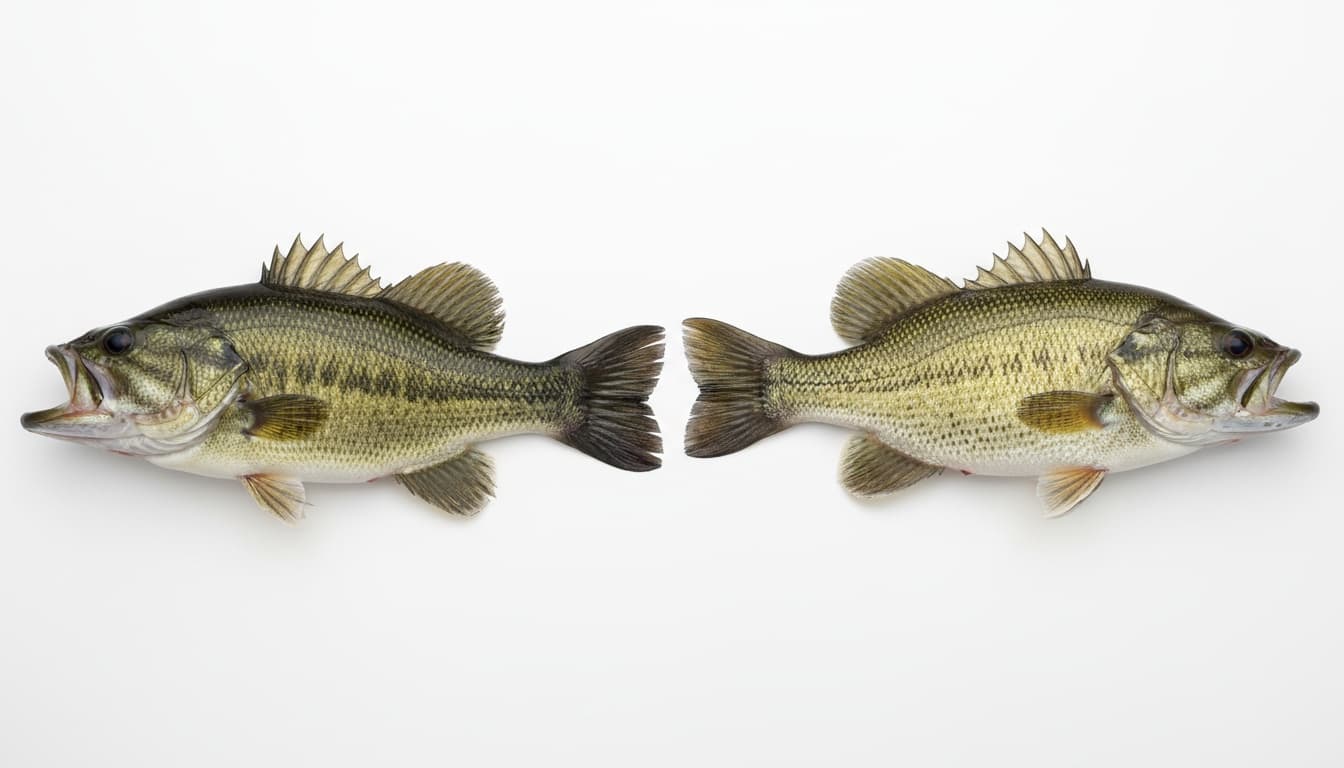
The jaw extension test settles most debates instantly. Hold the bass properly and close its mouth. On a largemouth bass, the rear edge of the upper jaw extends well past the back of the eye. Spotted bass jaws stop at or slightly before the eye line.
These identification methods are standard across state fish and wildlife agencies and recognized by tournament organizations like B.A.S.S. and FLW.
Here's the thing though—that jaw test fails on smaller fish. Young largemouths under 12 inches can have proportionally smaller jaws that don't extend past the eye yet.
Jaw Extension Test
Position the fish horizontally with its mouth closed naturally. Don't force the jaw shut — let it rest in its normal position. Draw an imaginary vertical line from the back edge of the eye downward. On largemouths, the jaw extends past this line by at least a quarter-inch. Spotted bass jaws end at or before the eye line.
In practice, I use my thumbnail as a reference—it's about a quarter-inch wide. This difference becomes more pronounced as fish mature.
Dorsal Fin Connection
Dorsal fin structure provides the most reliable identification marker across all sizes (well, except for really tiny fingerlings, but who's keeping those anyway?). Largemouth bass have two completely separate dorsal fins with a distinct gap between them. You can see clear water between the spiny front section and soft rear section.
By contrast, spotted bass have connected dorsal fins. The spiny and soft sections join together with a shallow notch, but they're never completely separated. Even when the connecting membrane is minimal, some tissue always bridges the gap.
Run your finger along the dorsal fin base. A largemouth feels like two distinct fins. A spotted bass feels like one continuous fin with a dip.
Want to practice these identification skills? Explore CatchRules' side-by-side photo comparisons to see real examples of each feature.
Tongue Tooth Patches
Open the fish's mouth and look at the tongue. Spotted bass have a distinctive rectangular tooth patch on their tongue that's easily visible. The patch has sharp, defined edges and sits prominently in the center.
Meanwhile, largemouth bass have oval or circular tooth patches that are often less pronounced. Sometimes the patch is barely visible or missing entirely on younger fish.
This method works best with fish over 10 inches. Smaller bass may not have fully developed tooth patterns yet.
2. Habitat Preferences: Where to Find Each Species
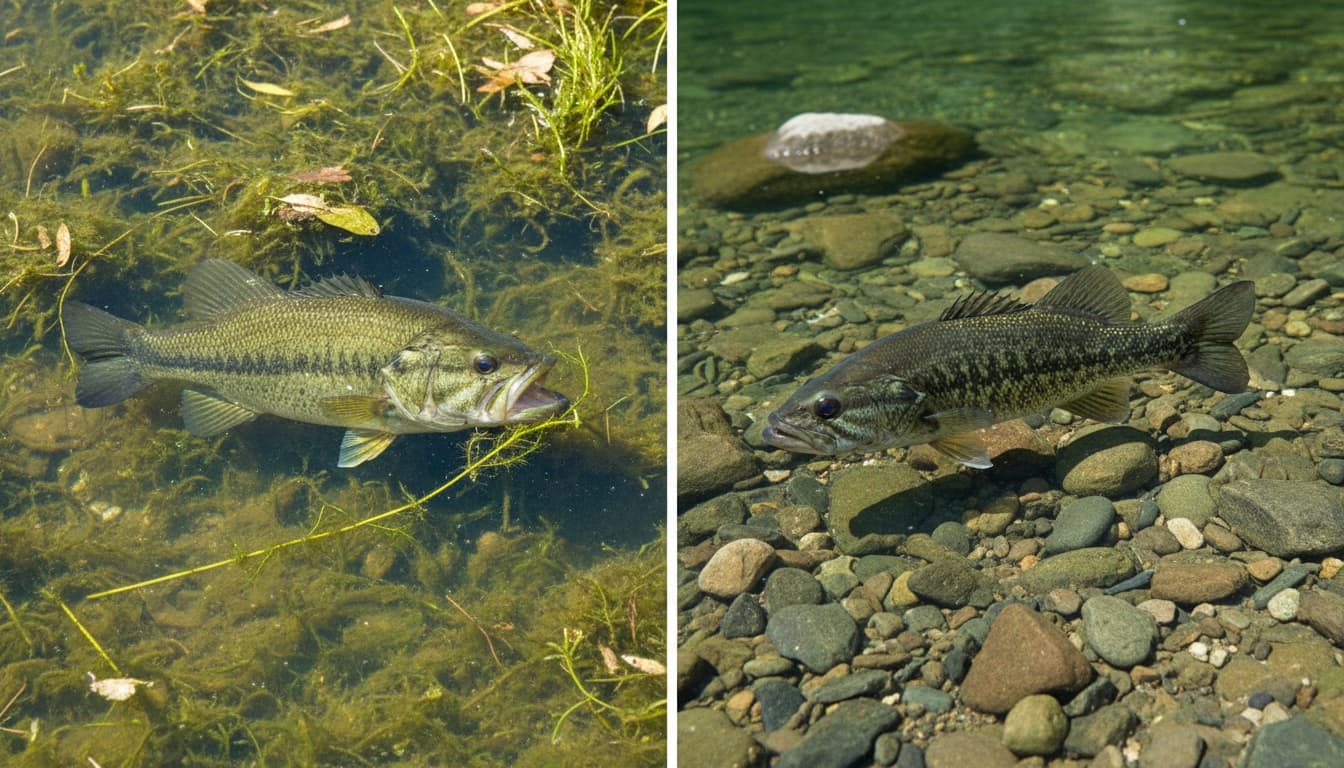
Habitat tells the story before you even see the fish. Largemouth bass gravitate toward weedy water with soft bottoms and minimal current. They love structure like fallen trees, docks, and vegetation beds in quiet coves and backwaters.
Spotted bass prefer the opposite environment entirely. Clear water with rocky bottoms, moderate current, and hard structure attract them. You'll find spots around bluff walls, chunk rock, and creek channels with flowing water.
Water clarity serves as a reliable predictor. Murky, stained water usually holds largemouths. Clear water with visibility beyond six feet typically hosts spotted bass populations.
Regional Distribution Patterns
| Feature | Largemouth Bass | Spotted Bass |
|---|---|---|
| Native Range | Most of North America | Southeast (Texas-Carolinas) |
| Introduced Range | Limited | Western states (CA, NV, AZ) |
| Lake Habitat | Protected coves, backwaters | Main lake, current areas |
| Water Preference | Murky, stained | Clear (6+ ft visibility) |
Spotted bass naturally occur across the southeastern United States, from Texas through the Carolinas. Their native range centers on the Tennessee and Cumberland river systems. Largemouth bass have a much broader natural distribution covering most of North America.
Introduced spotted bass populations now exist in many western states. California, Nevada, and Arizona have established spot populations in clear mountain reservoirs. These introductions often create identification confusion for anglers used to only largemouth bass.
Geographic overlap zones exist throughout the Southeast where both species thrive in the same water bodies. Lake Guntersville in Alabama, Kentucky Lake, and many Ozark Mountain reservoirs hold healthy populations of both species.
Spotted bass stick to the main lake areas with current and structure. Largemouths dominate the protected coves and backwaters of the same lakes.
Seasonal Behavior Differences
| Season | Largemouth Bass | Spotted Bass |
|---|---|---|
| Spring | Shallow bays, soft bottoms, 2 ft depth | Gravel/rock beds, 8-15 ft, current flow |
| Summer | Thickest cover, vegetation | Deep structure, open water |
| Fall | Vegetation edges, cover | Current breaks, structure |
| Winter | Deep cover, minimal movement | Suspended over structure |
Spring spawning patterns reveal species preferences clearly. Largemouths move into shallow, protected bays with soft bottoms and vegetation. They'll spawn in water as shallow as two feet if cover is available.
Spotted bass, however, spawn deeper on hard bottoms. They prefer gravel beds, chunk rock, or clay banks in 8-15 feet of water. Current flow near spawning areas attracts them more than still water.
Summer finds largemouths buried in the thickest cover available. They'll tolerate low oxygen levels to stay in vegetation. Spotted bass suspend over deep structure and follow baitfish movements in open water.
3. Bass Fishing Techniques: How to Target Each Species Effectively
Understanding habitat preferences directly impacts fishing success. I've seen anglers waste entire days fishing spotted bass techniques in largemouth water and vice versa.
Largemouth bass respond to presentations around cover. Flipping jigs into heavy vegetation, working topwater lures over weed beds, and pitching soft plastics to laydowns produce consistently. They ambush prey from concealment rather than chasing it down.
Spotted bass require a completely different approach. They suspend over deep structure and chase bait schools in open water. Vertical presentations like drop shots, spoons, and swimbaits work better than cover-oriented techniques.
Largemouth-Specific Techniques
Target the thickest cover available:
- Heavy jigs and Texas-rigged worms in dense vegetation
- Punch rigs through matted grass and lily pads
- Flipping presentations to fallen trees and docks
Use topwater during low-light periods:
- Buzzbaits over weed beds at dawn and dusk
- Frogs in thick vegetation and slop
- Walking baits around cover edges
Follow seasonal cover patterns:
- Spring: shallow spawning areas with protection
- Summer: thickest vegetation or deepest cover available
Spotted Bass-Specific Approaches
Focus on structure rather than cover:
- Drop shots and shaky heads on rocky bottoms
- Small swimbaits over suspended fish
- Spoons and blade baits in deep water
Use finesse presentations in clear water:
- Light line (6-10 lb test) and natural colors
- Small lures that match local baitfish
- Slow, subtle presentations
Target current areas:
- Creek mouths and dam tailraces
- Wind-blown points with moving water
- Channel edges with flow
4. Size, Taste, and Record Comparisons
Size potential differs dramatically between species. According to the International Game Fish Association (IGFA), the longstanding world record (since 1932) largemouth weighs 22 pounds, 4 ounces, caught in Georgia. Spotted bass top out much smaller — the world record weighs just 11 pounds, 15 ounces from California.
Average sizes reflect this gap. Largemouths commonly reach 5-8 pounds in productive waters. Spotted bass rarely exceed 4 pounds, with 2-3 pounders considered quality fish.
Growth rates favor largemouths in most environments. They reach sexual maturity faster and put on weight more quickly in food-rich waters. Spotted bass grow more slowly but live longer on average.
Record Weights and Trophy Potential
| Metric | Largemouth Bass | Spotted Bass |
|---|---|---|
| World Record | 22 lbs 4 oz (GA, 1932) | 11 lbs 15 oz (CA) |
| Average Trophy | 5-8 lbs | 2-3 lbs |
| Regional Variation | Larger in FL/CA | Larger in CA than SE |
| Maturity Rate | Faster | Slower |
| Lifespan | Shorter | Longer |
Trophy standards vary by region and species. A 5-pound largemouth qualifies as a trophy in most northern waters but barely registers in Florida or California. For spotted bass, anything over 3 pounds deserves recognition.
State records show the size disparity clearly. Alabama's largemouth record weighs 16 pounds, 8 ounces. Their spotted bass record weighs just 8 pounds, 15 ounces — caught from the same lake system.
Regional differences affect trophy potential significantly. California spotted bass grow larger than their southeastern cousins due to longer growing seasons and abundant forage.
Culinary Comparison
Taste differences are subtle but noticeable. Spotted bass have firmer, whiter meat with a cleaner flavor profile. Their clear-water habitat and diet of crayfish and small baitfish creates less muddy taste.
Largemouth bass can taste muddy, especially from weedy, warm waters. Their diet of frogs, worms, and vegetation affects flavor. Fish from clear, cool waters taste better than those from stagnant ponds.
Preparation methods remain similar for both species. Filleting techniques, cooking temperatures, and seasoning work equally well. The size difference means spotted bass yield smaller fillets.
5. Bass Hybrid Identification: Meanmouth Characteristics
Hybrid bass occur naturally when spotted bass and largemouth bass spawn together in overlapping habitat. These crosses combine characteristics from both parent species, creating identification challenges. Hybrid bass comprise 15-25% of populations in overlapping range zones like Kentucky Lake, according to Tennessee Wildlife Resources Agency studies.
Hybrid features typically fall between the parent species. Jaw extension reaches the eye line but doesn't extend far past it. Dorsal fins show partial connection with a deeper notch than pure spotted bass but not complete separation like largemouths.
Geographic areas with both species present show higher hybrid rates. Kentucky Lake, Lake Guntersville, and many Tennessee Valley Authority reservoirs produce noticeable hybrid populations.
Hybrid Identification Tips
Look for intermediate characteristics:
- Spotted bass coloration with largemouth jaw extension
- Largemouth fin structure with spotted bass tooth patches
- Behavioral traits that blend both species
Observe feeding patterns:
- Hybrids may relate to both cover and structure
- Often show increased aggression compared to parent species
- Adaptable to various presentations
Genetic testing provides definitive identification, but field characteristics usually suffice for angling purposes. When in doubt, use the most prominent feature — jaw extension or fin connection — for classification.
Common Misidentification Scenarios
Young largemouths get mistaken for spotted bass frequently:
- Juvenile largemouths haven't developed full jaw extension
- May have more pronounced lateral line markings
- Proportions differ from adult fish
Clear-water largemouths confuse identification:
- Fish from rocky, clear environments develop spotted bass-like coloration
- Retain largemouth physical characteristics despite habitat
- Behavior may shift toward spotted bass patterns
Regional variations add complexity. Northern largemouths often have different proportions than southern fish. Spotted bass from different watersheds show color and size variations.
6. Regional Regulations and Legal Considerations
Bass species regulations vary significantly by state and water body. Understanding these differences helps ensure compliance and conservation.
Tournament Rules
Tournament fishing organizations typically group both species under "black bass" categories. Major circuits like B.A.S.S. and FLW count spotted bass and largemouths equally toward limits and weights.
Some regional tournaments have species-specific divisions. Local clubs may separate categories to reflect population dynamics and angler preferences.
Conservation Status
Conservation status differs between species. Largemouth bass populations remain stable across their range. Some spotted bass subspecies face pressure from habitat loss and hybridization with introduced largemouths.
The Alabama spotted bass and Guadalupe bass (a spotted bass subspecies) have special protection status in certain watersheds. These populations require careful management due to limited range and hybridization threats.
Verification Steps
Always verify with local fish and wildlife agencies before keeping or releasing. Regulations change frequently based on population assessments and management goals.
Current regulations should be confirmed with state agencies, as they can change throughout the year. Some waters have species-specific limits reflecting conservation needs and population dynamics.
The CatchRules Species Comparison Framework:
- Physical ID check: jaw extension, dorsal fin connection, tongue tooth patch
- Habitat confirmation: water clarity, structure type, current presence
- Behavioral observation: feeding patterns, cover vs structure orientation
- Size context: weight ranges and trophy standards for your region
- Regulatory verification: species-specific limits and conservation status
7. Key Takeaways
- Jaw extension past the eye line provides the quickest field identification for adult fish
- Dorsal fin connection offers the most reliable identification across all sizes
- Habitat preferences predict species presence before you start fishing
- Fishing techniques must match habitat — cover for largemouths, structure for spotted bass
- Hybrid bass combine characteristics from both species and occur in overlapping ranges
- Size potential differs dramatically — largemouths grow much larger than spotted bass
After mastering these identification methods, use CatchRules' photo comparisons to verify your catch in the field — works offline when cell service fails. Our species profiles include habitat preferences, fishing techniques, and current regulations for your area.
8. FAQ
Q: Can you tell largemouth from spotted bass by color alone? A: No, color varies significantly within each species based on water conditions and diet. Use physical features like jaw extension and dorsal fin structure for reliable identification.
Q: Do largemouth and spotted bass taste different? A: Yes, spotted bass typically have firmer, cleaner-tasting meat due to their clear-water habitat and diet. Largemouths can taste muddy from weedy environments.
Q: Which species fights harder? A: Spotted bass are generally more aggressive fighters pound-for-pound. They make longer runs and jump more frequently than largemouths of similar size.
Q: Can spotted bass and largemouth bass live in the same lake? A: Yes, they often coexist in the same water body but occupy different habitats. Largemouths prefer weedy coves while spotted bass stay in main lake areas with current and structure.
Q: Are hybrid bass good to eat? A: Yes, hybrid bass combine the best culinary qualities of both parent species. They typically have firm, clean-tasting meat similar to spotted bass.
Q: How big do spotted bass get compared to largemouths? A: Spotted bass rarely exceed 5 pounds while largemouths can reach over 20 pounds. The world record spotted bass weighs 11 pounds, 15 ounces versus 22 pounds, 4 ounces for largemouths.