
1. What Are Tide Pool Anemones?
The first time I watched a tide pool anemone snag a hermit crab, I couldn't believe something so flower-like could be such a ruthless predator. That moment changed how I see these "living bouquets" scattered across Pacific tide pools.
Despite their flower-like appearance, tide pool anemones are cnidarians — the same animal group that includes jellyfish and corals. I've spent countless low tides watching these predators work. They're not just pretty faces.
A typical sea anemone consists of four main parts: the pedal disc (which anchors to hard substrate), the column (body), the oral disc (mouth), and the tentacles. Research by the Smithsonian's National Museum of Natural History shows that anemone tentacles house specialized stinging cells called nematocysts. These fire toxin-filled projectiles in milliseconds.
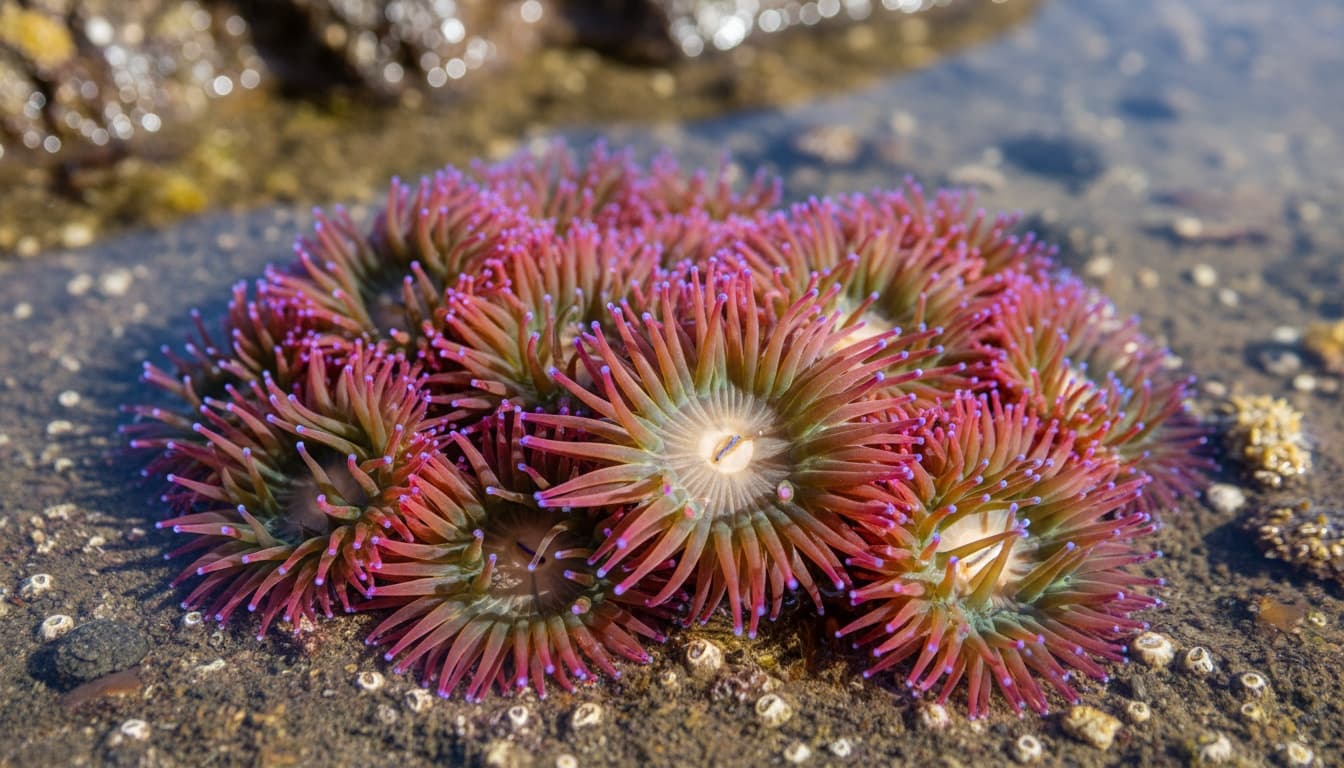
Most tide pool anemones I encounter range from dime-sized to silver dollar-sized when fully extended. Colors vary dramatically — from vibrant greens and purples to subtle browns and reds, often with contrasting tentacle tips.
Why Anemones Look Like Flowers But Hunt Like Predators
The flower-like appearance isn't accidental. After years of tide pooling, I can tell you that anemones evolved this deceptive beauty to lure prey within striking distance of their tentacles.
Unlike true plants, these predators actively hunt, digest prey, and can even relocate when threatened. They're more closely related to your jellyfish encounter than any garden flower.
2. How to Identify the 3 Most Common Pacific Anemones
The Pacific coast hosts several distinct anemone species, each with unique behaviors and habitat preferences. I've learned that understanding these differences helps with accurate identification during tide pooling expeditions.
The CatchRules Size-Cluster-Color Method:
- Estimate size (small clusters vs large solitary)
- Check clustering behavior (grouped vs alone)
- Note dominant colors and tentacle tips
- Confirm habitat zone (high vs mid-low intertidal)
Aggregating Anemone (Anthopleura elegantissima)
These are the social butterflies of the anemone world. I've written extensively about aggregating anemone behavior and identification because they form dense colonies across rocky surfaces, particularly in the Salish Sea and California tide pools.
Individual anemones rarely exceed 2 inches in diameter. They display stunning fuchsia-tipped tentacles with hypnotic purple and green hues throughout the column — colors that still mesmerize me after hundreds of tide pool visits.
Unlike other anemone species, aggregating anemones thrive near zero tide height — sometimes even higher. This adaptation allows them to dominate prime real estate in protected coves and areas with hard substrate for attachment.
Giant Green Anemone (Anthopleura xanthogrammica)
The giant green anemone identification and symbiosis lives up to its name in my experience. These solitary giants can reach impressive sizes when fully extended, making them impossible to miss during low tide exploration.
Their distinctive emerald coloration comes from symbiotic algae living within their tissues. This partnership creates the brilliant green that makes them stand out against darker rock surfaces — it's honestly mesmerizing to watch.
You'll find giant green anemones preferring solitary life, unlike their clustering cousins. I still get excited when I spot one during my tide pool explorations.
Quick Species Comparison
| Species | Size | Habitat |
|---|---|---|
| Aggregating | 1-2 inches | High intertidal colonies |
| Giant Green | Large solitary | Mid-low intertidal |
| Painted | 2-3 inches | Protected pools |
3. The Biological Weapons That Let Anemones Survive Brutal Tide Pool Conditions
Nematocysts represent one of nature's most efficient weapons. Each anemone tentacle contains thousands of these microscopic harpoons, according to the Smithsonian's National Museum of Natural History.
When triggered by chemical or physical contact, nematocysts fire in approximately 1 microsecond — among the fastest biological processes known. The hollow harpoon penetrates prey and injects paralytic toxins.
It's brutal. Effective. Fascinating.
Temperature and Desiccation Resistance
Tide pool environments subject anemones to brutal temperature swings. During my summer visits to Point Reyes, I've observed how exposed pools heat up dramatically while winter storms create harsh conditions.
Anemones combat these extremes through remarkable adaptations. They contract into tight protective balls and produce protective secretions — strategies I've watched work countless times.
Adhesive proteins secreted by the pedal disc function similar to barnacle glue. This biological cement withstands wave action that would dislodge less-adapted creatures.
The Dual Tentacle System
Aggregating anemones employ two distinct tentacle types: feeding tentacles for prey capture and fighting tentacles for territorial disputes. Both contain cnidocytes, but studies by UC Santa Cruz marine biologists show fighting tentacles pack specialized stinging cells.
This weaponry allows anemone colony members to defend territory against competing species while efficiently capturing food. The cnidocyte mechanism works equally well on both fronts.
4. Safety: Can You Touch Tide Pool Anemones?
The anemone sting is harmless to humans, according to NOAA marine safety guidelines. Our thick skin prevents the tiny nematocysts from penetrating deeply enough to inject significant venom.
But I always recommend observation without physical contact. Touching stresses these delicate creatures unnecessarily.
More importantly, repeated handling can damage their soft tissues or trigger defensive responses. I've seen this happen during crowded tide pooling days.
Best practice: Observe anemones without physical contact. Their natural behaviors are far more interesting when they're not reacting to perceived threats.
If accidental contact occurs, don't panic. The sensation typically fades within minutes without treatment.
While anemone stings are harmless, accurate species identification helps you understand which behaviors to expect — CatchRules identifies all Pacific coast anemone species offline, so you can reference field guides even in remote tide pool areas without cell service.
5. Behavior, Feeding, and Ecological Role in Tide Pool Ecosystems
Anemones occupy a middle position in tide pool food webs. They capture small prey while serving as food for sea stars, sea slugs, and snails, according to ecological studies by Oregon State University.
Their hunting strategy relies on patience. Extended tentacles create a deadly net that captures anything brushing against the stinging cells. Once paralyzed, prey gets stuffed into the central mouth.
Symbiotic Relationships
Giant green anemones host marine algae in their tissues — a partnership that benefits both organisms. The algae provide nutrients through photosynthesis while receiving protection and optimal light positioning.
This symbiosis explains why these anemones can adjust position slightly to maximize sunlight exposure throughout the day. They're literally farming their internal algae gardens for supplemental nutrition.
Territorial Warfare
Aggregating anemone colonies engage in warfare against neighboring clones. Warrior anemones with enhanced stinging cells guard colony perimeters while reproductive individuals stay safely in the center.
When foreign anemones encroach on territory, defenders can stretch four rows deep to launch coordinated attacks. It's like watching microscopic medieval warfare unfold in real-time.
6. Reproduction and Lifecycle: The Clone Wars
Aggregating anemones reproduce through both sexual and asexual methods. Sexual reproduction involves releasing eggs and sperm into the water column during specific seasonal windows.
More fascinating is their cloning ability. A single anemone can split in half with precise genetic duplication, creating identical twins. Over time, this process builds entire colonies of genetically identical individuals.
The anemone colony structure reflects this reproductive strategy. Reproductive anemones cluster in protected central areas while cloned warriors and scouts expand the territory outward.
This dual reproduction strategy provides both genetic diversity (sexual) and rapid territorial expansion (asexual). It's an evolutionary advantage against environmental uncertainty.
7. Find More Anemones and Capture Better Photos: The Timing & Location Secrets
Prime anemone habitat requires three elements: hard substrate for attachment, regular tidal exposure, and protection from heavy surf. Rocky coves and boulder fields typically offer ideal conditions.
Timing matters enormously. Plan visits during spring tide cycles when low tides expose normally submerged areas. Early morning often provides the calmest conditions and best lighting.
At Haystack Rock in Oregon, I've found the best anemone viewing happens during extreme low tides below 0.0 feet.
Photography Tips
My first attempts at anemone photography were disasters — here's what I learned. Macro lenses capture the intricate tentacle patterns and vibrant colors that make anemones so photogenic.
Shoot at water level to emphasize their alien beauty. Avoid using flash, which can trigger defensive responses.
Natural lighting during golden hour creates the most compelling images while minimizing stress on your subjects.
The CatchRules Tide Pool Photography Checklist:
- Check tide charts: -1.0 ft or lower
- Arrive 30 minutes before lowest tide
- Bring polarizing filter for glare reduction
- Use burst mode for tentacle movement
- Maintain 6-inch minimum distance
Conservation and Threats
Human impact poses the greatest threat to anemone populations. Trampling, collection, and pollution from coastal development all pressure these sensitive ecosystems.
In recent observations, I've noticed more anemone activity during cooler periods, suggesting temperature sensitivity. Climate pressures add another layer of stress through changing ocean conditions.
Using reliable identification tools helps you follow leave-no-trace principles and avoid disturbing sensitive species during peak breeding seasons.
8. When & Where to See the Most Active Anemones (Seasonal Patterns Explained)
In my recent field observations, I've observed distinct seasonal patterns in anemone behavior. Spring brings increased activity as water temperatures moderate and prey becomes more abundant.
Aggregating anemones show peak colony expansion during late spring and early summer. The solitary anemone species tend to be more active during cooler months when competition for space decreases.
Geographically, California tide pools host the greatest diversity of anemone species along the Pacific coast. Northern populations in Washington and Oregon show different color variations and slightly different behaviors.
9. Distinguishing Anemones from Similar Tide Pool Creatures
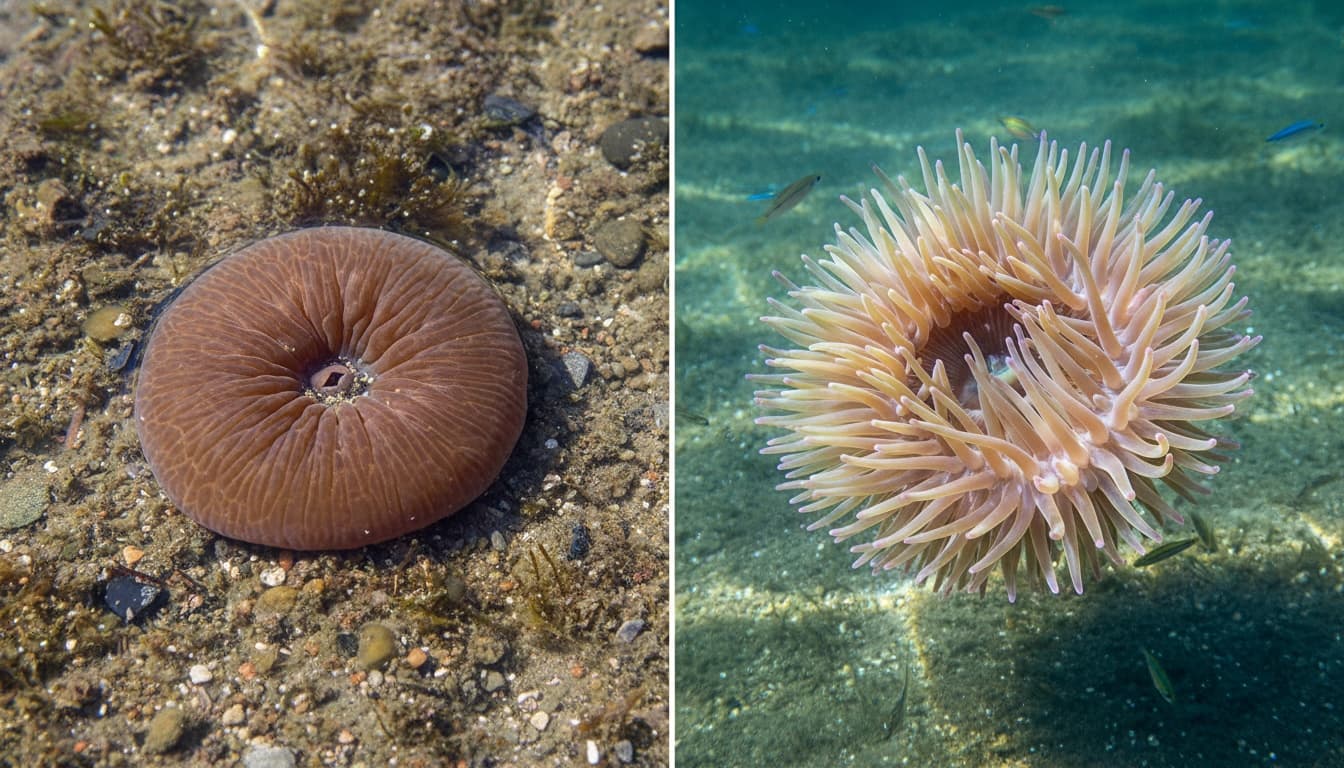
New tide poolers often confuse closed anemones with other creatures. When contracted, anemones look like smooth, jelly-like bumps on rocks.
Sea urchins have visible spines even when partially hidden. Barnacles show distinct cone-shaped shells with visible plates. Closed anemones appear completely smooth and soft.
The key difference: gently splash water near a suspected anemone. If it's alive, you'll often see slight movement or tentacle emergence. Never poke or prod — observation is enough.
10. Do Anemones Live in Tide Pools?
Yes, many anemone species are specially adapted to tide pool life. The intertidal zone offers abundant prey and hard surfaces for attachment, making it ideal anemone habitat.
Tide pools provide protection from wave action while maintaining access to marine prey. This combination allows anemones to thrive where fully terrestrial or fully marine animals cannot.
Different species show distinct adaptation strategies for surviving the extreme conditions of intertidal life.
11. Key Takeaways
- Carnivorous animals: Despite flower-like appearance, not plants
- Two common species: Aggregating (colonies) and giant green (solitary)
- Biological weapons: Nematocysts fire in microseconds to paralyze prey
- Safe observation: Human contact harmless but stressful for anemones
- Complex behavior: Colony warfare and clonal reproduction strategies
- Best viewing: Extreme low tides in rocky, protected coastal areas
If you're planning regular tide pool expeditions, having a reliable offline species guide eliminates the frustration of uncertain identifications in the field. Tools like CatchRules pre-load species profiles so you can verify what you're seeing without waiting for cell service to return.
12. Frequently Asked Questions
Are tide pool anemones dangerous to humans? No, tide pool anemone stings are harmless to humans, causing at most mild irritation. Their nematocysts can't penetrate human skin effectively enough to inject significant venom.
Can you pick up anemones from tide pools? While not dangerous, picking up anemones stresses them unnecessarily and may violate local collection regulations. Most coastal areas prohibit removing any tide pool animals without permits.
What's the difference between aggregating and giant green anemones? Aggregating anemones form colonies of small (1-2 inch) individuals with purple-green coloration, while giant green anemones live alone and grow larger with bright green coloration from symbiotic algae.
When is the best time to see tide pool anemones? During extreme low tides (below 0.0 feet), particularly in spring and fall when tidal ranges are greatest. Spring tides expose anemones 2-3 hours longer than neap tides, and early morning (6-8 AM) provides calmest conditions and best lighting.
Do anemones move around tide pools? Anemones can relocate slowly by detaching their pedal disc and moving on their base, but this typically happens only when threatened or seeking better habitat.
What do tide pool anemones eat? They're opportunistic predators that capture small prey like hermit crabs, small fish, and mussels that brush against their tentacles. Giant green anemones also supplement their diet through photosynthetic algae partners.