
1. King vs Coho Salmon at a Glance
| Feature | King Salmon (Chinook) | Coho Salmon (Silver) |
|---|---|---|
| Scientific name | *Oncorhynchus tshawytscha* | *Oncorhynchus kisutch* |
| Common names | Chinook, king, tyee | Coho, silver salmon |
| Average weight | 20–40 lbs (record: 100+ lbs) | 6–12 lbs (max ~20 lbs) |
| Length | 30–50 inches | 24–30 inches |
| Body coloration | Blue-green back, silvery sides | Bright silver sides, darker back |
| Tail spots | Both lobes, irregular | Upper lobe only, smaller |
| Gum/mouth color | Black gum line ("black mouth") | White/light gum line |
| Flesh color | Deep red-orange to ivory/white | Consistent bright orange-red |
| Omega-3 (per 100g) | ~1,300 mg | ~680 mg |
| Flavor profile | Buttery, rich, full-flavored | Mild, slightly sweet, cleaner |
| Avg. retail price | $30–$50+/lb wild (prices vary) | $15–$25/lb wild (prices vary) |
| Best cooking method | Sashimi, slow roast, poaching | Grilling, pan-sear, smoking |
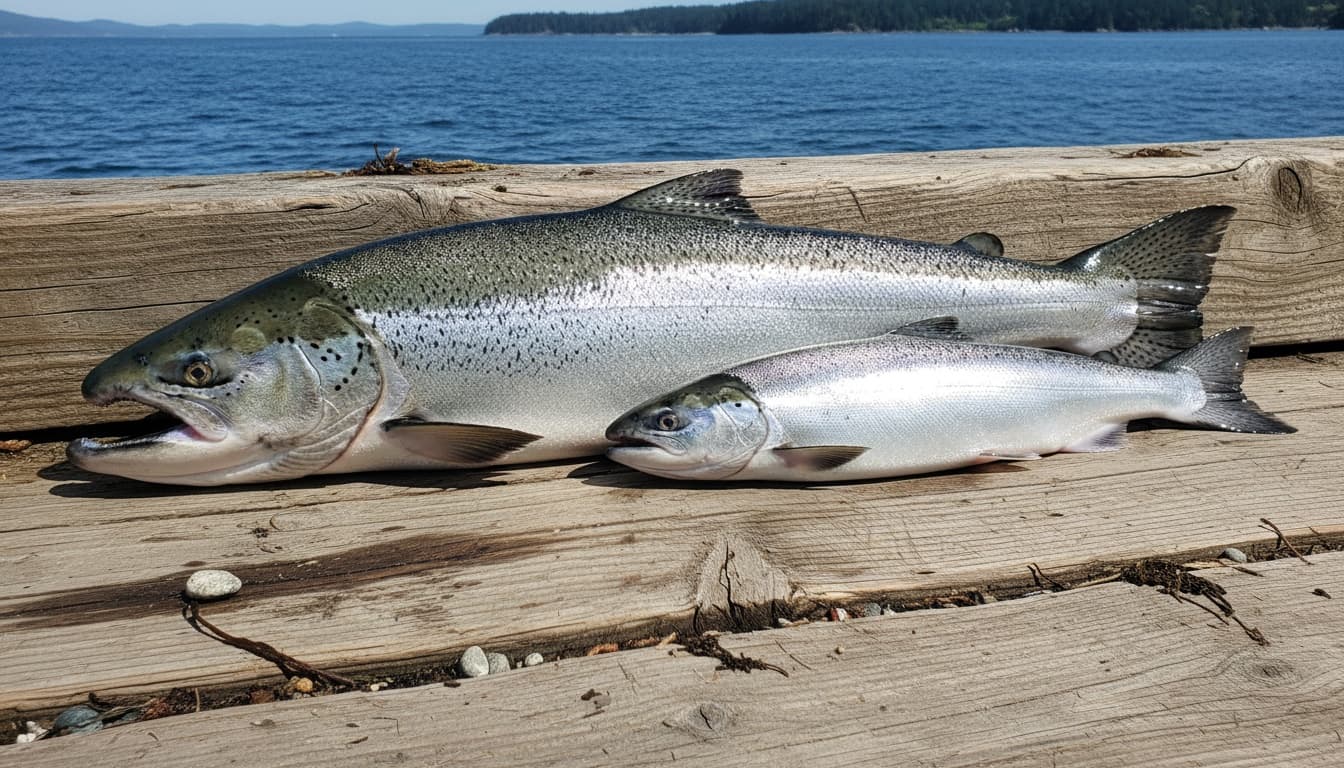
Two types of readers come to this comparison. Anglers need a fast field ID before the fish hits the deck. Buyers and cooks need to know which one earns the premium price. Both answers are below.
---
2. Identify Your Catch in 30 Seconds: King vs Coho Field Markers
Check the gum line first (black = king, white = coho), then confirm with tail spot pattern (spots on both lobes = king, upper lobe only = coho). Size, coloration, and fin differences provide secondary confirmation. Size alone isn't reliable — a large coho and a small king can overlap in weight.
Size and Weight
Kings weigh anywhere from 15 to over 50 lbs in typical catches, and the species can exceed 100 lbs. Coho top out around 12 lbs in most fisheries, with exceptional fish reaching 20 lbs. King salmon length runs 30–50 inches; coho measure 24–30 inches.
Kings are noticeably thicker through the mid-section. Body depth is a useful secondary check once you've confirmed the gum line.
Coloration
Kings have a dark blue-green back with silvery sides that fade to white on the belly. Coho earned the nickname "silver salmon" for a reason — their sides are a brighter, more uniform silver, especially in ocean-fresh fish.
Both species develop red spawning coloration. That makes body color unreliable late in the season, which is exactly why you lead with the gum line.
Fin Differences
King salmon have larger pectoral fins relative to body size. Both species carry an adipose fin (the small, fleshy fin between the dorsal and tail), but it's not a useful separator. Focus on the tail and mouth instead.
Tail and Spot Pattern Quick-ID
This is the rule worth memorizing.
Both species have a forked tail, but the spot distribution across those lobes is what separates them. King salmon have irregular black spots on both lobes of the tail. Coho have smaller spots on the upper lobe only — the lower lobe is typically spot-free or nearly so.
Stand over the fish, look at the tail straight on. Spots on both lobes? King. Spots only on top? Coho.
It sounds too simple to be reliable. It isn't — this pattern holds on spawning fish, on fish that have been in freshwater for weeks, on fish that have lost every other visual cue that made them identifiable. iNaturalist carries tens of thousands of North American observations tagged to Oncorhynchus tshawytscha and Oncorhynchus kisutch — the photographic record confirms this tail pattern holds across the entire range.
Mouth Color: The Fastest Field ID
Forget body color. The mouth doesn't lie.
King salmon have a distinctive black gum line and a dark mouth interior. Anglers call it the "black mouth" — it's the most reliable single-marker ID for chinook in the field. Coho have a white or light-colored gum line, even though the interior of the mouth is dark.
This marker works year-round, including on spawning fish when everything else has turned red and brown and confusing.
One quick check: lift the lip, look at the gum line. Black = king. White = coho. That's it.
Use CatchRules to confirm your ID and check species-specific limits before you commit to a tag.
Teeth: A Secondary Marker Worth Knowing
Teeth aren't a primary ID marker, but kings have noticeably larger, more prominent teeth than coho — useful if you're already looking at the mouth for the gum line check. Once you've confirmed the gum line, the teeth reinforce the ID. On a big fish, the size difference is obvious.
The gum line and tail spot pattern together give you a confident salmon identification in under 30 seconds. That matters when you're standing in a crowded river and the fish are moving fast.
---
3. Which Salmon Should You Cook? Taste, Texture, and the Right Method for Each
Coho is often the better choice for weeknight cooking. King salmon's fat content — which everyone praises — actually makes it unforgiving at high heat. Overcook a king fillet by two minutes on a hot grill and you've wasted $40. That flavor difference extends to texture and fat content.
Flavor Profile
King salmon delivers a buttery, rich, full-flavored experience driven by its high intramuscular fat. Salmon flavor this pronounced needs almost nothing added. Coho's milder, slightly sweet taste is cleaner on the palate — it takes seasoning and smoke better because it doesn't fight back.
Fat Content and Texture
King salmon runs about 12g fat per 3-oz serving. Coho sits at 4g per 3-oz serving. That difference shows up as texture: king flesh melts, coho holds together. For grilling or high-heat pan-searing, coho's firmer flesh is easier to cook.
Flesh Color Variation
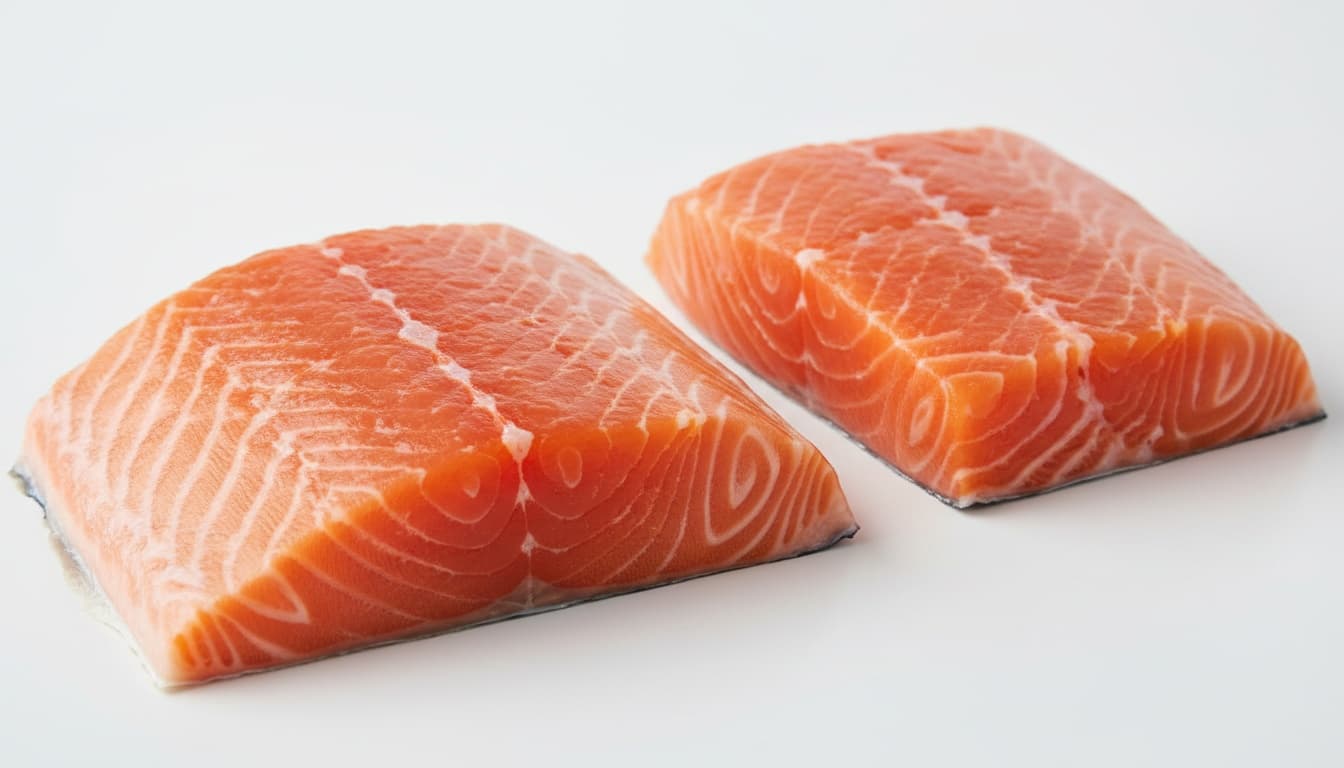
King ranges from deep red-orange to the rare ivory-white "white king" — a genetic variant, not a different species. Chefs actively seek white king for its visual contrast and subtly different texture; it commands a premium even over standard king at specialty fish counters. Coho is consistently bright orange-red.
Cooking Methods by Species
- King salmon: raw preparations (sashimi, crudo, gravlax), cedar plank, poaching, slow roasting at 275°F. The goal is protecting the fat.
- Coho salmon: grilling, pan-searing, broiling, smoking. Firmer flesh handles heat without falling apart.
Quick buyer's decision: choose king for special occasions, raw preparations, or low-heat cooking. Choose coho for grilling, everyday meals, or if you prefer a milder salmon flavor. Those cooking differences reflect a deeper nutritional gap between the two species.
---
4. Nutritional Profile and Health Benefits
The differences come down to fat — and whether that fat serves your goals.
Per 3-oz serving, king salmon delivers 21g protein, 12g fat, and 200 calories. Coho comes in at 19g protein, 4g fat, and 120 calories. The protein gap is small. The fat gap is not.
Omega-3 fatty acids. King salmon contains approximately 1,300 mg omega-3 per 100g serving. Coho delivers around 680 mg per 100g. King salmon ranks among the highest omega-3 fish available — higher than most other salmon species, including Atlantic farmed. King's 12g fat per 3-oz serving delivers nearly 3x the omega-3s of coho, making it the choice for readers optimizing for heart health and anti-inflammatory benefits.
Both species are high in B12, selenium, and vitamin D. King edges ahead on vitamin D because of its fat content (fat-soluble vitamins travel with the fat).
Is Coho Salmon the Healthiest?
Coho is among the healthiest fish you can eat — high protein, moderate fat, strong omega-3 profile, and a low contaminant load compared to farmed alternatives. King salmon delivers more omega-3s per serving, but coho's leaner profile suits calorie-conscious diets without sacrificing much nutritional value. Neither is definitively "healthiest." The better choice depends on what you're optimizing for.
---
5. Fishing Guide: Habitat, Seasons, and Tactics
The CatchRules Species-Swap ID Framework
Here's the five-second check I run every time a fish hits the deck before I even reach for the pliers. Five points, in order of reliability.
The CatchRules Species-Swap ID Framework:
- Gum line — black "black mouth" (king) or white (coho)? This is your first check, every time.
- Tail lobes — spots on both lobes (king) or upper lobe only (coho)? Confirms the gum line read.
- Weight estimate — over 15 lbs strongly suggests king; under 12 lbs is likely coho. Overlap exists; don't rely on weight alone.
- Body color — blue-green back (king) or bright silver sides (coho)? Unreliable at spawn. Use steps 1–2 first.
- Regulations check — confirm species-specific limits for your water before keeping anything. Always verify with your state or provincial fish and wildlife agency.
Now that you can ID your catch, here's where to find each species and when.
Geographic Range and Distribution
King salmon range from California to Alaska along the Pacific Coast, with introduced populations in all five Great Lakes. Coho share that Pacific range and are also well established in the Great Lakes — Michigan's tributaries in particular hold strong coho runs. Both species appear in major river systems from the Sacramento to the Yukon.
Habitat Preferences
Kings favor deep, cold, fast-moving water. They're a main-stem river fish. Coho are more adaptable — you'll find them in shallower coastal waters and smaller tributaries, which is part of why they're accessible to more anglers.
Seasonal Timing
- King salmon: spring chinook run May–July; fall chinook peak August–October; Great Lakes kings peak August–October
- Coho salmon: Pacific Coast runs September–November; Great Lakes coho peak September–October
Fishing Tactics: King Salmon
Troll with large spoons, herring, or plugs at depth. Back-bounce roe in rivers. Drift fishing works well in faster water. Heavier gear is standard — 20–40 lb test is common, and kings will test it. The salmon size and weight alone justify going heavier than you think you need.
Fishing Tactics: Coho Salmon
Coho are more aggressive surface feeders. Spinners, spoons, and flies all produce. Lighter gear is viable (10–20 lb test), and coho are one of the best fly fishing targets in the Pacific salmon family.
On the Kenai in late September, we watched a guy in waders land three coho back-to-back on an 8-weight while the king angler two holes upstream got spooled twice on 30-lb test. Different fish, different game entirely.
Spawning Behavior and Life Cycle
Both species are semelparous — they spawn once and die. Kings use large main-stem rivers; coho favor smaller tributaries and side channels. That difference tells you where to find pre-spawn fish. Kings stack in the main river; coho push into water you might overlook on a map.
King salmon have the longest freshwater migration of any Pacific salmon. Some Yukon River kings travel over 2,000 miles to spawn. Coho spend roughly 1.5 years in freshwater before ocean migration — shorter residency, different juvenile habitat requirements.
Why Did Alaska Ban King Salmon Fishing?
Alaska has implemented emergency closures and strict restrictions on chinook salmon fishing — restrictions that have been in place on several drainages, including portions of the Yukon, through the 2026 season. Critically low returns linked to ocean survival declines, climate-driven prey shifts, and bycatch in commercial trawl fisheries drove those decisions.
Check ADF&G's 2026 season announcements before booking any Alaska chinook trip. Regulations change annually — sometimes in-season. Coho runs have been more stable but are also subject to in-season changes. Always verify with the Alaska Department of Fish & Game before any Alaska salmon trip.
Great Lakes Salmon Fishing
Both species thrive as introduced populations in the Great Lakes — no ocean migration, so behavior differs slightly from Pacific fish. Great Lakes kings don't travel 2,000 miles; they run shorter tributary distances. For king salmon in the Great Lakes specifics, Michigan's Pere Marquette River and the Salmon River in New York are two of the most productive tributaries for both species. Great Lakes coho typically run smaller than their Pacific counterparts. Neither Great Lakes population supports a commercial fishery — recreational fishing only.
---
6. Get More Salmon for Your Budget: Price, Availability, and Sustainability
Fresh wild king salmon typically runs $30–$50+ per lb at retail (prices vary by season and region). Coho lands at $15–$25/lb. Both cost significantly more than farmed Atlantic salmon, which reflects both the fishing effort and the species' commercial value.
Availability differs too. Coho has larger commercial harvest volumes, so it shows up fresh more reliably at fish counters. King salmon is often a premium seasonal item — when it's there, buy it; when it's not, coho is not a consolation prize.
Farmed vs. Wild: What Buyers Should Know
Wild Alaska salmon — both king and coho — carry generally favorable ratings from the Monterey Bay Aquarium Seafood Watch program for sustainable fishing practices. Farmed coho exists (rare, but it does), with variable sustainability ratings depending on the operation. Farmed king salmon is even rarer commercially; when you see it, it's typically from small-scale aquaculture operations in Chile or New Zealand, and sustainability varies widely. If the label doesn't say "wild Alaska," ask.
The conservation picture is uneven. Wild Alaska coho populations are relatively stable. King salmon runs in California's Sacramento River system and parts of Alaska are under serious pressure — declining returns have triggered both commercial and recreational fishing restrictions since 2020. Buying wild Alaska king or coho over farmed alternatives supports better-managed fisheries, but the king salmon situation in some regions warrants attention.
Wild king for special occasions, raw preparations, and when you want the richest salmon experience available. Wild coho as the everyday premium salmon — excellent flavor, easier to cook, better availability, and a lower price point that makes it a realistic regular meal.
---
7. Quick Answers: Your King vs Coho Questions Answered
What is the main difference between king and coho salmon? King salmon average 20–40 lbs with buttery, rich flavor and ~1,300 mg omega-3 per 100g. Coho average 6–12 lbs with milder, slightly sweet flavor and ~680 mg omega-3 per 100g. Fastest field ID: king have a black gum line; coho have a white gum line.
How do you tell king salmon from coho in the field? Check two things first: the gum line (black = king, white = coho) and the tail spot pattern (spots on both tail lobes = king, spots on upper lobe only = coho). Body coloration helps in fresh fish but becomes unreliable during spawning season when both species turn red. The "black mouth" on a king is the single most reliable marker — it doesn't change.
Which salmon has more omega-3 fatty acids, king or coho? King salmon delivers approximately 1,300 mg of omega-3 fatty acids per 100g serving. Coho comes in at around 680 mg per 100g. King salmon ranks among the highest omega-3 fish available — its fat content drives both the richer flavor and the superior omega-3 profile.
Is coho salmon good eating? Yes — and for most home cooks, coho is the better buy. Its milder flavor and firm texture handle grilling, pan-searing, smoking, and broiling better than king salmon does at high heat. King gets the press; coho earns the weeknight meal.
Why is king salmon so much more expensive than coho? King salmon runs aren't nearly as numerous as coho runs, which limits supply. Kings also take longer to reach market size, and the commercial harvest is tightly managed given population pressures in some regions. The high fat content and prestige factor drive premium pricing at retail. The tyee — a king over 30 lbs in British Columbia sport fishing tradition — commands even higher prices when it shows up at specialty counters.
Can you substitute coho for king salmon in recipes? For grilling, smoking, and high-heat methods: yes, and coho is often the better choice. Its firmer flesh handles heat without falling apart. For sashimi, crudo, slow roasting, or any preparation where fat-driven richness is the point, king salmon isn't substitutable — the texture and flavor difference is significant.
---
8. How CatchRules Helps
Before you head to the ramp, pull up the king salmon species guide and coho salmon identification and regulations on CatchRules. The offline regulations lookup and field ID markers are there when you're standing in a drainage with no signal and 30 seconds to make the call — gum line criteria, tail spot patterns, range maps, and species-specific limits all in one place.
---