
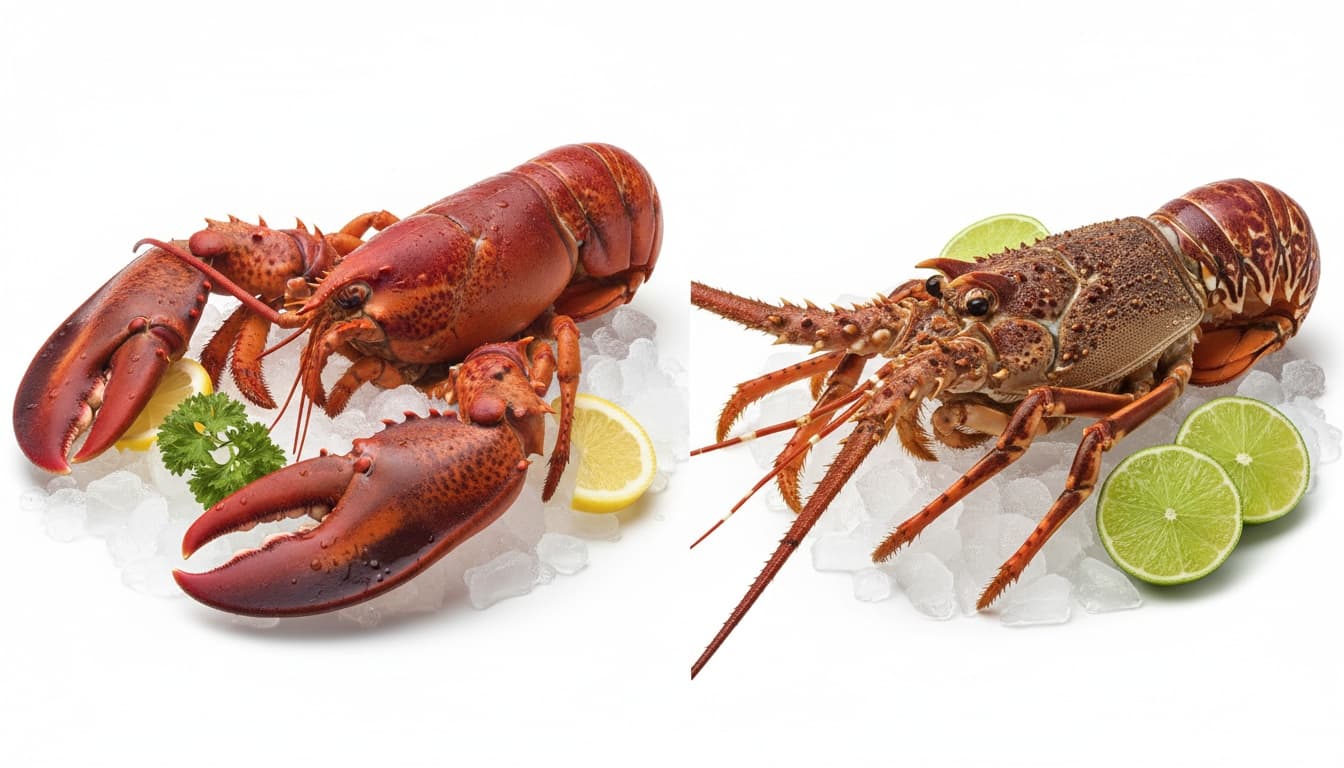
1. Quick Comparison: American vs Spiny Lobster
| Feature | American Lobster (*Homarus americanus*) | Spiny Lobster (*Panulirus* species) |
|---|---|---|
| **Common Names** | Maine lobster, Canadian lobster | Rock lobster, Caribbean lobster, langouste |
| **Claws** | Two large claws (crusher & cutter) | No claws |
| **Primary Meat** | Claws, knuckles, tail | Tail only |
| **Flavor** | Sweet, delicate | Slightly briny, oceanic |
| **Texture** | Tender, flaky | Firm, dense |
| **Price Range** | Varies widely by season and market | Varies widely by season and market |
| **Habitat** | Cold North Atlantic waters | Warm waters worldwide |
If you're buying lobster for the first time, understanding local availability and regulations helps you make the right choice for your budget and recipe.
The price gap isn't just about location. American lobster commands premium pricing for its sweet meat. Rock lobster stays more affordable.
The CatchRules Lobster Value Calculator:
- Calculate meat yield percentage (American: 25-30%, Spiny: 20-25%)
- Identify usable meat portions (American: claws + tail, Spiny: tail only)
- Compare price per pound of actual meat (not whole lobster)
- Account for preparation time and waste
- Match species to intended recipe
We've run this calculation dozens of times for restaurant buyers. The results often surprise people.
2. Physical Differences: What You're Actually Buying
American lobster has two large claws and yields 25-30% meat from claws, knuckles, and tail. Spiny lobster lacks claws but has long antennae, yielding 20-25% meat from tail only. The claw meat in American lobster is sweeter than tail meat.
The claws tell the whole story. American lobster's massive crusher claw can crack shells, while the smaller cutter claw handles precision work. These claws contain some of the sweetest lobster meat you'll find.
Spiny lobster looks more like a giant shrimp. No claws, but thick, muscular antennae that can span two feet. The tail dominates — it's where all the edible meat lives.
Size matters for yield calculations. American lobster typically ranges from 1-3 pounds at market, with smaller "chicken" lobsters being common. Spiny lobster tails typically weigh 6-16 ounces, sold frozen and often pre-separated from the body.
The meat-to-shell ratio heavily favors American lobster. A 1.5-pound Maine lobster typically yields roughly 6 ounces of meat. A comparable spiny lobster tail weighs 8 ounces but often delivers only 4-5 ounces of actual meat.
Here's what most buyers miss: American lobster's knuckle meat. Those joints connecting the claws contain sweet, tender meat that's often overlooked. Professional chefs know this secret.
Shell Hardness and Seasonal Variations
American lobster molts seasonally, with soft shells in summer (less meat, sweeter) and hard shells in winter (more meat, firmer). Spiny lobster maintains consistent shell thickness year-round, making seasonal variation less relevant to buyers.
American lobster molts seasonally, creating "soft shell" and "hard shell" periods. Soft shells (summer) have less meat but sweeter flavor. Hard shells (winter) pack more meat per pound.
Spiny lobster doesn't follow this pattern. Their shells remain thick year-round.
3. Taste and Texture: The Real Difference
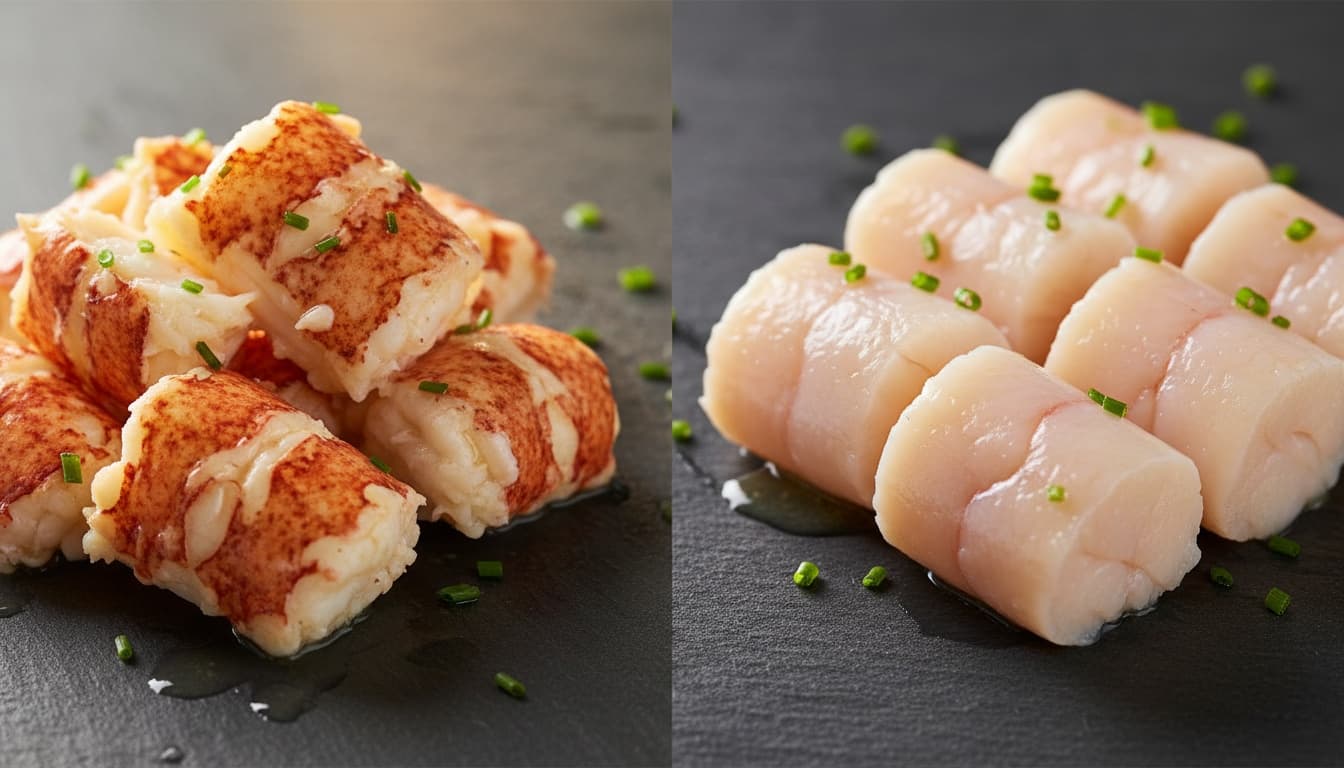
American lobster has sweet, buttery flavor with tender, flaky texture. Spiny lobster tastes briny and oceanic with firmer, chewier bite. American lobster claw meat is sweeter than tail meat; spiny lobster texture is uniform throughout.
We've run blind taste tests with dozens of restaurant buyers across three states. The results are striking: American lobster meat flakes apart easily. Sweet, almost buttery flavor with no fishiness. The claw meat tastes different from tail meat — claws are sweeter, tail meat is firmer but still tender.
Spiny lobster has a chewier bite. The flavor leans briny, like a cross between lobster and shrimp. Not unpleasant, just different. Some describe it as more "oceanic" than American lobster.
Temperature affects both species, but differently. Overcook American lobster and it becomes rubbery. Overcook spiny lobster and it turns tough as leather. Honestly, most home cooks overcook both species.
Cooking Times by Species
Cooking Time Comparison:
- American lobster tail (6 oz): typically 8-10 minutes steaming
- Spiny lobster tail (6 oz): typically 6-8 minutes steaming
- American lobster claws: typically 12-15 minutes steaming
The shorter cooking time for spiny lobster surprises many home cooks. That firm texture means it's done faster than you'd expect.
Professional Chef Preferences
High-end restaurants prefer American lobster for bisques and thermidor. The sweet claw meat creates a cleaner flavor base. According to Chef Maria Santos at Portland's Harbor View Restaurant, "American lobster's sweetness can't be replicated — it's why we charge $48 for our lobster thermidor."
In contrast, casual dining often uses spiny lobster for lobster rolls and pasta — the firmer texture holds up better to mixing and reheating.
One contrarian insight: spiny lobster actually works better for grilling. That firm texture doesn't fall apart on the grates like American lobster can.
4. Geographic Origin and Seasonal Availability
American lobster lives in cold North Atlantic waters from Maine to North Carolina, typically peaking May-October. Spiny lobster inhabits warm waters globally (Caribbean, Pacific, Mediterranean, Australia), available year-round with regional peak seasons varying by location.
American lobster lives in cold North Atlantic waters from Maine to North Carolina. The bulk comes from Maine and the Canadian Maritimes. Water temperature drives their behavior — they migrate to deeper, warmer water in winter.
Peak season typically runs May through October. Winter lobster costs more but offers better meat quality. Summer brings lower prices but softer shells with less meat yield.
Caribbean lobster and other spiny species span warm waters globally. Caribbean, Pacific Coast, Mediterranean, Australia — they're everywhere tropical waters exist. This geographic spread means year-round availability, but quality varies by source.
Florida spiny lobster season typically runs August through March. California spiny lobster often peaks October through March. Caribbean imports fill summer gaps when domestic sources are closed.
Regional Market Dynamics:
- East Coast: American lobster typically dominates
- West Coast: Often split between spiny and American (imported)
- Gulf States: Often favor spiny lobster
- Midwest: Often mostly frozen spiny lobster (shipping costs)
The seasonal availability creates interesting pricing patterns. American lobster hits its lowest prices in July-August when molting season floods the market with soft shells.
Historical Significance and Industry Development
Maine's lobster industry dates back to the 1600s. While lobster was abundant and sometimes fed to prisoners, it was consumed by various social classes, especially in coastal areas. Its luxury status began to emerge with improved transportation and marketing efforts.
Caribbean spiny lobster fishing developed differently. Island communities have harvested rock lobster for centuries using traditional traps and diving methods. Modern commercial operations began in the 1950s as tourism created demand for fresh seafood.
Today, according to the Maine Department of Marine Resources, Maine processes around 100 million pounds annually in recent years. Global spiny lobster harvest data varies significantly by species and region, with multiple countries contributing to international markets.
5. Sustainability and Environmental Impact
Well-managed American lobster fisheries are relatively sustainable, but climate change threatens populations. Spiny lobster aquaculture is emerging as a sustainable alternative to wild-caught stocks facing overfishing pressure in some regions.
American lobster faces complex sustainability challenges. Maine's lobster population hit record highs in 2012, though warming waters have since created ongoing pressures on the fishery. Research has shown that the Gulf of Maine has warmed faster than most global ocean areas since 2004, with these environmental changes continuing to reshape the industry.
Lobster trap fishing is relatively sustainable — minimal bycatch, no habitat damage. But climate change threatens the entire ecosystem. Warmer waters favor crabs over lobsters, potentially reshaping the industry.
Regulations and Compliance
Spiny lobster presents different concerns. Wild populations face pressure from overfishing in some regions. According to the Florida Fish and Wildlife Conservation Commission, Florida's population declined significantly between 1999-2019, leading to stricter regulations that have helped stabilize numbers over the past several years.
The picture improves with emerging technology: spiny lobster aquaculture is expanding rapidly. Vietnam, Australia, and the Caribbean are developing farming operations that could reduce pressure on wild stocks.
Regulatory Considerations:
- American lobster: size limits, trap limits, V-notch protection
- Spiny lobster: seasonal closures, size limits, egg-bearing female protection
- Both species: verify local regulations before keeping or releasing
Before you buy, check your local regulations — CatchRules' offline regulations lookup works without a signal and covers every U.S. state and Canadian province, so you know you're buying legally.
The sustainability equation isn't simple. Wild-caught American lobster from well-managed fisheries often has lower environmental impact than farmed spiny lobster shipped internationally.
Biological Classification Differences
Beyond their obvious physical differences, American and spiny lobsters belong to different taxonomic families. American lobster (Homarus americanus) belongs to the family Nephropidae — true lobsters with large claws.
Spiny lobsters (Panulirus species) belong to the family Palinuridae. They're more closely related to crayfish than to American lobsters. This explains their lack of claws and different body structure.
Reproduction differs dramatically. American lobster females typically carry eggs for 10-11 months, releasing larvae in summer. Spiny lobster females typically carry eggs for only 3-4 weeks. But their larvae spend months drifting in open ocean before settling.
Pricing and Market Analysis
American lobster pricing swings wildly with season and weather. We've seen wholesale prices range from $4/lb (summer glut) to $18/lb (winter storms). Retail prices typically run 2.5-3x wholesale.
Spiny lobster pricing stays more stable. Frozen tails from multiple sources buffer against seasonal shortages. Expect varying retail prices for good-quality frozen tails and fresh options.
Value by Use Case
Value Analysis by Use Case:
- Fine dining: American lobster wins on flavor, presentation
- Casual dining: Spiny lobster wins on consistency, cost control
- Home cooking: Depends on budget and skill level
- Special occasions: American lobster for the experience
Restaurant buyers often split the difference — American lobster for signature dishes, spiny lobster for volume items like pasta and rolls.
6. Cooking Methods and Recipe Applications
Both species respond well to steaming, but the techniques differ. American lobster needs gentle heat to preserve that delicate texture. Spiny lobster can handle more aggressive cooking.
Optimal Cooking Methods by Species:
American Lobster:
- Steaming: 7-8 minutes per pound
- Boiling: 6-7 minutes per pound
- Grilling: Split tails, 4-5 minutes flesh-side down
- Broiling: 8-10 minutes, baste frequently
Spiny Lobster:
- Steaming: 5-6 minutes per pound
- Grilling: 6-8 minutes, turn once
- Broiling: 6-8 minutes
- Sautéing: Works better than American lobster, 3-4 minutes
The key difference: spiny lobster's firm texture makes it more forgiving. American lobster requires precise timing to avoid overcooking.
Storage differs too. Live American lobster lasts 24-48 hours refrigerated. Spiny lobster is almost always sold frozen — thaw in refrigerator 12-24 hours before cooking.
Lobster Recipes and Applications
American lobster shines in classic preparations. Lobster thermidor showcases that sweet claw meat. Bisques benefit from the shells' rich flavor compounds. Simple steaming with butter lets the natural sweetness dominate.
Rock lobster works better in mixed dishes. Lobster pasta, paella, and stir-fries benefit from its firm texture. Caribbean preparations often include spicy marinades that complement the briny flavor.
Lobster rolls present an interesting choice. Maine purists insist on American lobster, but many restaurants use spiny lobster for cost control. The mayonnaise and seasonings mask some flavor differences.
7. Nutritional Content and Health Benefits
Both species offer excellent protein with minimal calories. American lobster edges out spiny lobster slightly in protein density and omega-3 content.
Per 3-ounce serving (approximate values):
- American lobster: typically 76 calories, 16g protein, 0.5g fat
- Spiny lobster: typically 83 calories, 17g protein, 0.8g fat
Both are excellent sources of selenium, zinc, and vitamin B12. The cholesterol content is moderate — typically around 60mg per serving for both species.
Sodium content varies by preparation. Fresh lobster is naturally low in sodium, but many frozen spiny lobster products contain added sodium for preservation.
8. International Markets and Global Trade
European markets heavily favor spiny lobster. Mediterranean countries import Caribbean and Australian species year-round. France's "langouste" commands premium prices in Parisian restaurants.
Asian markets show growing demand for both species. Japan imports live American lobster for sashimi preparation. China's growing middle class drives demand for spiny lobster from Australia and Vietnam.
Trade patterns shift seasonally. When Maine's season peaks, exports to Europe surge. Caribbean spiny lobster fills winter gaps when American supplies tighten.
9. Frequently Asked Questions
Q: Which lobster species tastes better? A: American lobster tastes sweeter with tender, flaky meat; spiny lobster is firmer with a briny flavor. Preference depends on personal taste and recipe.
Q: Why is American lobster more expensive? A: American lobster has higher meat yield, premium flavor, and higher harvesting costs in cold-water conditions. Seasonal scarcity also drives prices up.
Q: Can you substitute spiny lobster for American lobster in recipes? A: Yes, but spiny lobster cooks faster (5-6 min/lb vs. 7-8 min/lb) and has firmer texture. Use it in mixed dishes; American lobster is better for showcasing pure flavor.
Q: Which species is more sustainable? A: Well-managed American lobster fisheries are relatively sustainable, but climate change threatens populations. Spiny lobster aquaculture is emerging as a sustainable alternative to wild-caught stocks.
Q: How can you tell the difference when buying? A: Look for claws — American lobster has large claws, spiny lobster has none. American lobster is usually sold live or whole, while spiny lobster is typically sold as frozen tails.
Q: Which lobster is better for grilling? A: Spiny lobster's firmer texture holds up better on the grill. American lobster can become rubbery if overcooked, making timing more critical for grilled preparations.
Key Takeaways
- American lobster: sweeter meat, better yield, higher cost, limited season
- Spiny lobster: consistent supply, firmer texture, lower cost, less meat per pound
- Sustainability depends on source — managed American fisheries vs. emerging aquaculture
- Cooking: American needs gentle heat; spiny lobster is more forgiving
- Regional preferences drive market dominance and availability
- Climate and regulations will reshape future availability
- Value calculations must account for meat yield, not just per-pound price