
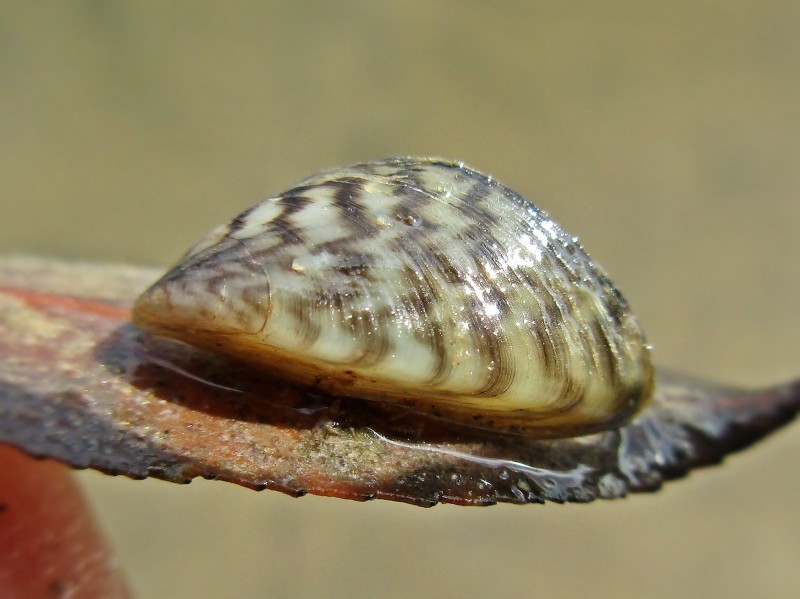
Species profile
Zebra Mussel
Dreissena polymorpha
Identify Zebra Mussel (Dreissena polymorpha) from a photo: try it free in your browser, or get unlimited IDs, no sign-up, with the CatchRules app. Plus current fishing rules across 6 jurisdictions.
At a glance
Zebra Mussel (Dreissena polymorpha) is an IUCN Least Concern bivalve mollusk regulated in 9 of 66 jurisdictions tracked by CatchRules across the U.S. and Canada.
The strictest bag limit is 5 (Missouri); the most generous is 25 (Texas).
Confirmed by 5,380 research-grade iNaturalist observations, with Ontario, Michigan, and Minnesota the top jurisdictions by observation count.
Notable details
- First detected in North America in Lake St. Clair in 1988, likely arriving in ship ballast water from Europe.
- A single adult filters up to one liter of water daily, stripping phytoplankton other species depend on.
- Dense colonies can exceed 700,000 individuals per square meter on hard surfaces.
- Adults grow to about 2–3 cm long and typically live 3–5 years.
- They anchor to almost any hard surface using sticky byssus threads, clogging water intake pipes and fouling boat hulls.
Where Zebra Mussel are seen
Jurisdictions with rules for Zebra Mussel
Background
The zebra mussel is a small freshwater mussel, an aquatic bivalve mollusc in the family Dreissenidae. The species originates from the lakes of southwestern Russia and southeastern Europe, but has been accidentally introduced to numerous other areas and has become an invasive species in many countries in the Northern Hemisphere. Since the 1980s, the species has invaded the Great Lakes, Hudson…
Background excerpt adapted from Wikipedia's Zebra Mussel article (CC BY-SA). Visit Wikipedia for the full entry.
Other clams/oysters/mussels on CatchRules
Frequently asked questions
What is Zebra Mussel?
Zebra Mussel (Dreissena polymorpha) is an IUCN Least Concern bivalve mollusk regulated in 9 of 66 jurisdictions tracked by CatchRules across the U.S. and Canada.
What is the scientific name for Zebra Mussel?
Zebra Mussel is Dreissena polymorpha.
Is Zebra Mussel regulated for fishing?
Yes — Zebra Mussel has fishing regulations in 6 U.S. states and/or Canadian provinces tracked by CatchRules. See the "Jurisdictions with rules" section above for the binding-source links.
How can I identify Zebra Mussel?
Take a photo with the free CatchRules app for iPhone or Android — on-device identification recognizes Zebra Mussel along with ~1,500 other species. No sign-up, unlimited use.
Photo credit: iNaturalist / Wikipedia. Identification reference only — verify regulations with the issuing wildlife agency before retaining a catch.