
Species profile
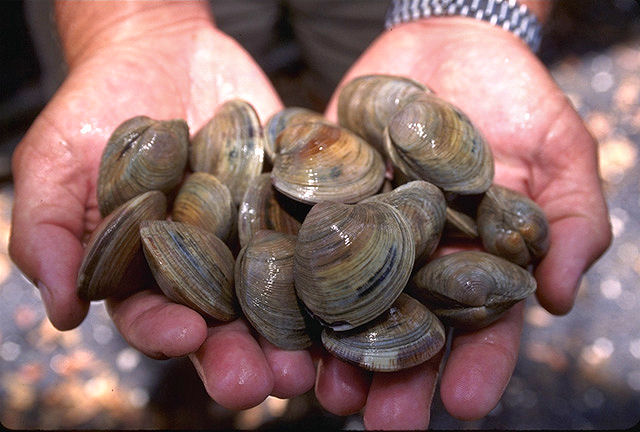
Northern Quahog
Mercenaria mercenaria
Identify Northern Quahog (Mercenaria mercenaria) from a photo: try it free in your browser, or get unlimited IDs, no sign-up, with the CatchRules app. Plus current fishing rules across 14 jurisdictions.
At a glance
Northern Quahog (Mercenaria mercenaria) is a bivalve mollusk regulated in 17 of 66 jurisdictions tracked by CatchRules across the U.S. and Canada.
The strictest bag limit is 1 (Georgia); the most generous is 300 (New Brunswick).
Across 10 jurisdictions with stated minimum sizes, the average minimum is 1.4 in.
Confirmed by 5,061 research-grade iNaturalist observations, with Massachusetts, New York, and New Jersey the top jurisdictions by observation count.
Notable details
- Native Americans used the purple interior of quahog shells to craft wampum beads used in trade.
- Northern quahogs can live over 40 years, far outlasting most commercially harvested shellfish.
- They are sold by size: littleneck, topneck, cherrystone, and chowder, from smallest to largest.
- The species name mercenaria means 'earning wages' in Latin, a nod to its use as currency.
- A muscular foot allows the quahog to slowly burrow into sand and muddy substrate.
Where Northern Quahog are seen
Jurisdictions with rules for Northern Quahog
Background
The hard clam, also known as the round clam, hard-shell clam, or the quahog, is an edible marine bivalve mollusk that is native to the eastern shores of North America and Central America from Prince Edward Island to the Yucatán Peninsula. It is one of many unrelated edible bivalves that in the United States are frequently referred to simply as clams. Older literature sources may use the…
Background excerpt adapted from Wikipedia's Northern Quahog article (CC BY-SA). Visit Wikipedia for the full entry.
Other clams/oysters/mussels on CatchRules
Frequently asked questions
What is Northern Quahog?
Northern Quahog (Mercenaria mercenaria) is a bivalve mollusk regulated in 17 of 66 jurisdictions tracked by CatchRules across the U.S. and Canada.
What is the scientific name for Northern Quahog?
Northern Quahog is Mercenaria mercenaria.
Is Northern Quahog regulated for fishing?
Yes — Northern Quahog has fishing regulations in 14 U.S. states and/or Canadian provinces tracked by CatchRules. See the "Jurisdictions with rules" section above for the binding-source links.
How can I identify Northern Quahog?
Take a photo with the free CatchRules app for iPhone or Android — on-device identification recognizes Northern Quahog along with ~1,500 other species. No sign-up, unlimited use.
Photo credit: iNaturalist / Wikipedia. Identification reference only — verify regulations with the issuing wildlife agency before retaining a catch.