
Species profile
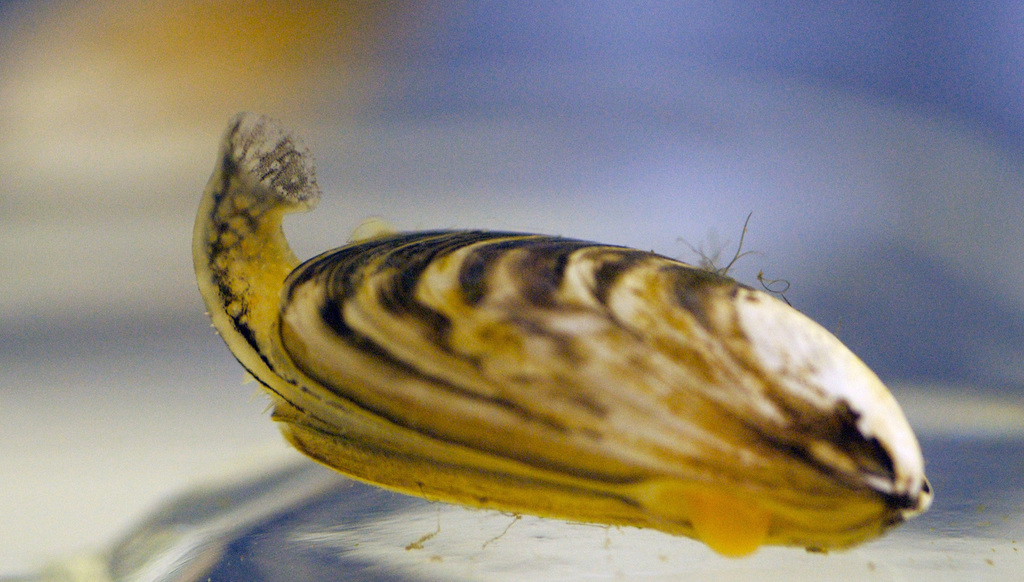
Quagga Mussel
Dreissena bugensis
Identify Quagga Mussel (Dreissena bugensis) from a photo: try it free in your browser, or get unlimited IDs, no sign-up, with the CatchRules app. Plus current fishing rules across 5 jurisdictions.
At a glance
Quagga Mussel (Dreissena bugensis) is an IUCN Least Concern bivalve mollusk regulated in 7 of 66 jurisdictions tracked by CatchRules across the U.S. and Canada.
The strictest bag limit is 5 (Missouri); the most generous is 25 (Texas).
Confirmed by 2,058 research-grade iNaturalist observations, with Ontario, Michigan, and Wisconsin the top jurisdictions by observation count.
Notable details
- Native to the Ponto-Caspian region of Eastern Europe, quagga mussels were first detected in Lake Erie in 1989.
- A single adult filters up to 1 liter of water per day, removing phytoplankton that native species depend on.
- Unlike zebra mussels, quagga mussels can colonize soft lake-bottom sediment and survive depths exceeding 100 meters.
- Named for the extinct quagga — a zebra relative — because of the mussel's faint striped shell pattern.
- It spreads mainly by boat; a single drop of bilge water can carry microscopic veliger larvae.
Where Quagga Mussel are seen
Jurisdictions with rules for Quagga Mussel
Background
The quagga mussel, scientific name Dreissena bugensis, and also known as Dreissena rostriformis bugensis, is a species (or subspecies) of freshwater mussel, an aquatic bivalve mollusk in the family Dreissenidae.
Background excerpt adapted from Wikipedia's Quagga Mussel article (CC BY-SA). Visit Wikipedia for the full entry.
Other clams/oysters/mussels on CatchRules
Frequently asked questions
What is Quagga Mussel?
Quagga Mussel (Dreissena bugensis) is an IUCN Least Concern bivalve mollusk regulated in 7 of 66 jurisdictions tracked by CatchRules across the U.S. and Canada.
What is the scientific name for Quagga Mussel?
Quagga Mussel is Dreissena bugensis.
Is Quagga Mussel regulated for fishing?
Yes — Quagga Mussel has fishing regulations in 5 U.S. states and/or Canadian provinces tracked by CatchRules. See the "Jurisdictions with rules" section above for the binding-source links.
How can I identify Quagga Mussel?
Take a photo with the free CatchRules app for iPhone or Android — on-device identification recognizes Quagga Mussel along with ~1,500 other species. No sign-up, unlimited use.
Photo credit: iNaturalist / Wikipedia. Identification reference only — verify regulations with the issuing wildlife agency before retaining a catch.