
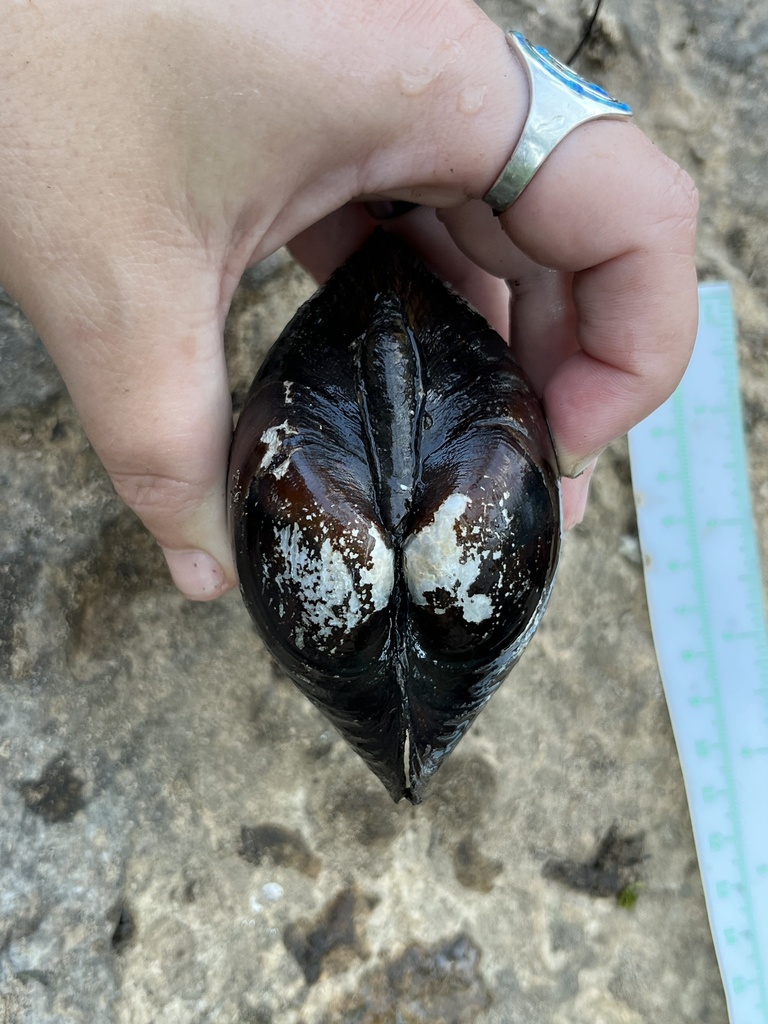
Species profile
Plain Pocketbook
Lampsilis cardium
Identify Plain Pocketbook (Lampsilis cardium) from a photo: try it free in your browser, or get unlimited IDs, no sign-up, with the CatchRules app. Plus current fishing rules across 3 jurisdictions.
At a glance
Plain Pocketbook (Lampsilis cardium) is an IUCN Least Concern bivalve mollusk regulated in 6 of 66 jurisdictions tracked by CatchRules across the U.S. and Canada.
The strictest bag limit is 5 (Missouri); the most generous is 25 (Texas).
Confirmed by 4,119 research-grade iNaturalist observations, with Wisconsin, South Dakota, and Ontario the top jurisdictions by observation count.
Notable details
- Female Plain Pocketbooks use a fleshy mantle lure that mimics a small fish to attract host fish for their larvae.
- Their larvae (glochidia) temporarily parasitize fish gills before dropping off as fully formed juvenile mussels.
- Plain Pocketbooks filter algae and fine particles from the water, improving clarity in the rivers they inhabit.
- They can live 10 to 20 years in clean, well-oxygenated rivers across eastern North America.
- Each female requires a specific host fish species to successfully complete her reproductive cycle.
Where Plain Pocketbook are seen
Jurisdictions with rules for Plain Pocketbook
Background
Lampsilis cardium is a species of freshwater mussel in the family Unionidae, the river mussels. It is known commonly as the plain pocketbook. It is widespread in eastern North America, where it is native to the Mississippi River and Great Lakes drainage systems.
Background excerpt adapted from Wikipedia's Plain Pocketbook article (CC BY-SA). Visit Wikipedia for the full entry.
Other clams/oysters/mussels on CatchRules
Frequently asked questions
What is Plain Pocketbook?
Plain Pocketbook (Lampsilis cardium) is an IUCN Least Concern bivalve mollusk regulated in 6 of 66 jurisdictions tracked by CatchRules across the U.S. and Canada.
What is the scientific name for Plain Pocketbook?
Plain Pocketbook is Lampsilis cardium.
Is Plain Pocketbook regulated for fishing?
Yes — Plain Pocketbook has fishing regulations in 3 U.S. states and/or Canadian provinces tracked by CatchRules. See the "Jurisdictions with rules" section above for the binding-source links.
How can I identify Plain Pocketbook?
Take a photo with the free CatchRules app for iPhone or Android — on-device identification recognizes Plain Pocketbook along with ~1,500 other species. No sign-up, unlimited use.
Photo credit: iNaturalist / Wikipedia. Identification reference only — verify regulations with the issuing wildlife agency before retaining a catch.