
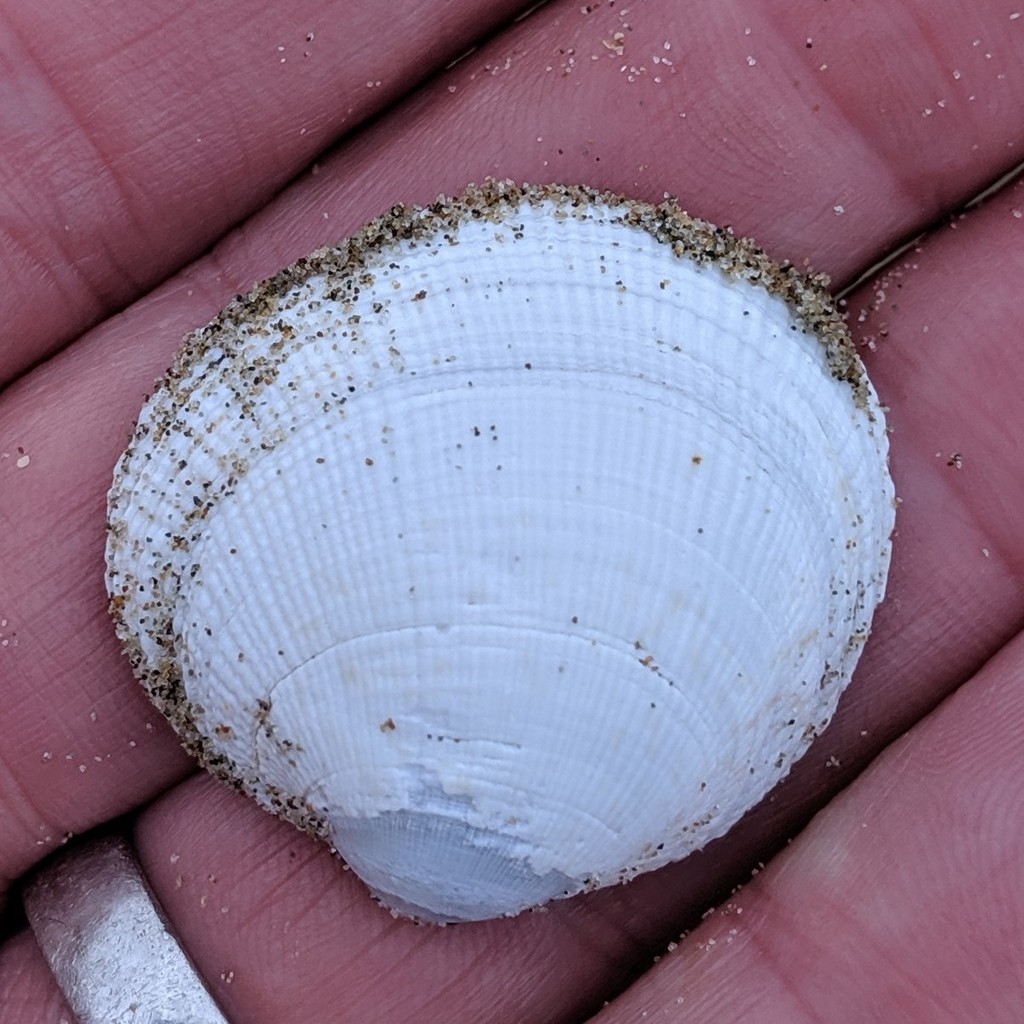
Species profile
Pacific Littleneck Clam
Leukoma staminea
Identify Pacific Littleneck Clam (Leukoma staminea) from a photo: try it free in your browser, or get unlimited IDs, no sign-up, with the CatchRules app.
At a glance
Pacific Littleneck Clam (Leukoma staminea) is a bivalve mollusk present across the CatchRules coverage area but without species-specific bag, size, or season rules tracked in our regulatory dataset.
Confirmed by 2,391 research-grade iNaturalist observations, with California, British Columbia, and Washington the top jurisdictions by observation count.
Notable details
- Burrows 2–4 inches deep in gravel and sandy-gravel beaches to filter-feed.
- Shell diameter reaches about 3 inches (7.5 cm) at full size.
- Can live 14 years or more, with annual growth rings visible on its ridged shell.
- Highly prized for eating and harvested recreationally and commercially from Alaska to Baja California.
- Its ridged, oval shell helps anchor it in shifting gravel against wave action.
Where Pacific Littleneck Clam are seen
Background
Leukoma staminea, common name the Pacific littleneck clam, is a species of bivalve mollusc in the family Veneridae. This species of mollusc was exploited by early humans in North America; for example, the Chumash peoples of Central California harvested these clams in Morro Bay approximately 1,000 years ago.
Background excerpt adapted from Wikipedia's Pacific Littleneck Clam article (CC BY-SA). Visit Wikipedia for the full entry.
Other clams/oysters/mussels on CatchRules
Frequently asked questions
What is Pacific Littleneck Clam?
Pacific Littleneck Clam (Leukoma staminea) is a bivalve mollusk present across the CatchRules coverage area but without species-specific bag, size, or season rules tracked in our regulatory dataset.
What is the scientific name for Pacific Littleneck Clam?
Pacific Littleneck Clam is Leukoma staminea.
Are there fishing rules for Pacific Littleneck Clam?
Pacific Littleneck Clam does not currently have published fishing rules in CatchRules' curated jurisdictions. Identification, range, and habitat are still tracked above.
How can I identify Pacific Littleneck Clam?
Take a photo with the free CatchRules app for iPhone or Android — on-device identification recognizes Pacific Littleneck Clam along with ~1,500 other species. No sign-up, unlimited use.
Photo credit: iNaturalist / Wikipedia. Identification reference only — verify regulations with the issuing wildlife agency before retaining a catch.