
Species profile
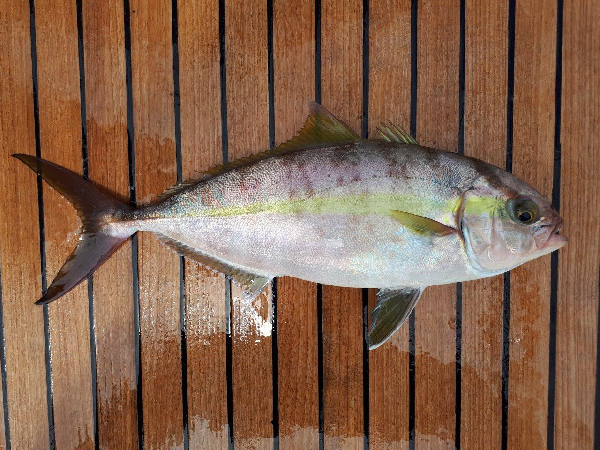
Lesser Amberjack
Seriola fasciata
Identify Lesser Amberjack (Seriola fasciata) from a photo: try it free in your browser, or get unlimited IDs, no sign-up, with the CatchRules app. Plus current fishing rules across 4 jurisdictions.
At a glance
Lesser Amberjack (Seriola fasciata) is an IUCN Least Concern bony-fish species regulated in 6 of 66 jurisdictions tracked by CatchRules across the U.S. and Canada.
The strictest bag limit is 1 (Georgia); the most generous is 20 (Federal Waters (NOAA)).
Across 6 jurisdictions with stated minimum sizes, the average minimum is 21.5 in (≈ 1 ft 10 in).
Confirmed by 6 research-grade iNaturalist observations across the species' range.
Notable details
- The smallest amberjack in the Atlantic, typically reaching 40–60 cm and under 5 kg.
- Prefers deep water at 50–400 meters — much deeper than its cousin the Greater Amberjack.
- A dark stripe runs from the snout through the eye to the front of the dorsal fin.
- Rarely targeted by sport anglers due to its preference for deep offshore habitat.
- Like all jacks, it is a fast, powerful swimmer capable of short bursts of high speed.
Where Lesser Amberjack are seen
Jurisdictions with rules for Lesser Amberjack
Background
The lesser amberjack (Seriola fasciata), also known as the false amberjack or little amberjack, is a species of ray-finned fish from the family Carangidae, the jacks and pompanos. It occurs in the Atlantic Ocean. In the western Atlantic it ranges from Massachusetts in the north along the eastern Coast of the United States and into the Gulf of Mexico as far south as Tamaulipas. In the Caribbean…
Background excerpt adapted from Wikipedia's Lesser Amberjack article (CC BY-SA). Visit Wikipedia for the full entry.
Other bony fish on CatchRules
Frequently asked questions
What is Lesser Amberjack?
Lesser Amberjack (Seriola fasciata) is an IUCN Least Concern bony-fish species regulated in 6 of 66 jurisdictions tracked by CatchRules across the U.S. and Canada.
What is the scientific name for Lesser Amberjack?
Lesser Amberjack is Seriola fasciata.
Is Lesser Amberjack regulated for fishing?
Yes — Lesser Amberjack has fishing regulations in 4 U.S. states and/or Canadian provinces tracked by CatchRules. See the "Jurisdictions with rules" section above for the binding-source links.
How can I identify Lesser Amberjack?
Take a photo with the free CatchRules app for iPhone or Android — on-device identification recognizes Lesser Amberjack along with ~1,500 other species. No sign-up, unlimited use.
Photo credit: iNaturalist / Wikipedia. Identification reference only — verify regulations with the issuing wildlife agency before retaining a catch.