
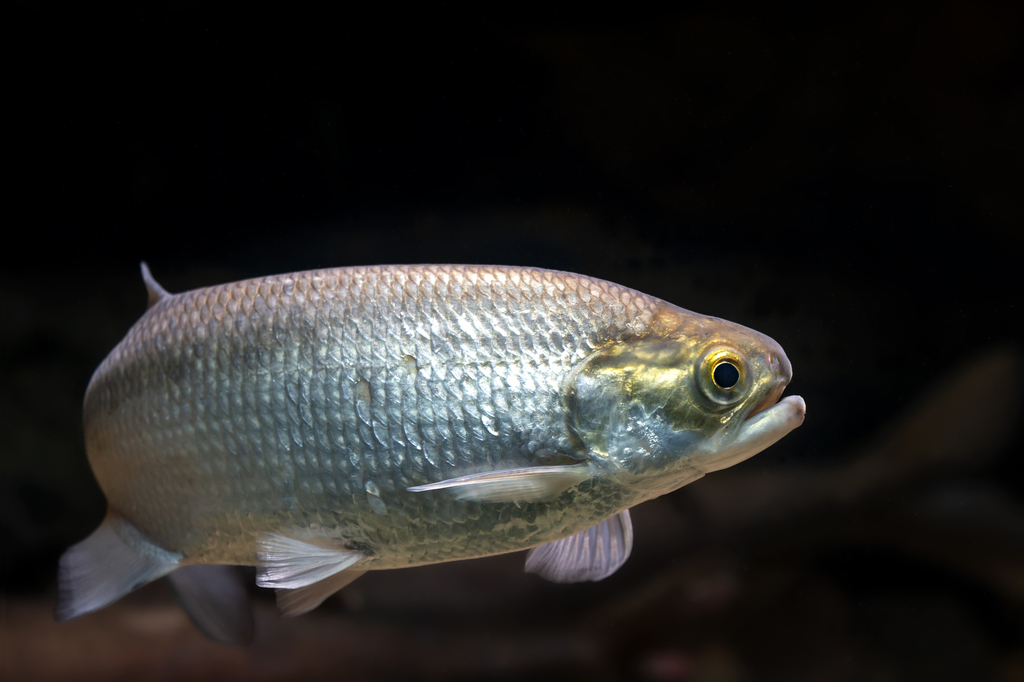
Species profile
Goldeye
Hiodon alosoides
Identify Goldeye (Hiodon alosoides) from a photo: try it free in your browser, or get unlimited IDs, no sign-up, with the CatchRules app. Plus current fishing rules across 6 jurisdictions.
At a glance
Goldeye (Hiodon alosoides) is an IUCN Least Concern bony-fish species regulated in 10 of 66 jurisdictions tracked by CatchRules across the U.S. and Canada.
The strictest bag limit is 5 (Northwest Territories); the most generous is 15 (Alberta).
Confirmed by 369 research-grade iNaturalist observations, with Minnesota, Alberta, and Montana the top jurisdictions by observation count.
Notable details
- Named for its striking gold-colored iris, clearly visible even in murky river water.
- The smoked 'Winnipeg goldeye' has been a celebrated Canadian prairie delicacy since the 1800s.
- Typically reaches 12–16 inches and feeds actively near the water surface after dark.
- Native to river and lake systems across central North America, from the Mackenzie to the Missouri.
Where Goldeye are seen
Jurisdictions with rules for Goldeye
Background
The goldeye is a freshwater fish found in Canada and the northern United States. It is one of only two remaining species in the family Hiodontidae, the other species being the mooneye (Hiodon tergisus). The species name alosoides means shad-like. It is also called Winnipeg goldeye, western goldeye, yellow herring, toothed herring, shad mooneye, la Queche, weepicheesis, or laquaiche aux yeux d’or…
Background excerpt adapted from Wikipedia's Goldeye article (CC BY-SA). Visit Wikipedia for the full entry.
Other bony fish on CatchRules
Frequently asked questions
What is Goldeye?
Goldeye (Hiodon alosoides) is an IUCN Least Concern bony-fish species regulated in 10 of 66 jurisdictions tracked by CatchRules across the U.S. and Canada.
What is the scientific name for Goldeye?
Goldeye is Hiodon alosoides.
Is Goldeye regulated for fishing?
Yes — Goldeye has fishing regulations in 6 U.S. states and/or Canadian provinces tracked by CatchRules. See the "Jurisdictions with rules" section above for the binding-source links.
How can I identify Goldeye?
Take a photo with the free CatchRules app for iPhone or Android — on-device identification recognizes Goldeye along with ~1,500 other species. No sign-up, unlimited use.
Photo credit: iNaturalist / Wikipedia. Identification reference only — verify regulations with the issuing wildlife agency before retaining a catch.