
Species profile
Chain Pickerel
Esox niger
Identify Chain Pickerel (Esox niger) from a photo: try it free in your browser, or get unlimited IDs, no sign-up, with the CatchRules app. Plus current fishing rules across 18 jurisdictions.
At a glance
Chain Pickerel (Esox niger) is an IUCN Least Concern bony-fish species regulated in 21 of 66 jurisdictions tracked by CatchRules across the U.S. and Canada.
The strictest bag limit is 1 (West Virginia); the most generous is 15 (Florida).
Across 8 jurisdictions with stated minimum sizes, the average minimum is 14.7 in (≈ 1 ft 3 in).
Confirmed by 2,737 research-grade iNaturalist observations, with Massachusetts, New Jersey, and New York the top jurisdictions by observation count.
Notable details
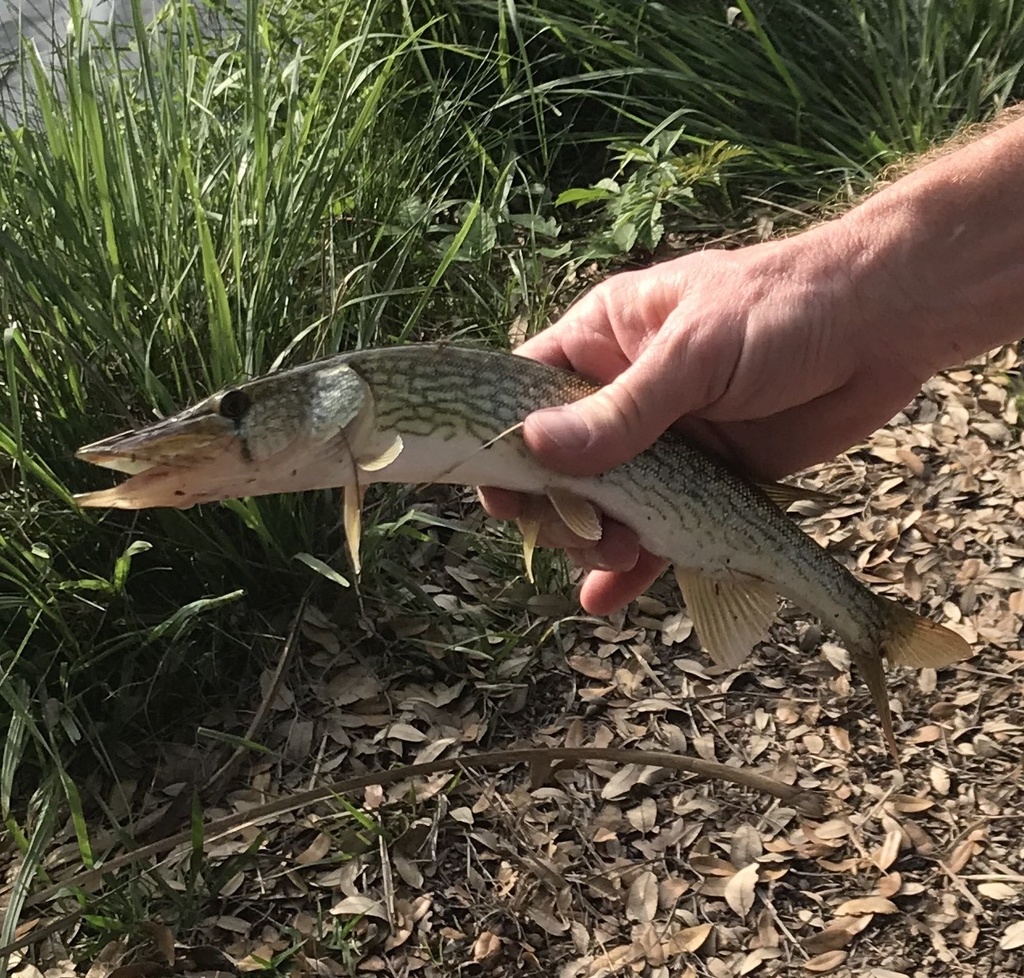
- Chain pickerel are named for the distinctive chain-link pattern on their greenish sides.
- They are aggressive predators year-round, feeding actively even under ice in winter.
- Found throughout eastern North America, from Nova Scotia south to Florida.
- Typical adults measure 18–24 inches; the world record exceeds 9 lbs.
- Chain pickerel tolerate warmer and more acidic water than their northern pike relatives.
Where Chain Pickerel are seen
Jurisdictions with rules for Chain Pickerel
Background
The chain pickerel or southern pike (Esox niger) is a species of freshwater fish in the pike family (family Esocidae) of order Esociformes. The chain pickerel and the American pickerel belong to the Esox genus of pike.
Background excerpt adapted from Wikipedia's Chain Pickerel article (CC BY-SA). Visit Wikipedia for the full entry.
Other bony fish on CatchRules
Frequently asked questions
What is Chain Pickerel?
Chain Pickerel (Esox niger) is an IUCN Least Concern bony-fish species regulated in 21 of 66 jurisdictions tracked by CatchRules across the U.S. and Canada.
What is the scientific name for Chain Pickerel?
Chain Pickerel is Esox niger.
Is Chain Pickerel regulated for fishing?
Yes — Chain Pickerel has fishing regulations in 18 U.S. states and/or Canadian provinces tracked by CatchRules. See the "Jurisdictions with rules" section above for the binding-source links.
How can I identify Chain Pickerel?
Take a photo with the free CatchRules app for iPhone or Android — on-device identification recognizes Chain Pickerel along with ~1,500 other species. No sign-up, unlimited use.
Photo credit: iNaturalist / Wikipedia. Identification reference only — verify regulations with the issuing wildlife agency before retaining a catch.