
Species profile
Thresher Shark
Alopias vulpinus
Identify Thresher Shark (Alopias vulpinus) from a photo: try it free in your browser, or get unlimited IDs, no sign-up, with the CatchRules app. Plus current fishing rules across 6 jurisdictions.
At a glance
Thresher Shark (Alopias vulpinus) is an IUCN Vulnerable invertebrate regulated in 9 of 66 jurisdictions tracked by CatchRules across the U.S. and Canada.
The strictest bag limit is 1 (Maryland); the most generous is 2 (California).
Across 3 jurisdictions with stated minimum sizes, the average minimum is 54.0 in (≈ 4 ft 6 in).
Confirmed by 141 research-grade iNaturalist observations, with California, Nova Scotia, and North Carolina the top jurisdictions by observation count.
Listed under CITES — verify protected-species rules with the issuing agency before retaining or handling.
Notable details
- Its upper tail fin can equal the entire length of the rest of its body.
- Uses its massive tail like a bullwhip to stun schools of small fish.
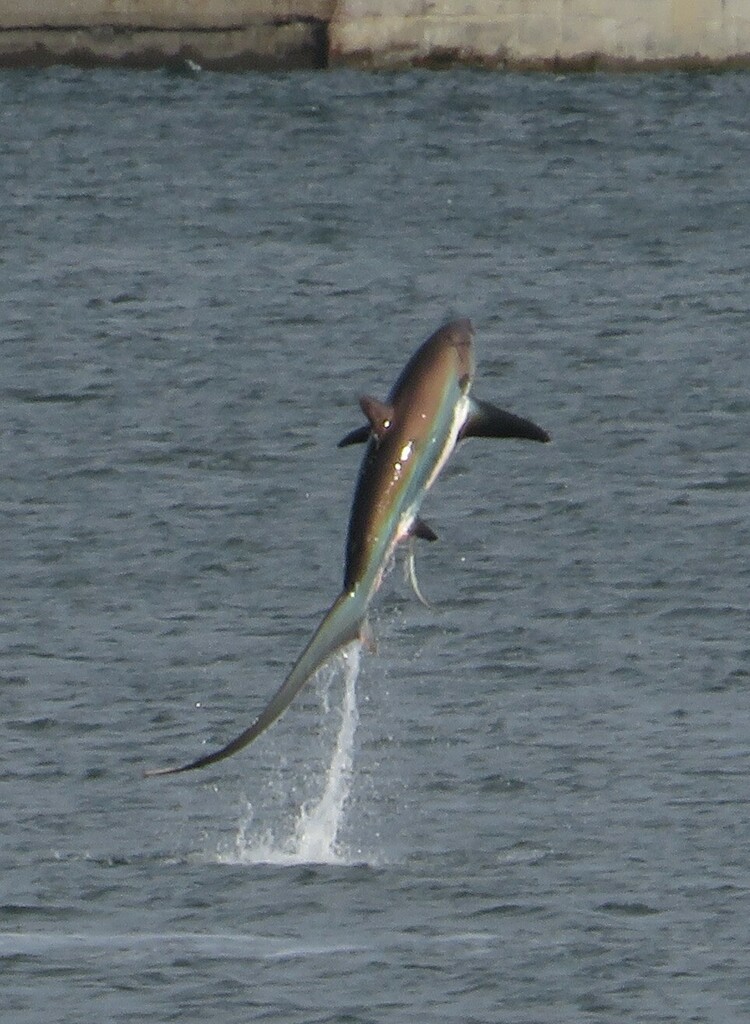
- Can breach completely out of the water, a rare behavior among sharks.
- Gives birth to live pups, typically just 2–4 per litter.
- Can reach 20 feet in total length and weigh up to 500 pounds.
Where Thresher Shark are seen
Jurisdictions with rules for Thresher Shark
Protected status
- CITES Appendix II (Alopiidae — all thresher sharks, CoP17 2017).
Always verify protected-species rules with the issuing agency before retaining or handling.
Background
The common thresher (Alopias vulpinus), also known by many names such as Atlantic thresher, big-eye thresher, fox shark, green thresher, swingletail, slasher, swiveltail, thintail thresher, whip-tailed shark and Zorro thresher shark, is the largest species of thresher shark, family Alopiidae, reaching some 6 m (20 ft) in length. About half of its length consists of the elongated upper lobe of its…
Background excerpt adapted from Wikipedia's Thresher Shark article (CC BY-SA). Visit Wikipedia for the full entry.
Other invertebrates on CatchRules
Frequently asked questions
What is Thresher Shark?
Thresher Shark (Alopias vulpinus) is an IUCN Vulnerable invertebrate regulated in 9 of 66 jurisdictions tracked by CatchRules across the U.S. and Canada.
What is the scientific name for Thresher Shark?
Thresher Shark is Alopias vulpinus.
Is Thresher Shark regulated for fishing?
Yes — Thresher Shark has fishing regulations in 6 U.S. states and/or Canadian provinces tracked by CatchRules. See the "Jurisdictions with rules" section above for the binding-source links.
How can I identify Thresher Shark?
Take a photo with the free CatchRules app for iPhone or Android — on-device identification recognizes Thresher Shark along with ~1,500 other species. No sign-up, unlimited use.
Photo credit: iNaturalist / Wikipedia. Identification reference only — verify regulations with the issuing wildlife agency before retaining a catch.