
Species profile
Spotted Reef Crab
Carpilius maculatus
Identify Spotted Reef Crab (Carpilius maculatus) from a photo: try it free in your browser, or get unlimited IDs, no sign-up, with the CatchRules app.
At a glance
Spotted Reef Crab (Carpilius maculatus) is an invertebrate with specific harvest rules tracked in 1 of 66 jurisdictions covered by CatchRules.
Confirmed by 196 research-grade iNaturalist observations, concentrated in Hawaii.
Notable details
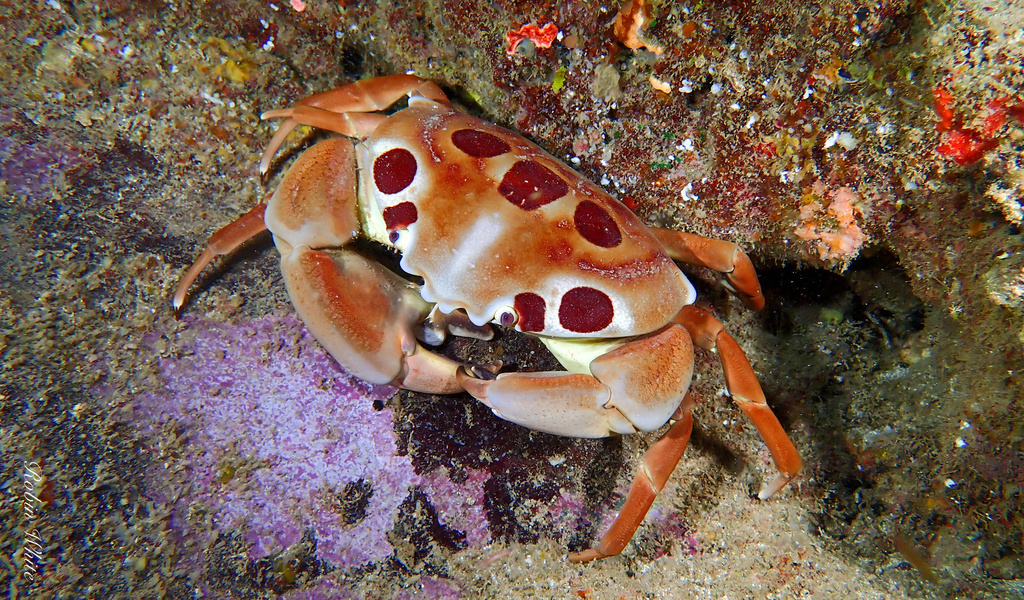
- Their smooth, dome-shaped carapace can reach up to 6 inches (15 cm) across.
- The shell is reddish-brown marked with large, irregular white spots.
- They inhabit coral reef environments across the Indo-Pacific.
- Their powerful claws are strong enough to crush thick-shelled mollusks.
- Their flesh can accumulate saxitoxin-type compounds and has caused paralytic poisoning — they are not safe to eat.
Where Spotted Reef Crab are seen
Background
Carpilius maculatus common names seven-eleven crab, spotted reef crab, dark-finger coral crab, and large spotted crab, is a species of crab in the family Carpiliidae.
Background excerpt adapted from Wikipedia's Spotted Reef Crab article (CC BY-SA). Visit Wikipedia for the full entry.
Other invertebrates on CatchRules
Frequently asked questions
What is Spotted Reef Crab?
Spotted Reef Crab (Carpilius maculatus) is an invertebrate with specific harvest rules tracked in 1 of 66 jurisdictions covered by CatchRules.
What is the scientific name for Spotted Reef Crab?
Spotted Reef Crab is Carpilius maculatus.
Are there fishing rules for Spotted Reef Crab?
Spotted Reef Crab does not currently have published fishing rules in CatchRules' curated jurisdictions. Identification, range, and habitat are still tracked above.
How can I identify Spotted Reef Crab?
Take a photo with the free CatchRules app for iPhone or Android — on-device identification recognizes Spotted Reef Crab along with ~1,500 other species. No sign-up, unlimited use.
Photo credit: iNaturalist / Wikipedia. Identification reference only — verify regulations with the issuing wildlife agency before retaining a catch.