
Species profile
Hickory Shad
Alosa mediocris
Identify Hickory Shad (Alosa mediocris) from a photo: try it free in your browser, or get unlimited IDs, no sign-up, with the CatchRules app. Plus current fishing rules across 8 jurisdictions.
At a glance
Hickory Shad (Alosa mediocris) is an IUCN Least Concern bony-fish species regulated in 12 of 66 jurisdictions tracked by CatchRules across the U.S. and Canada.
The strictest bag limit is 5 (New York); the most generous is 20 (South Carolina).
Confirmed by 267 research-grade iNaturalist observations, with Maryland, Virginia, and New Jersey the top jurisdictions by observation count.
Notable details
- Hickory shad are anadromous, leaving the ocean each spring to spawn in freshwater rivers.
- They can reach 24 inches and about 2.5 pounds — the second largest shad in eastern North America.
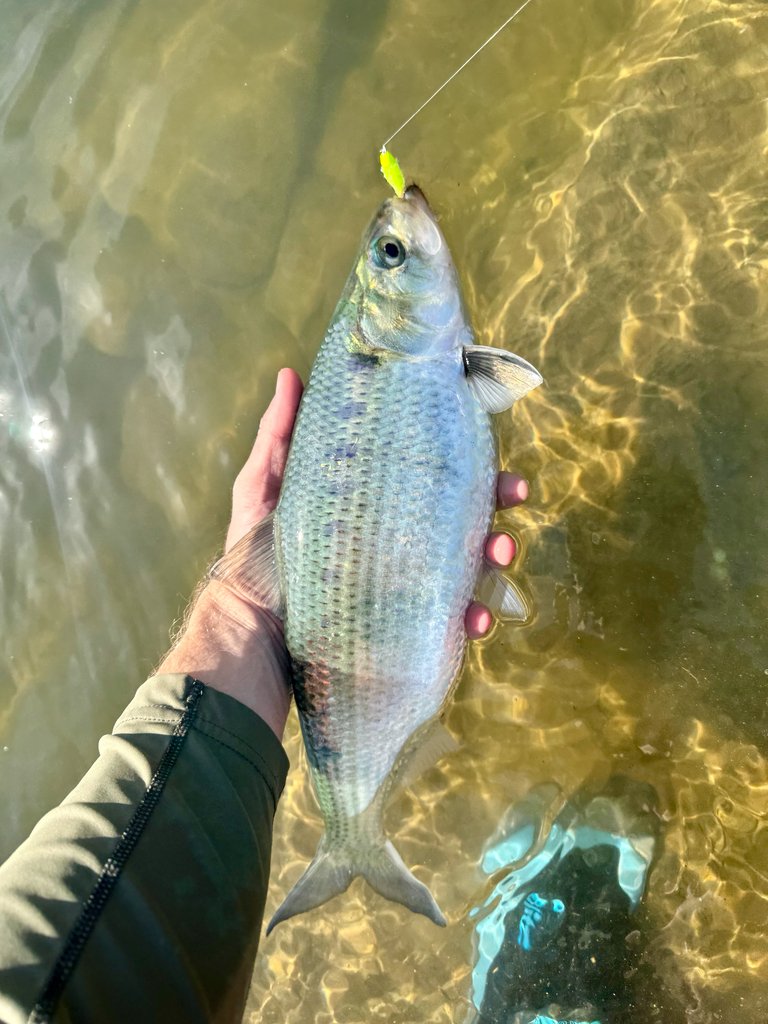
- Unlike American shad, they feed aggressively during their spawning run, hitting lures readily.
- A row of dark spots trails behind the gill cover along their sides.
- Their flesh is edible but extremely bony, so most anglers practice catch-and-release.
Where Hickory Shad are seen
Jurisdictions with rules for Hickory Shad
Background
Hickory shad (Alosa mediocris) is a member of the herring family Clupeidae, ranging along the East Coast of the United States from Florida to the Gulf of Maine. It is an anadromous fish species, meaning that it spawns in freshwater portions of rivers but spends most of its life at sea. It is subject to fishing, both historic and current, but it is often confused with or simply grouped together…
Background excerpt adapted from Wikipedia's Hickory Shad article (CC BY-SA). Visit Wikipedia for the full entry.
Other bony fish on CatchRules
Frequently asked questions
What is Hickory Shad?
Hickory Shad (Alosa mediocris) is an IUCN Least Concern bony-fish species regulated in 12 of 66 jurisdictions tracked by CatchRules across the U.S. and Canada.
What is the scientific name for Hickory Shad?
Hickory Shad is Alosa mediocris.
Is Hickory Shad regulated for fishing?
Yes — Hickory Shad has fishing regulations in 8 U.S. states and/or Canadian provinces tracked by CatchRules. See the "Jurisdictions with rules" section above for the binding-source links.
How can I identify Hickory Shad?
Take a photo with the free CatchRules app for iPhone or Android — on-device identification recognizes Hickory Shad along with ~1,500 other species. No sign-up, unlimited use.
Photo credit: iNaturalist / Wikipedia. Identification reference only — verify regulations with the issuing wildlife agency before retaining a catch.