
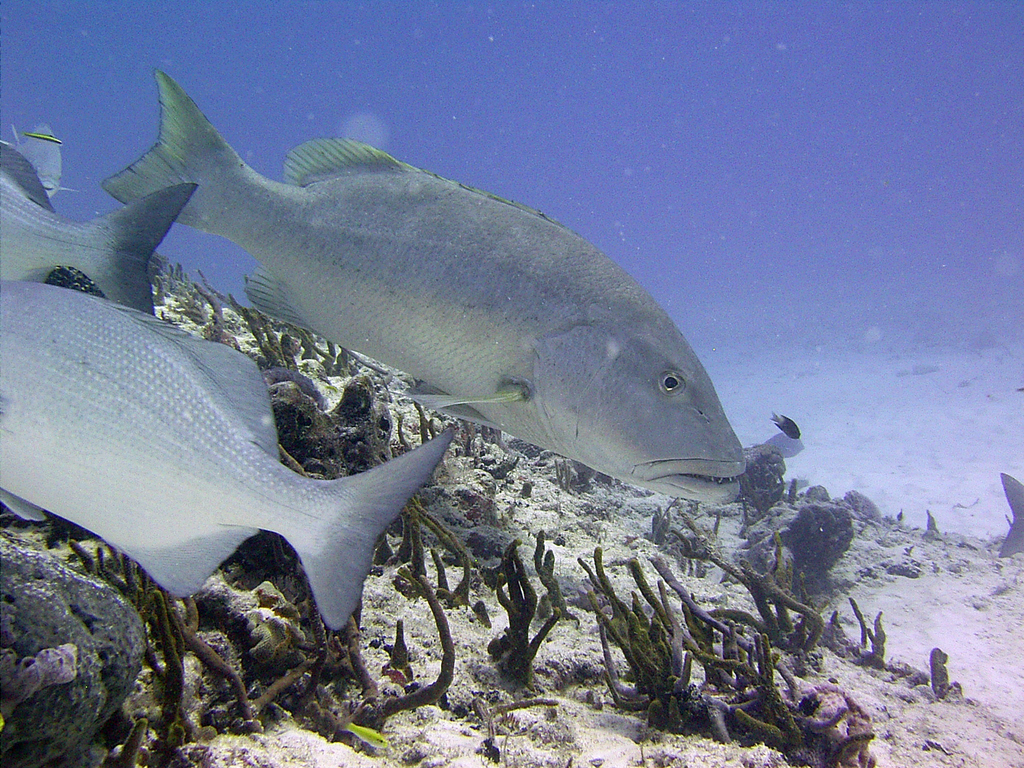
Species profile
Cubera Snapper
Lutjanus cyanopterus
Identify Cubera Snapper (Lutjanus cyanopterus) from a photo: try it free in your browser, or get unlimited IDs, no sign-up, with the CatchRules app. Plus current fishing rules across 2 jurisdictions.
At a glance
Cubera Snapper (Lutjanus cyanopterus) is an IUCN Vulnerable bony-fish species regulated in 2 of 66 jurisdictions tracked by CatchRules across the U.S. and Canada.
The strictest bag limit is 2 (Florida); the most generous is 10 (Florida).
Confirmed by 28 research-grade iNaturalist observations, with Florida, Nova Scotia, and Louisiana the top jurisdictions by observation count.
Notable details
- The largest Atlantic snapper species, capable of exceeding 4 feet and 100 pounds.
- Age studies suggest cubera can live more than 40 years.
- Heavy jaws and large canine teeth let them crack open crustaceans other snappers can't.
- Juveniles inhabit mangroves and estuaries; adults move to deep rocky reefs and ledges.
Where Cubera Snapper are seen
Jurisdictions with rules for Cubera Snapper
Background
The cubera snapper (Lutjanus cyanopterus) is a species of snapper native to the western Atlantic Ocean from Nova Scotia to the Amazon River in Brazil, though it is rare north of Florida. It can also be found in the Caribbean Sea and, rarely, in the Gulf of Mexico. It inhabits areas associated with reefs, preferring areas with rocky substrates, and feeds on ray-finned fishes, shrimp and crabs. It…
Background excerpt adapted from Wikipedia's Cubera Snapper article (CC BY-SA). Visit Wikipedia for the full entry.
Other bony fish on CatchRules
Frequently asked questions
What is Cubera Snapper?
Cubera Snapper (Lutjanus cyanopterus) is an IUCN Vulnerable bony-fish species regulated in 2 of 66 jurisdictions tracked by CatchRules across the U.S. and Canada.
What is the scientific name for Cubera Snapper?
Cubera Snapper is Lutjanus cyanopterus.
Is Cubera Snapper regulated for fishing?
Yes — Cubera Snapper has fishing regulations in 2 U.S. states and/or Canadian provinces tracked by CatchRules. See the "Jurisdictions with rules" section above for the binding-source links.
How can I identify Cubera Snapper?
Take a photo with the free CatchRules app for iPhone or Android — on-device identification recognizes Cubera Snapper along with ~1,500 other species. No sign-up, unlimited use.
Photo credit: iNaturalist / Wikipedia. Identification reference only — verify regulations with the issuing wildlife agency before retaining a catch.