
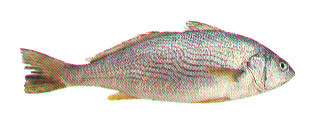
Species profile
Croaker
Umbrina roncador
Identify Croaker (Umbrina roncador) from a photo: try it free in your browser, or get unlimited IDs, no sign-up, with the CatchRules app. Plus current fishing rules across 5 jurisdictions.
At a glance
Croaker (Umbrina roncador) is an IUCN Least Concern bony-fish species regulated in 6 of 66 jurisdictions tracked by CatchRules across the U.S. and Canada.
The strictest bag limit is 6 (California); the most generous is 100 (Florida).
Confirmed by 346 research-grade iNaturalist observations, concentrated in California.
Notable details
- Named for the loud croak males produce using specialized muscles attached to their swim bladder.
- Found from Point Conception, California to the Gulf of California in sandy surf zones and bays.
- Typically reaches 16–20 inches and up to 4 pounds at maturity.
- Feeds on sand crabs, worms, and small crustaceans buried in sandy shorebreak.
- A favorite southern California surf target, yellowfin croaker runs are heaviest in summer months.
Where Croaker are seen
Jurisdictions with rules for Croaker
Background
Yellowfin croaker (Umbrina roncador) is a species of croaker occurring from the Gulf of California, Mexico, to Point Conception, California. They frequent bays, channels, harbors and other nearshore waters over sandy bottoms. These croakers are more abundant along beaches during the summer months and may move to deeper water in winter. There is no set size limit for the yellowfin croaker.
Background excerpt adapted from Wikipedia's Croaker article (CC BY-SA). Visit Wikipedia for the full entry.
Other bony fish on CatchRules
Frequently asked questions
What is Croaker?
Croaker (Umbrina roncador) is an IUCN Least Concern bony-fish species regulated in 6 of 66 jurisdictions tracked by CatchRules across the U.S. and Canada.
What is the scientific name for Croaker?
Croaker is Umbrina roncador.
Is Croaker regulated for fishing?
Yes — Croaker has fishing regulations in 5 U.S. states and/or Canadian provinces tracked by CatchRules. See the "Jurisdictions with rules" section above for the binding-source links.
How can I identify Croaker?
Take a photo with the free CatchRules app for iPhone or Android — on-device identification recognizes Croaker along with ~1,500 other species. No sign-up, unlimited use.
Photo credit: iNaturalist / Wikipedia. Identification reference only — verify regulations with the issuing wildlife agency before retaining a catch.