
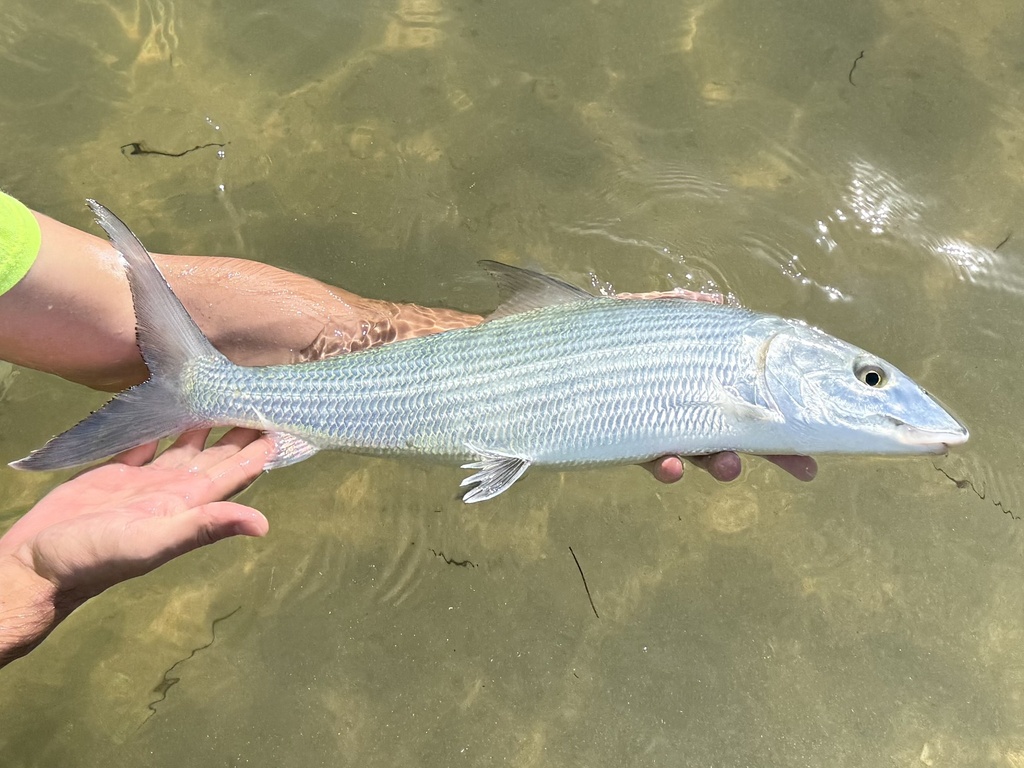
Species profile
Common Bonefish
Albula vulpes
Identify Common Bonefish (Albula vulpes) from a photo: try it free in your browser, or get unlimited IDs, no sign-up, with the CatchRules app. Plus current fishing rules across 1 jurisdiction.
At a glance
Common Bonefish (Albula vulpes) is an IUCN Near Threatened bony-fish species with specific harvest rules tracked in 1 of 66 jurisdictions covered by CatchRules.
Confirmed by 50 research-grade iNaturalist observations, with Florida, Texas, and Alabama the top jurisdictions by observation count.
Notable details
- Known as the 'ghost of the flats,' bonefish are prized for explosive, high-speed runs.
- They root into sandy flats with their snout to uncover buried crabs and shrimp.
- The species name 'vulpes' is Latin for fox, reflecting their cunning, wary nature.
- Bonefish can live up to 20 years and typically reach 15 to 25 inches in length.
- They are almost exclusively catch-and-release targets in North American flats fisheries.
Where Common Bonefish are seen
Jurisdictions with rules for Common Bonefish
Background
The bonefish (Albula vulpes) is the type species of the bonefish family (Albulidae), the only family in order Albuliformes.
Background excerpt adapted from Wikipedia's Common Bonefish article (CC BY-SA). Visit Wikipedia for the full entry.
Other bony fish on CatchRules
Frequently asked questions
What is Common Bonefish?
Common Bonefish (Albula vulpes) is an IUCN Near Threatened bony-fish species with specific harvest rules tracked in 1 of 66 jurisdictions covered by CatchRules.
What is the scientific name for Common Bonefish?
Common Bonefish is Albula vulpes.
Is Common Bonefish regulated for fishing?
Yes — Common Bonefish has fishing regulations in 1 U.S. state and/or Canadian province tracked by CatchRules. See the "Jurisdictions with rules" section above for the binding-source links.
How can I identify Common Bonefish?
Take a photo with the free CatchRules app for iPhone or Android — on-device identification recognizes Common Bonefish along with ~1,500 other species. No sign-up, unlimited use.
Photo credit: iNaturalist / Wikipedia. Identification reference only — verify regulations with the issuing wildlife agency before retaining a catch.