
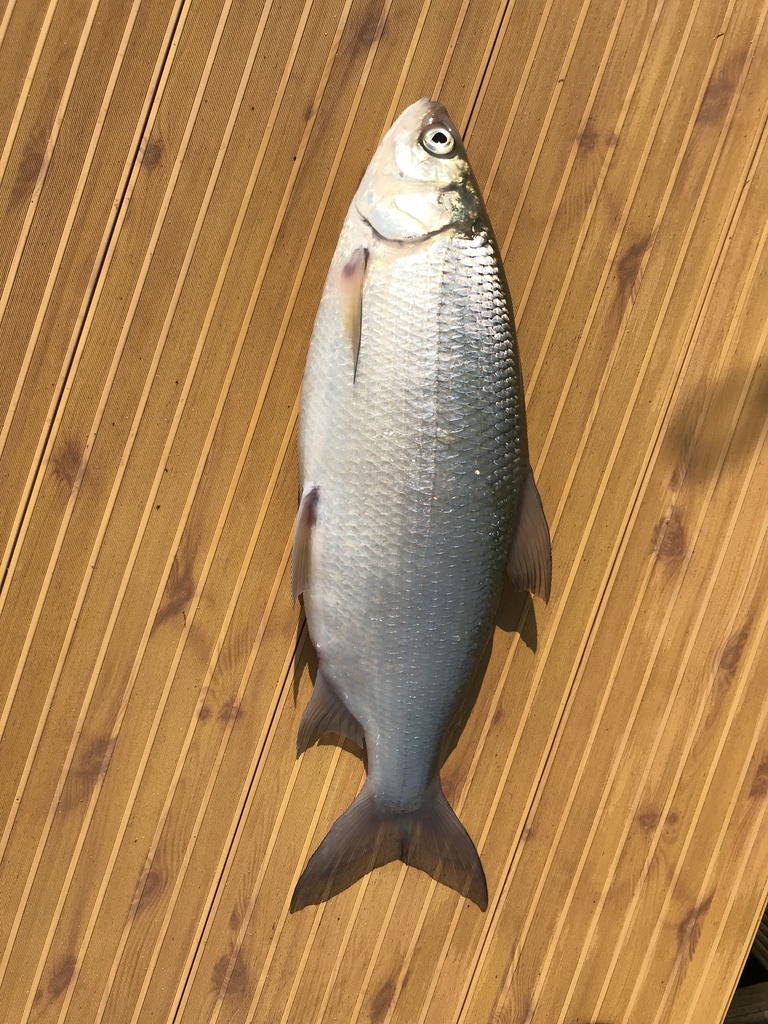
Species profile
Cisco
Coregonus artedi
Identify Cisco (Coregonus artedi) from a photo: try it free in your browser, or get unlimited IDs, no sign-up, with the CatchRules app. Plus current fishing rules across 7 jurisdictions.
At a glance
Cisco (Coregonus artedi) is an IUCN Least Concern bony-fish species regulated in 12 of 66 jurisdictions tracked by CatchRules across the U.S. and Canada.
The strictest bag limit is 2 (Ontario); the most generous is 350 (Nunavut).
Confirmed by 300 research-grade iNaturalist observations, with Ontario, Minnesota, and Michigan the top jurisdictions by observation count.
Notable details
- Cisco, also called lake herring, were once commercially harvested by the millions of pounds from the Great Lakes.
- They typically reach 10–18 inches and weigh up to 2 pounds.
- Cisco spawn in late fall and early winter, often just as ice begins forming.
- They feed primarily on zooplankton and small crustaceans filtered from open water.
- Cisco are a key forage fish for lake trout, walleye, and northern pike.
Where Cisco are seen
Jurisdictions with rules for Cisco
Background
Coregonus artedi, commonly known as the cisco, is a North American species of freshwater whitefish in the family Salmonidae. The number of species and definition of species limits in North American ciscoes is a matter of debate. Accordingly, Coregonus artedi may refer either in a narrow sense to one of the several types of cisco found e.g. in the Great Lakes, or in a broad sense to the complex of…
Background excerpt adapted from Wikipedia's Cisco article (CC BY-SA). Visit Wikipedia for the full entry.
Other bony fish on CatchRules
Frequently asked questions
What is Cisco?
Cisco (Coregonus artedi) is an IUCN Least Concern bony-fish species regulated in 12 of 66 jurisdictions tracked by CatchRules across the U.S. and Canada.
What is the scientific name for Cisco?
Cisco is Coregonus artedi.
Is Cisco regulated for fishing?
Yes — Cisco has fishing regulations in 7 U.S. states and/or Canadian provinces tracked by CatchRules. See the "Jurisdictions with rules" section above for the binding-source links.
How can I identify Cisco?
Take a photo with the free CatchRules app for iPhone or Android — on-device identification recognizes Cisco along with ~1,500 other species. No sign-up, unlimited use.
Photo credit: iNaturalist / Wikipedia. Identification reference only — verify regulations with the issuing wildlife agency before retaining a catch.