
Species profile
Cannonball Jelly
Stomolophus meleagris
Identify Cannonball Jelly (Stomolophus meleagris) from a photo: try it free in your browser, or get unlimited IDs, no sign-up, with the CatchRules app.
At a glance
Cannonball Jelly (Stomolophus meleagris) is a cnidarian present across the CatchRules coverage area but without species-specific bag, size, or season rules tracked in our regulatory dataset.
Confirmed by 7,712 research-grade iNaturalist observations, with South Carolina, Florida, and North Carolina the top jurisdictions by observation count.
Notable details
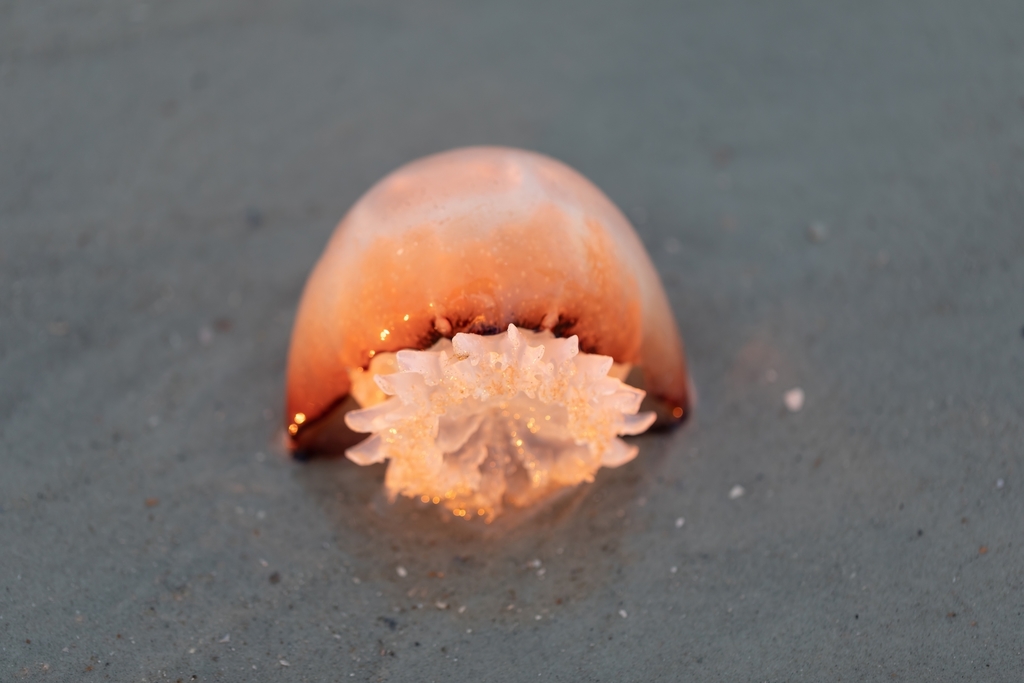
- Named for its perfectly round, ball-shaped bell that can reach 10 inches across.
- Unlike most jellyfish, it has no trailing tentacles — only short, bushy oral arms.
- Commercially harvested along the US Southeast coast and exported to Asian food markets.
- Can form massive blooms of millions during warm summer months in the Gulf of Mexico.
- Juvenile fish often shelter among its oral arms, using the jellyfish as a mobile refuge.
Where Cannonball Jelly are seen
Background
The cannonball jellyfish, also known as the cabbagehead jellyfish, is a species of jellyfish in the family Stomolophidae. Its common name derives from its similarity to a cannonball in shape and size. Its scientific name means “many mouthed hunter”. Its dome-shaped bell can reach 25 cm (10 in) in diameter. The rim is often colored with brown pigment. There are several known undescribed…
Background excerpt adapted from Wikipedia's Cannonball Jelly article (CC BY-SA). Visit Wikipedia for the full entry.
Other jellyfish/anemones/corals on CatchRules
Frequently asked questions
What is Cannonball Jelly?
Cannonball Jelly (Stomolophus meleagris) is a cnidarian present across the CatchRules coverage area but without species-specific bag, size, or season rules tracked in our regulatory dataset.
What is the scientific name for Cannonball Jelly?
Cannonball Jelly is Stomolophus meleagris.
Are there fishing rules for Cannonball Jelly?
Cannonball Jelly does not currently have published fishing rules in CatchRules' curated jurisdictions. Identification, range, and habitat are still tracked above.
How can I identify Cannonball Jelly?
Take a photo with the free CatchRules app for iPhone or Android — on-device identification recognizes Cannonball Jelly along with ~1,500 other species. No sign-up, unlimited use.
Photo credit: iNaturalist / Wikipedia. Identification reference only — verify regulations with the issuing wildlife agency before retaining a catch.