
Species profile
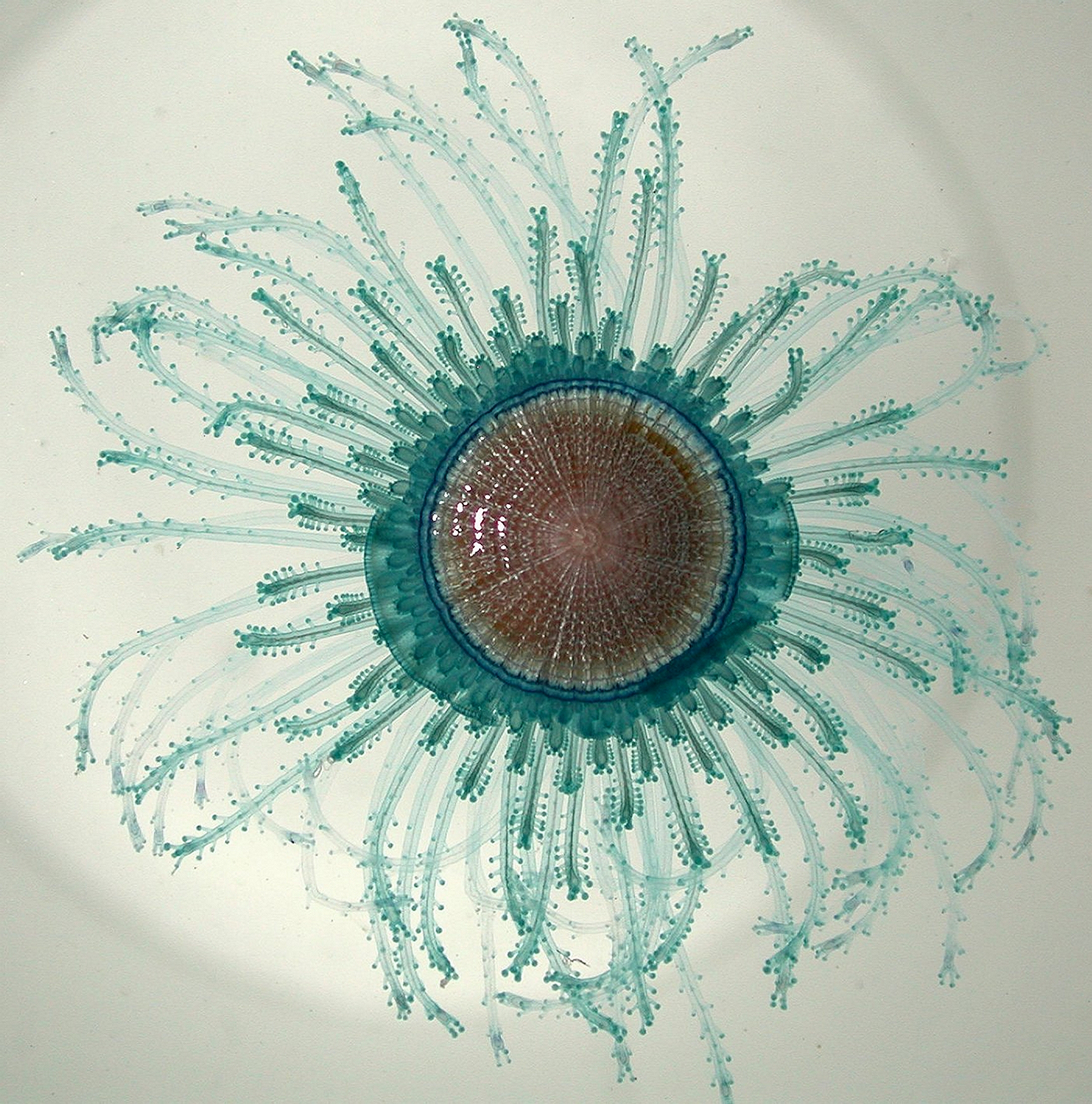
Blue Button
Porpita porpita
Identify Blue Button (Porpita porpita) from a photo: try it free in your browser, or get unlimited IDs, no sign-up, with the CatchRules app.
At a glance
Blue Button (Porpita porpita) is a cnidarian present across the CatchRules coverage area but without species-specific bag, size, or season rules tracked in our regulatory dataset.
Confirmed by 1,888 research-grade iNaturalist observations, with Texas, Florida, and North Carolina the top jurisdictions by observation count.
Notable details
- Blue button is a colonial organism — each disc is a colony of specialized polyps, not a single animal.
- The rigid blue float measures about 1 inch (2.5 cm) across and drifts passively on ocean currents.
- Its tentacles can cause mild skin irritation, though far weaker than a Portuguese Man-of-War sting.
- Blue sea slugs (Glaucus atlanticus) eat blue buttons and repurpose their stinging cells for their own defense.
- Blue buttons frequently wash ashore in large numbers, often alongside other open-ocean drifters.
Where Blue Button are seen
Background
Porpita porpita, or the blue button, is a marine organism consisting of a colony of hydroids found in the warmer, tropical and sub-tropical waters of the Pacific, Atlantic, and Indian oceans, as well as the Mediterranean Sea and eastern Arabian Sea. It was first identified by Carl Linnaeus in 1758, under the basionym Medusa porpita. In addition, it is one of the two genera under the suborder…
Background excerpt adapted from Wikipedia's Blue Button article (CC BY-SA). Visit Wikipedia for the full entry.
Other jellyfish/anemones/corals on CatchRules
Frequently asked questions
What is Blue Button?
Blue Button (Porpita porpita) is a cnidarian present across the CatchRules coverage area but without species-specific bag, size, or season rules tracked in our regulatory dataset.
What is the scientific name for Blue Button?
Blue Button is Porpita porpita.
Are there fishing rules for Blue Button?
Blue Button does not currently have published fishing rules in CatchRules' curated jurisdictions. Identification, range, and habitat are still tracked above.
How can I identify Blue Button?
Take a photo with the free CatchRules app for iPhone or Android — on-device identification recognizes Blue Button along with ~1,500 other species. No sign-up, unlimited use.
Photo credit: iNaturalist / Wikipedia. Identification reference only — verify regulations with the issuing wildlife agency before retaining a catch.