
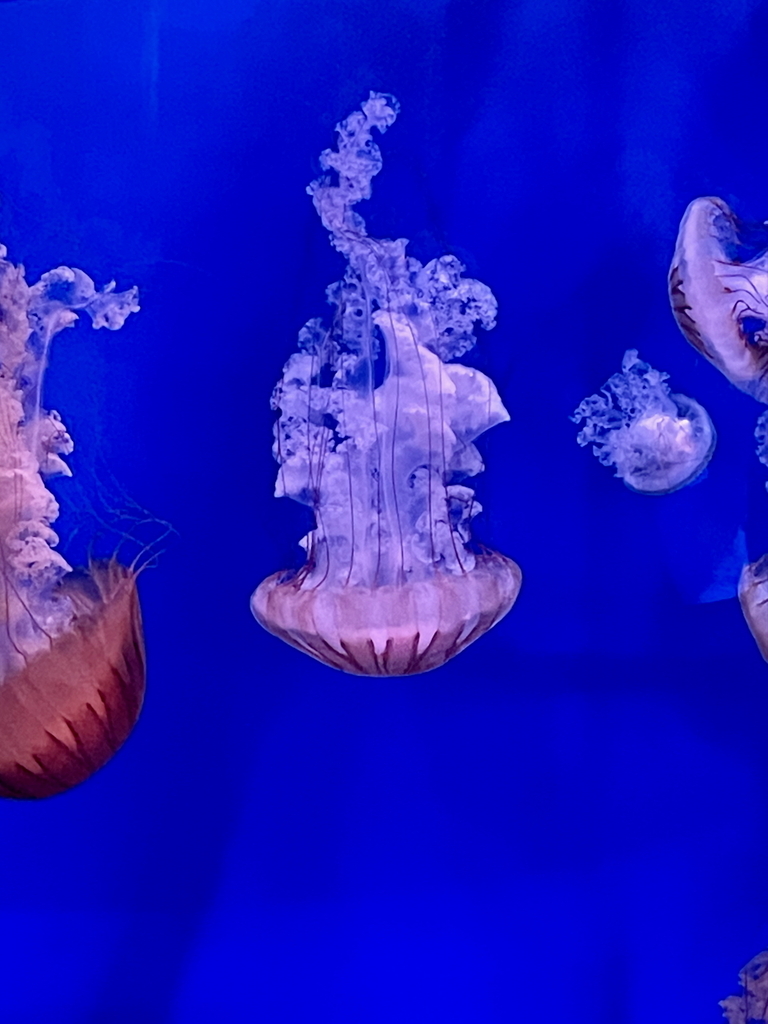
Species profile
Atlantic Sea Nettle
Chrysaora quinquecirrha
Identify Atlantic Sea Nettle (Chrysaora quinquecirrha) from a photo: try it free in your browser, or get unlimited IDs, no sign-up, with the CatchRules app.
At a glance
Atlantic Sea Nettle (Chrysaora quinquecirrha) is a cnidarian present across the CatchRules coverage area but without species-specific bag, size, or season rules tracked in our regulatory dataset.
Confirmed by 274 research-grade iNaturalist observations, with North Carolina, Texas, and Florida the top jurisdictions by observation count.
Notable details
- Atlantic sea nettles prefer brackish estuaries like Chesapeake Bay, where they bloom each summer.
- Their bell typically grows to about 6–8 inches in diameter.
- They feed on comb jellies, zooplankton, and small fish.
- Polyps overwinter on the seafloor and bud off new medusae each spring.
- Their sting causes a mild but memorable burning rash.
Where Atlantic Sea Nettle are seen
Background
The Atlantic sea nettle, also called the East Coast sea nettle in the United States, is a species of jellyfish that inhabits the Atlantic coast of the United States. Historically it was confused with several Chrysaora species, resulting in incorrect reports of C. quinquecirrha from other parts of the Atlantic and other oceans. Most recently, C. chesapeakei of estuaries on the Atlantic coast of…
Background excerpt adapted from Wikipedia's Atlantic Sea Nettle article (CC BY-SA). Visit Wikipedia for the full entry.
Frequently asked questions
What is Atlantic Sea Nettle?
Atlantic Sea Nettle (Chrysaora quinquecirrha) is a cnidarian present across the CatchRules coverage area but without species-specific bag, size, or season rules tracked in our regulatory dataset.
What is the scientific name for Atlantic Sea Nettle?
Atlantic Sea Nettle is Chrysaora quinquecirrha.
Are there fishing rules for Atlantic Sea Nettle?
Atlantic Sea Nettle does not currently have published fishing rules in CatchRules' curated jurisdictions. Identification, range, and habitat are still tracked above.
How can I identify Atlantic Sea Nettle?
Take a photo with the free CatchRules app for iPhone or Android — on-device identification recognizes Atlantic Sea Nettle along with ~1,500 other species. No sign-up, unlimited use.
Photo credit: iNaturalist / Wikipedia. Identification reference only — verify regulations with the issuing wildlife agency before retaining a catch.