
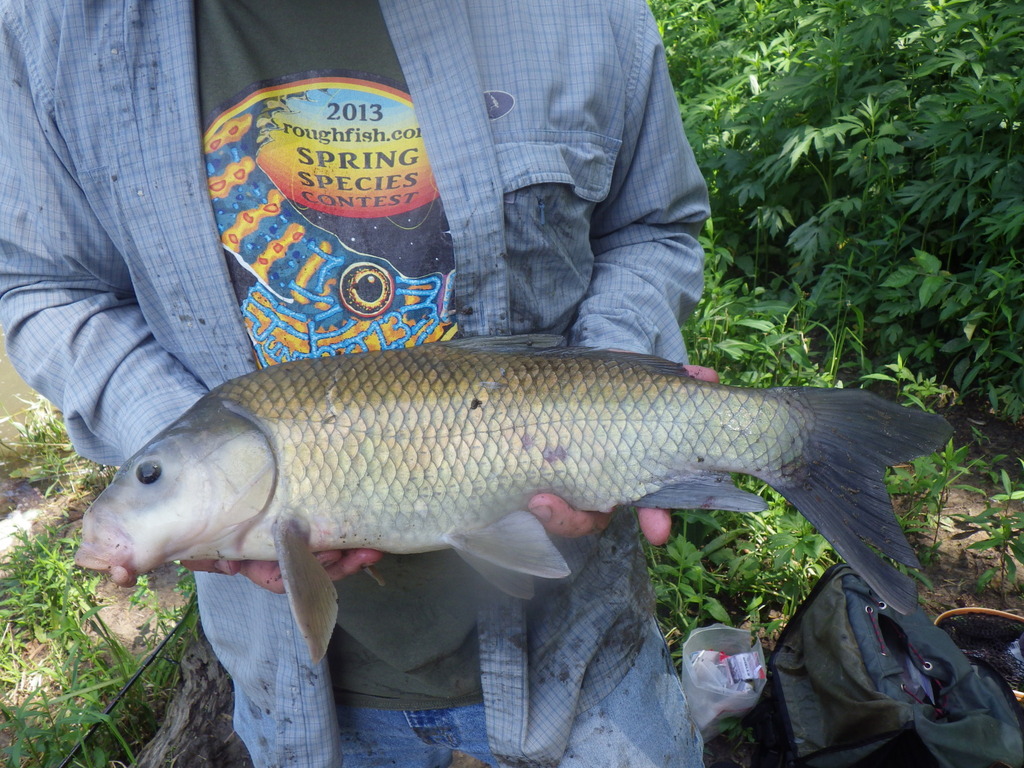
Species profile
Buffalo
Ictiobus niger
Identify Buffalo (Ictiobus niger) from a photo: try it free in your browser, or get unlimited IDs, no sign-up, with the CatchRules app. Plus current fishing rules across 6 jurisdictions.
At a glance
Buffalo (Ictiobus niger) is an IUCN Least Concern bony-fish species regulated in 8 of 66 jurisdictions tracked by CatchRules across the U.S. and Canada.
Confirmed by 156 research-grade iNaturalist observations, with Illinois, Missouri, and Indiana the top jurisdictions by observation count.
Notable details
- Black buffalo can exceed 50 pounds and grow over 3 feet long.
- Feed by sucking up invertebrates and organic material from the bottom, using a downward-facing mouth.
- Native to large rivers and reservoirs across the central United States.
- The closely related bigmouth buffalo has been documented living over 100 years.
- Despite their size and abundance, they are underutilized by most recreational anglers.
Where Buffalo are seen
Jurisdictions with rules for Buffalo
Background
The black buffalo (Ictiobus niger) is a North American species of freshwater fish in the Catostomidae or sucker family. I. niger is found in the Mississippi Basin and southern Great Lakes. I. niger was first discovered in Canada in the western end of Lake Erie and has been reported from Boston Creek. The Tennessee distribution ranges from rivers and streams in the Cumberland Mountains, a few…
Background excerpt adapted from Wikipedia's Buffalo article (CC BY-SA). Visit Wikipedia for the full entry.
Other bony fish on CatchRules
Frequently asked questions
What is Buffalo?
Buffalo (Ictiobus niger) is an IUCN Least Concern bony-fish species regulated in 8 of 66 jurisdictions tracked by CatchRules across the U.S. and Canada.
What is the scientific name for Buffalo?
Buffalo is Ictiobus niger.
Is Buffalo regulated for fishing?
Yes — Buffalo has fishing regulations in 6 U.S. states and/or Canadian provinces tracked by CatchRules. See the "Jurisdictions with rules" section above for the binding-source links.
How can I identify Buffalo?
Take a photo with the free CatchRules app for iPhone or Android — on-device identification recognizes Buffalo along with ~1,500 other species. No sign-up, unlimited use.
Photo credit: iNaturalist / Wikipedia. Identification reference only — verify regulations with the issuing wildlife agency before retaining a catch.