
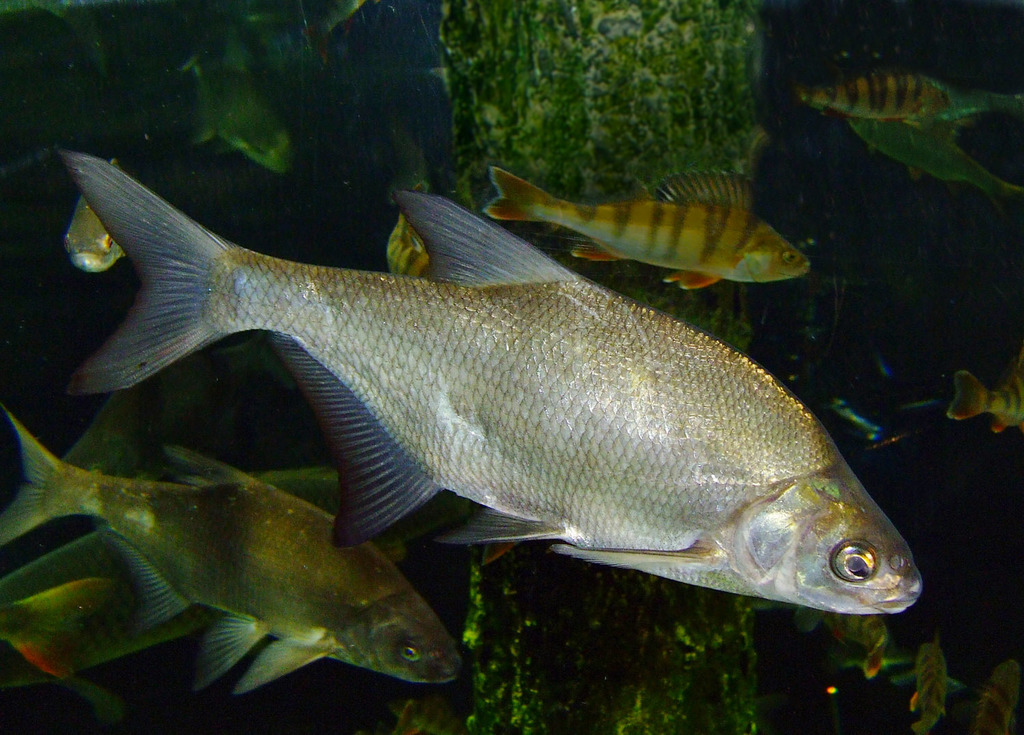
Species profile
Bream
Abramis brama
Identify Bream (Abramis brama) from a photo: try it free in your browser, or get unlimited IDs, no sign-up, with the CatchRules app. Plus current fishing rules across 5 jurisdictions.
At a glance
Bream (Abramis brama) is an IUCN Least Concern bony-fish species regulated in 5 of 66 jurisdictions tracked by CatchRules across the U.S. and Canada.
The strictest bag limit is 15 (Georgia); the most generous is 50 (Arkansas).
Notable details
- Common bream can live up to 29 years in the wild.
- They grow 12–22 inches long and can exceed 13 pounds in large lakes.
- Their highly protrusible mouth works like a vacuum to suck invertebrates from muddy bottoms.
- Bream spawn in noisy, splashing groups in shallow weedy bays each spring.
- They are highly social and travel in large shoals year-round.
Jurisdictions with rules for Bream
Background
The common bream, freshwater bream, bream, bronze bream or carp bream (Abramis brama), is a European species of freshwater fish in the family Cyprinidae. It is now considered to be the only species in the genus Abramis.
Background excerpt adapted from Wikipedia's Bream article (CC BY-SA). Visit Wikipedia for the full entry.
Other bony fish on CatchRules
Frequently asked questions
What is Bream?
Bream (Abramis brama) is an IUCN Least Concern bony-fish species regulated in 5 of 66 jurisdictions tracked by CatchRules across the U.S. and Canada.
What is the scientific name for Bream?
Bream is Abramis brama.
Is Bream regulated for fishing?
Yes — Bream has fishing regulations in 5 U.S. states and/or Canadian provinces tracked by CatchRules. See the "Jurisdictions with rules" section above for the binding-source links.
How can I identify Bream?
Take a photo with the free CatchRules app for iPhone or Android — on-device identification recognizes Bream along with ~1,500 other species. No sign-up, unlimited use.
Photo credit: iNaturalist / Wikipedia. Identification reference only — verify regulations with the issuing wildlife agency before retaining a catch.