
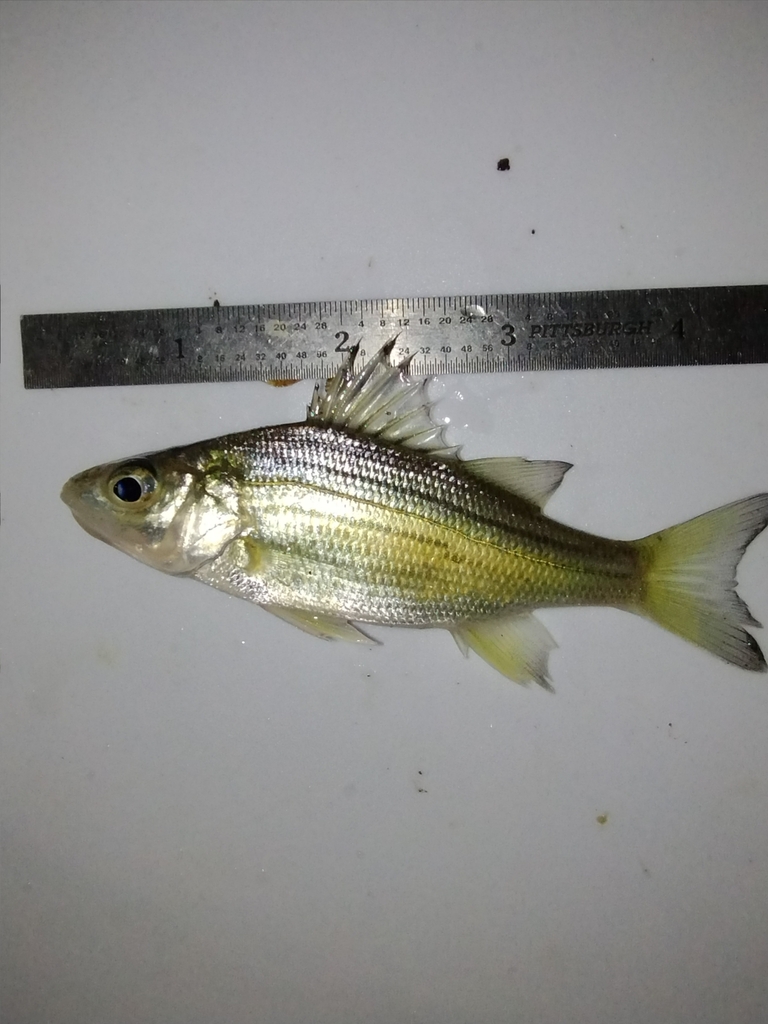
Species profile
Yellow Bass
Morone mississippiensis
Identify Yellow Bass (Morone mississippiensis) from a photo: try it free in your browser, or get unlimited IDs, no sign-up, with the CatchRules app. Plus current fishing rules across 8 jurisdictions.
At a glance
Yellow Bass (Morone mississippiensis) is an IUCN Least Concern bony-fish species regulated in 10 of 66 jurisdictions tracked by CatchRules across the U.S. and Canada.
The strictest bag limit is 3 (Illinois); the most generous is 100 (Minnesota).
Confirmed by 690 research-grade iNaturalist observations, with Texas, Illinois, and Tennessee the top jurisdictions by observation count.
Notable details
- Its golden body features broken, offset horizontal stripes, distinguishing it from white bass.
- Rarely exceeds 2 pounds; most anglers catch fish well under a pound.
- Found primarily in the Mississippi River basin and connected rivers of the central U.S.
- Forms tight schools, especially during spring spawning runs up tributary streams.
- Considered excellent eating with firm, mild white flesh.
Where Yellow Bass are seen
Jurisdictions with rules for Yellow Bass
Background
Morone mississippiensis, commonly known as the yellow bass, is a member of the family Moronidae. This species is a deep bodied fish that possesses five to seven dark stripes laterally along the sides, the lowest few of these are often broken or disrupted anterior to the origin of the anal fin. This species is somewhat similar to two other species in the family Moronidae, the white bass and the…
Background excerpt adapted from Wikipedia's Yellow Bass article (CC BY-SA). Visit Wikipedia for the full entry.
Other bony fish on CatchRules
Frequently asked questions
What is Yellow Bass?
Yellow Bass (Morone mississippiensis) is an IUCN Least Concern bony-fish species regulated in 10 of 66 jurisdictions tracked by CatchRules across the U.S. and Canada.
What is the scientific name for Yellow Bass?
Yellow Bass is Morone mississippiensis.
Is Yellow Bass regulated for fishing?
Yes — Yellow Bass has fishing regulations in 8 U.S. states and/or Canadian provinces tracked by CatchRules. See the "Jurisdictions with rules" section above for the binding-source links.
How can I identify Yellow Bass?
Take a photo with the free CatchRules app for iPhone or Android — on-device identification recognizes Yellow Bass along with ~1,500 other species. No sign-up, unlimited use.
Photo credit: iNaturalist / Wikipedia. Identification reference only — verify regulations with the issuing wildlife agency before retaining a catch.