
Species profile
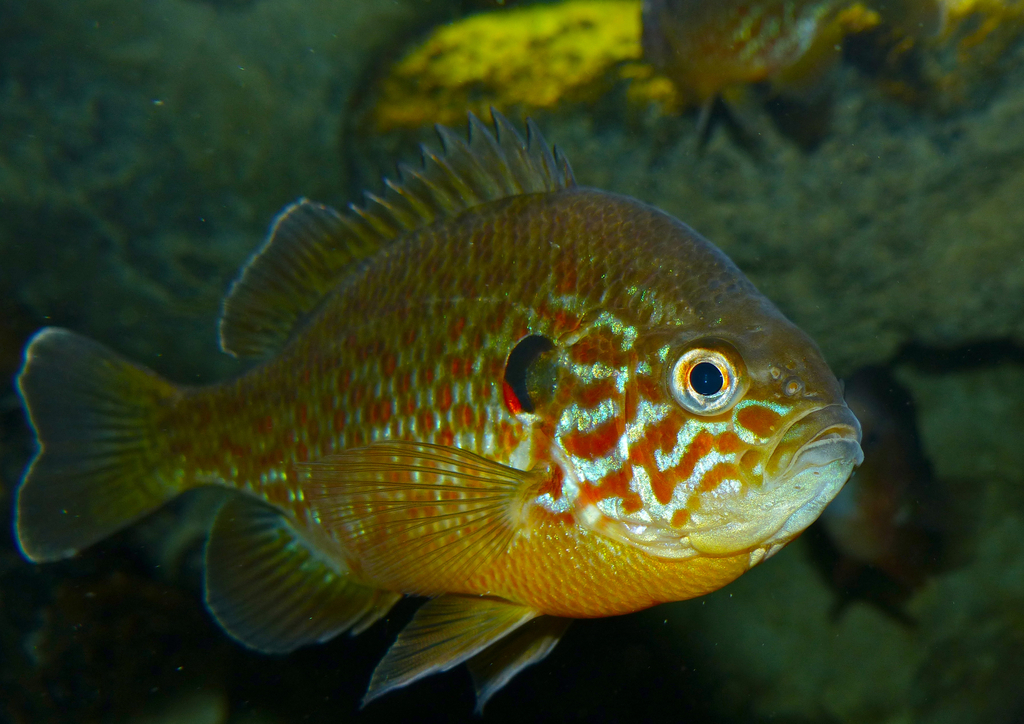
Pumpkinseed
Lepomis gibbosus
Identify Pumpkinseed (Lepomis gibbosus) from a photo: try it free in your browser, or get unlimited IDs, no sign-up, with the CatchRules app. Plus current fishing rules across 25 jurisdictions.
At a glance
Pumpkinseed (Lepomis gibbosus) is an IUCN Least Concern bony-fish species regulated in 31 of 66 jurisdictions tracked by CatchRules across the U.S. and Canada.
The strictest bag limit is 5 (Minnesota); the most generous is 300 (Ontario).
Across 7 jurisdictions with stated minimum sizes, the average minimum is 8.1 in.
Confirmed by 11,757 research-grade iNaturalist observations, with Ontario, New York, and Quebec the top jurisdictions by observation count.
Notable details
- Its deep, round, laterally flattened body resembles a pumpkin seed, which inspired the common name.
- The ear flap has a vivid red or orange spot at its tip — a field mark found on no other eastern sunfish.
- Throat teeth specialized for crushing hard shells let pumpkinseed eat snails that most sunfish cannot handle.
- Adults typically reach 6–9 inches and rarely exceed 1 pound.
- Introduced to Europe decades ago, pumpkinseed are now naturalized in numerous French, Italian, and Iberian waterways.
Where Pumpkinseed are seen
Jurisdictions with rules for Pumpkinseed
Background
The pumpkinseed (Lepomis gibbosus) is a North American freshwater fish of the sunfish family (Centrarchidae) of order Perciformes. It is also referred to as pond perch, common sunfish, punkys, sunfish, sunny, and kivver.
Background excerpt adapted from Wikipedia's Pumpkinseed article (CC BY-SA). Visit Wikipedia for the full entry.
Other bony fish on CatchRules
Frequently asked questions
What is Pumpkinseed?
Pumpkinseed (Lepomis gibbosus) is an IUCN Least Concern bony-fish species regulated in 31 of 66 jurisdictions tracked by CatchRules across the U.S. and Canada.
What is the scientific name for Pumpkinseed?
Pumpkinseed is Lepomis gibbosus.
Is Pumpkinseed regulated for fishing?
Yes — Pumpkinseed has fishing regulations in 25 U.S. states and/or Canadian provinces tracked by CatchRules. See the "Jurisdictions with rules" section above for the binding-source links.
How can I identify Pumpkinseed?
Take a photo with the free CatchRules app for iPhone or Android — on-device identification recognizes Pumpkinseed along with ~1,500 other species. No sign-up, unlimited use.
Photo credit: iNaturalist / Wikipedia. Identification reference only — verify regulations with the issuing wildlife agency before retaining a catch.