
Species profile
Perch
Perca fluviatilis
Identify Perch (Perca fluviatilis) from a photo: try it free in your browser, or get unlimited IDs, no sign-up, with the CatchRules app. Plus current fishing rules across 39 jurisdictions.
At a glance
Perch (Perca fluviatilis) is an IUCN Least Concern bony-fish species regulated in 42 of 66 jurisdictions tracked by CatchRules across the U.S. and Canada.
The strictest bag limit is 1 (South Dakota); the most generous is 100 (New Brunswick).
Across 14 jurisdictions with stated minimum sizes, the average minimum is 9.2 in.
Notable details
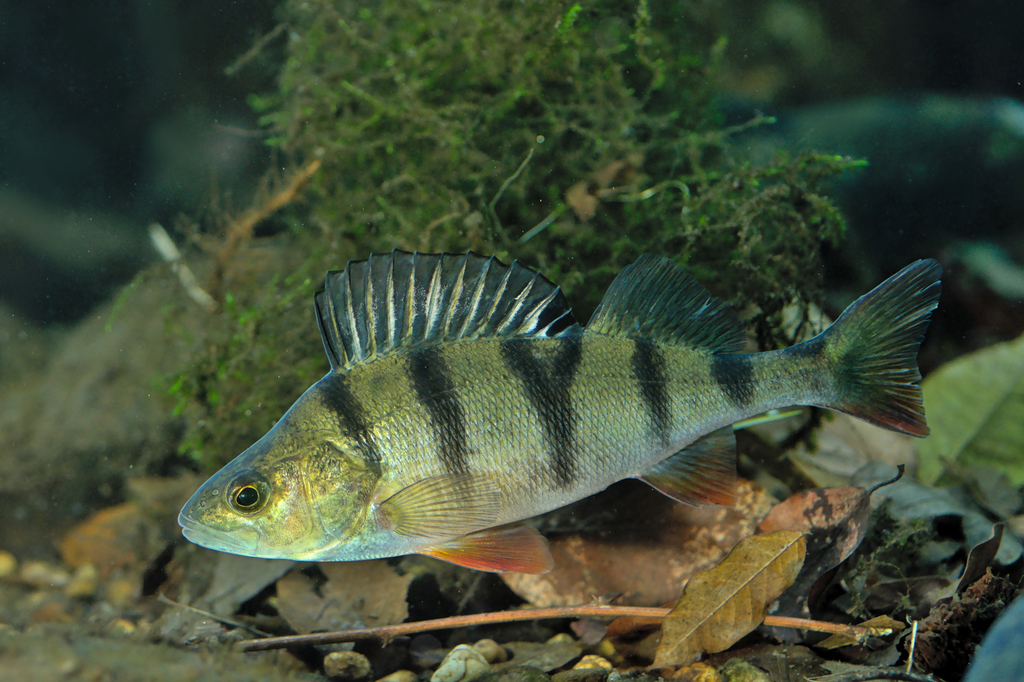
- European perch are identified by bold dark vertical stripes and vivid red-orange pelvic fins.
- They can live up to 22 years but most reach 8–14 inches in length.
- Young perch school for protection; adults become solitary ambush predators of smaller fish.
- Native to Europe and Asia, European perch have been introduced to Australia, New Zealand, and South Africa.
- Females grow significantly larger than males and can weigh over 4 lbs in productive lakes.
Jurisdictions with rules for Perch
Background
Perca fluviatilis, commonly known as the European perch, perch, redfin perch, big-scaled redfin, English perch, Eurasian perch, Eurasian river perch or common perch, is a predatory species of perch found in Europe and northern Asia. The species is a popular quarry for anglers, and has been widely introduced beyond its native area, into Australia, New Zealand, and South Africa. They have caused…
Background excerpt adapted from Wikipedia's Perch article (CC BY-SA). Visit Wikipedia for the full entry.
Other bony fish on CatchRules
Frequently asked questions
What is Perch?
Perch (Perca fluviatilis) is an IUCN Least Concern bony-fish species regulated in 42 of 66 jurisdictions tracked by CatchRules across the U.S. and Canada.
What is the scientific name for Perch?
Perch is Perca fluviatilis.
Is Perch regulated for fishing?
Yes — Perch has fishing regulations in 39 U.S. states and/or Canadian provinces tracked by CatchRules. See the "Jurisdictions with rules" section above for the binding-source links.
How can I identify Perch?
Take a photo with the free CatchRules app for iPhone or Android — on-device identification recognizes Perch along with ~1,500 other species. No sign-up, unlimited use.
Photo credit: iNaturalist / Wikipedia. Identification reference only — verify regulations with the issuing wildlife agency before retaining a catch.