
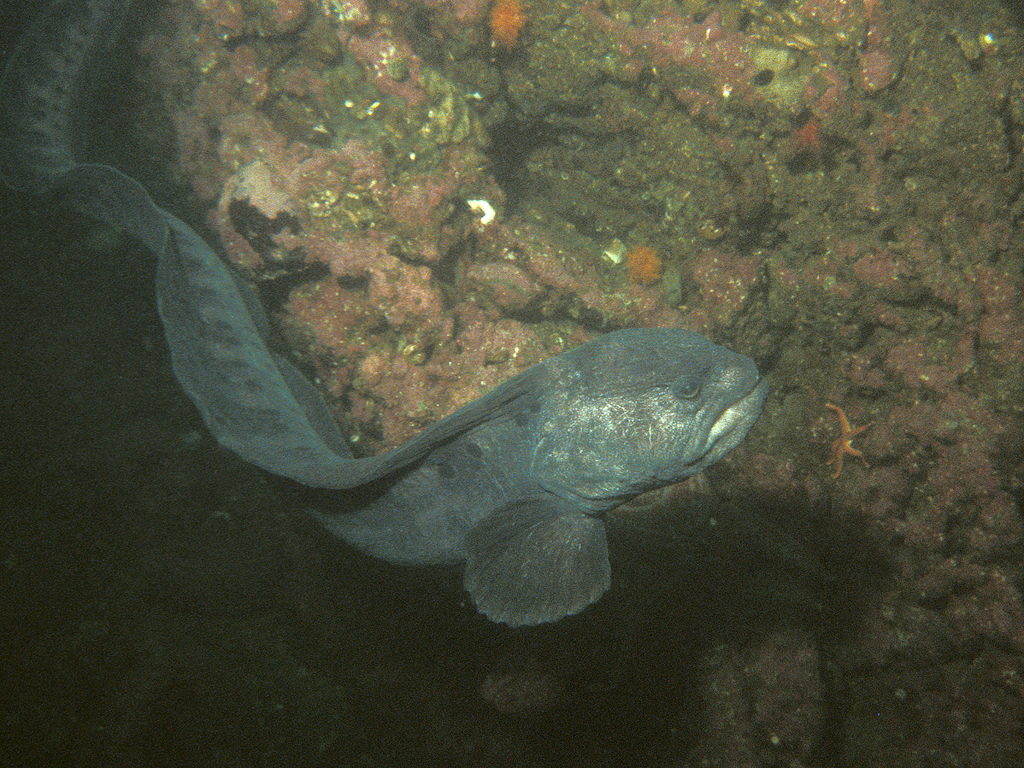
Species profile
Wolf Eel
Anarrhichthys ocellatus
Identify Wolf Eel (Anarrhichthys ocellatus) from a photo: try it free in your browser, or get unlimited IDs, no sign-up, with the CatchRules app. Plus current fishing rules across 2 jurisdictions.
At a glance
Wolf Eel (Anarrhichthys ocellatus) is an IUCN Least Concern bony-fish species regulated in 3 of 66 jurisdictions tracked by CatchRules across the U.S. and Canada.
Confirmed by 784 research-grade iNaturalist observations, with British Columbia, Washington, and California the top jurisdictions by observation count.
Notable details
- Despite the name, wolf eels are not true eels — they belong to the wolffish family.
- Can grow up to 8 feet long along rocky reefs from Alaska to Baja California.
- Wolf eels are monogamous and typically mate for life.
- Both parents wrap around their egg mass for months to guard it.
- Powerful crushing teeth let them eat sea urchins, crabs, and clams.
Where Wolf Eel are seen
Jurisdictions with rules for Wolf Eel
Background
The wolf eel (Anarrhichthys ocellatus) is a species of wolffish (Anarhichadidae) from the North Pacific. It is monotypic within the genus Anarrhichthys and one of only two genera in the family, the other being Anarhichas.
Background excerpt adapted from Wikipedia's Wolf Eel article (CC BY-SA). Visit Wikipedia for the full entry.
Other bony fish on CatchRules
Frequently asked questions
What is Wolf Eel?
Wolf Eel (Anarrhichthys ocellatus) is an IUCN Least Concern bony-fish species regulated in 3 of 66 jurisdictions tracked by CatchRules across the U.S. and Canada.
What is the scientific name for Wolf Eel?
Wolf Eel is Anarrhichthys ocellatus.
Is Wolf Eel regulated for fishing?
Yes — Wolf Eel has fishing regulations in 2 U.S. states and/or Canadian provinces tracked by CatchRules. See the "Jurisdictions with rules" section above for the binding-source links.
How can I identify Wolf Eel?
Take a photo with the free CatchRules app for iPhone or Android — on-device identification recognizes Wolf Eel along with ~1,500 other species. No sign-up, unlimited use.
Photo credit: iNaturalist / Wikipedia. Identification reference only — verify regulations with the issuing wildlife agency before retaining a catch.