
Species profile
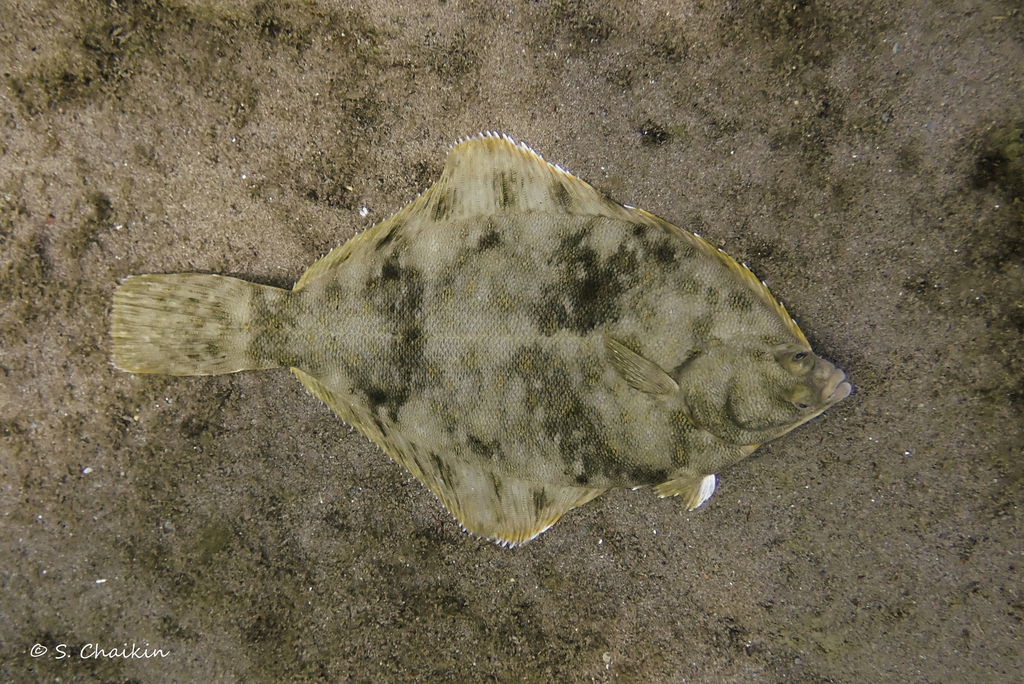
Winter Flounder
Pseudopleuronectes americanus
Identify Winter Flounder (Pseudopleuronectes americanus) from a photo: try it free in your browser, or get unlimited IDs, no sign-up, with the CatchRules app. Plus current fishing rules across 16 jurisdictions.
At a glance
Winter Flounder (Pseudopleuronectes americanus) is an IUCN Vulnerable bony-fish species regulated in 19 of 66 jurisdictions tracked by CatchRules across the U.S. and Canada.
The strictest bag limit is 2 (Massachusetts); the most generous is 25 (Oregon).
Across 11 jurisdictions with stated minimum sizes, the average minimum is 12.9 in.
Confirmed by 1,040 research-grade iNaturalist observations, with Massachusetts, Nova Scotia, and New York the top jurisdictions by observation count.
Notable details
- Both eyes migrate to the right side of the head during larval development.
- Can reach 24 inches (61 cm) in length and over 5 pounds (2.3 kg) in weight.
- Spawns in late winter and early spring in coastal bays and estuaries.
- Can rapidly alter its skin color and pattern to match the seafloor.
- Lives up to 18 years in the wild.
Where Winter Flounder are seen
Jurisdictions with rules for Winter Flounder
Background
The winter flounder, also known as the black back, is a right-eyed ("dextral") flatfish of the family Pleuronectidae. It is native to coastal waters of the western north Atlantic coast, from Labrador, Canada to Georgia, United States, although it is less common south of Delaware Bay. It is the most common near-shore (shallow-water) flounder in the waters from Newfoundland down through…
Background excerpt adapted from Wikipedia's Winter Flounder article (CC BY-SA). Visit Wikipedia for the full entry.
Other bony fish on CatchRules
Frequently asked questions
What is Winter Flounder?
Winter Flounder (Pseudopleuronectes americanus) is an IUCN Vulnerable bony-fish species regulated in 19 of 66 jurisdictions tracked by CatchRules across the U.S. and Canada.
What is the scientific name for Winter Flounder?
Winter Flounder is Pseudopleuronectes americanus.
Is Winter Flounder regulated for fishing?
Yes — Winter Flounder has fishing regulations in 16 U.S. states and/or Canadian provinces tracked by CatchRules. See the "Jurisdictions with rules" section above for the binding-source links.
How can I identify Winter Flounder?
Take a photo with the free CatchRules app for iPhone or Android — on-device identification recognizes Winter Flounder along with ~1,500 other species. No sign-up, unlimited use.
Photo credit: iNaturalist / Wikipedia. Identification reference only — verify regulations with the issuing wildlife agency before retaining a catch.