
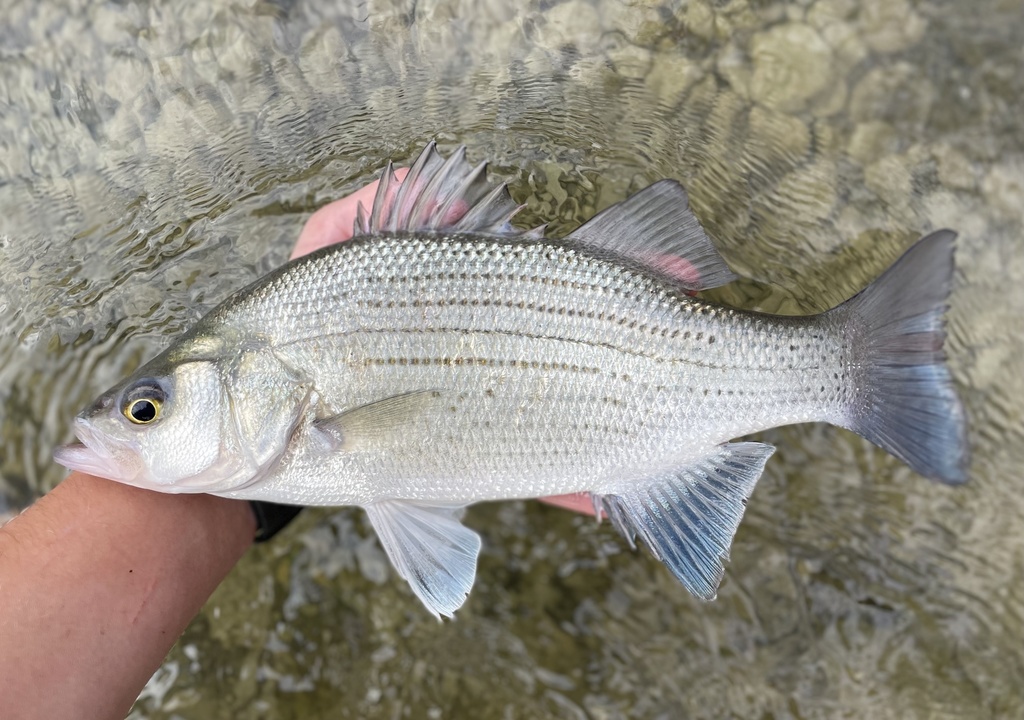
Species profile
White Bass
Morone chrysops
Identify White Bass (Morone chrysops) from a photo: try it free in your browser, or get unlimited IDs, no sign-up, with the CatchRules app. Plus current fishing rules across 41 jurisdictions.
At a glance
White Bass (Morone chrysops) is an IUCN Least Concern bony-fish species regulated in 40 of 66 jurisdictions tracked by CatchRules across the U.S. and Canada.
The strictest bag limit is 1 (Oregon); the most generous is 50 (Pennsylvania).
Across 21 jurisdictions with stated minimum sizes, the average minimum is 15.8 in (≈ 1 ft 4 in).
Confirmed by 2,028 research-grade iNaturalist observations, with Texas, Ohio, and Illinois the top jurisdictions by observation count.
Notable details
- Unlike its cousin Striped Bass, White Bass lives entirely in freshwater lakes and rivers.
- Crossing White Bass with Striped Bass produces the 'Wiper' hybrid, a popular stocked sport fish.
- They herd shad to the surface in explosive schooling feeding frenzies visible from shore.
- White Bass typically reach 10-15 inches and rarely exceed 3-4 pounds in the wild.
- Large spawning runs up river tributaries each spring draw anglers from across their range.
Where White Bass are seen
Jurisdictions with rules for White Bass
Background
The white bass, silver bass, or sand bass (Morone chrysops) is a freshwater fish of the temperate bass family Moronidae. It is the state fish of Oklahoma.
Background excerpt adapted from Wikipedia's White Bass article (CC BY-SA). Visit Wikipedia for the full entry.
Other bony fish on CatchRules
Frequently asked questions
What is White Bass?
White Bass (Morone chrysops) is an IUCN Least Concern bony-fish species regulated in 40 of 66 jurisdictions tracked by CatchRules across the U.S. and Canada.
What is the scientific name for White Bass?
White Bass is Morone chrysops.
Is White Bass regulated for fishing?
Yes — White Bass has fishing regulations in 41 U.S. states and/or Canadian provinces tracked by CatchRules. See the "Jurisdictions with rules" section above for the binding-source links.
How can I identify White Bass?
Take a photo with the free CatchRules app for iPhone or Android — on-device identification recognizes White Bass along with ~1,500 other species. No sign-up, unlimited use.
Photo credit: iNaturalist / Wikipedia. Identification reference only — verify regulations with the issuing wildlife agency before retaining a catch.