
Species profile
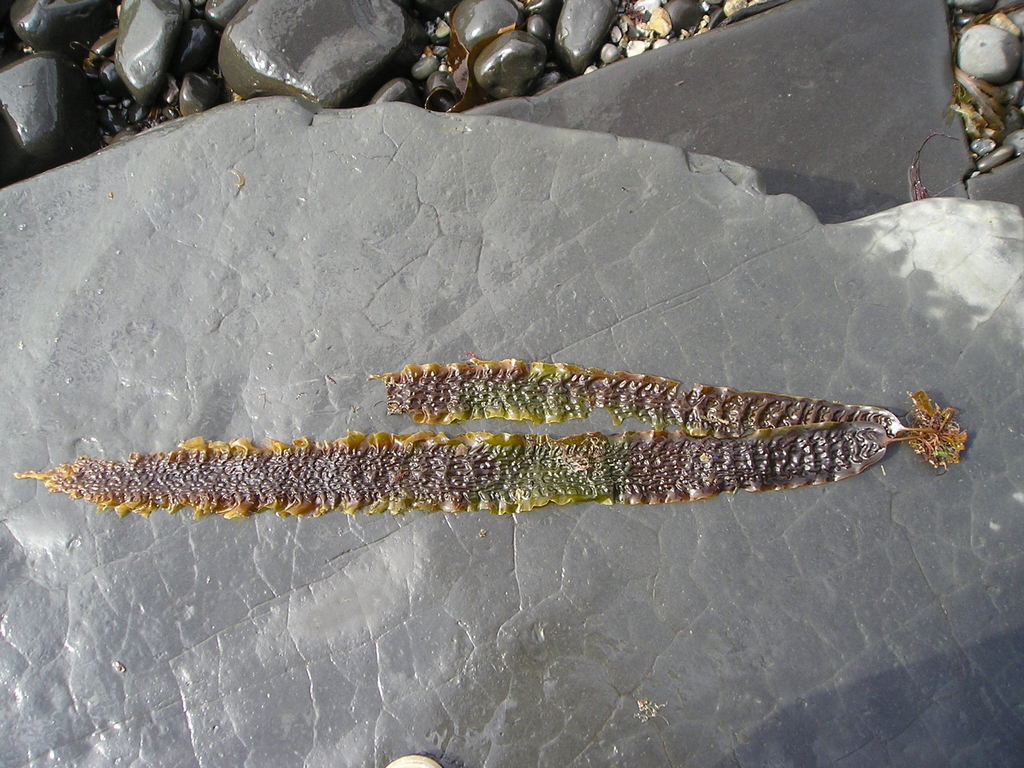
Sugar Kelp
Saccharina latissima
At a glance
Sugar Kelp (Saccharina latissima) is a marine alga regulated in 3 of 66 jurisdictions tracked by CatchRules across the U.S. and Canada.
The strictest bag limit is 1 (Oregon); the most generous is 10 (California).
Confirmed by 2,371 research-grade iNaturalist observations, with British Columbia, Washington, and Nova Scotia the top jurisdictions by observation count.
Notable details
- Named for the sweet white powder (mannitol) that forms on its surface when dried.
- A single blade can grow up to 4 meters (13 feet) long.
- Grows in cold North Atlantic and North Pacific waters, often forming dense underwater forests.
- Farmed commercially for food, fertilizer, biofuel feedstock, and cosmetic ingredients.
- Provides essential nursery habitat for fish, sea urchins, and other invertebrates.
Where Sugar Kelp are seen
Jurisdictions with rules for Sugar Kelp
Background
Saccharina latissima is a brown algae (class Phaeophyceae), of the family Laminariaceae. It is also known by the common names sea belt and Devil's apron, due to its shape. It is found in the north east Atlantic Ocean and the Barents Sea south to Galicia in Spain. It is not found in the Bay of Biscay but is common round the coasts of the British Isles. The species is found at sheltered rocky…
Background excerpt adapted from Wikipedia's Sugar Kelp article (CC BY-SA). Visit Wikipedia for the full entry.
Other brown algae/kelps on CatchRules
Photo credit: iNaturalist / Wikipedia. Identification reference only — verify regulations with the issuing wildlife agency before retaining a catch.