
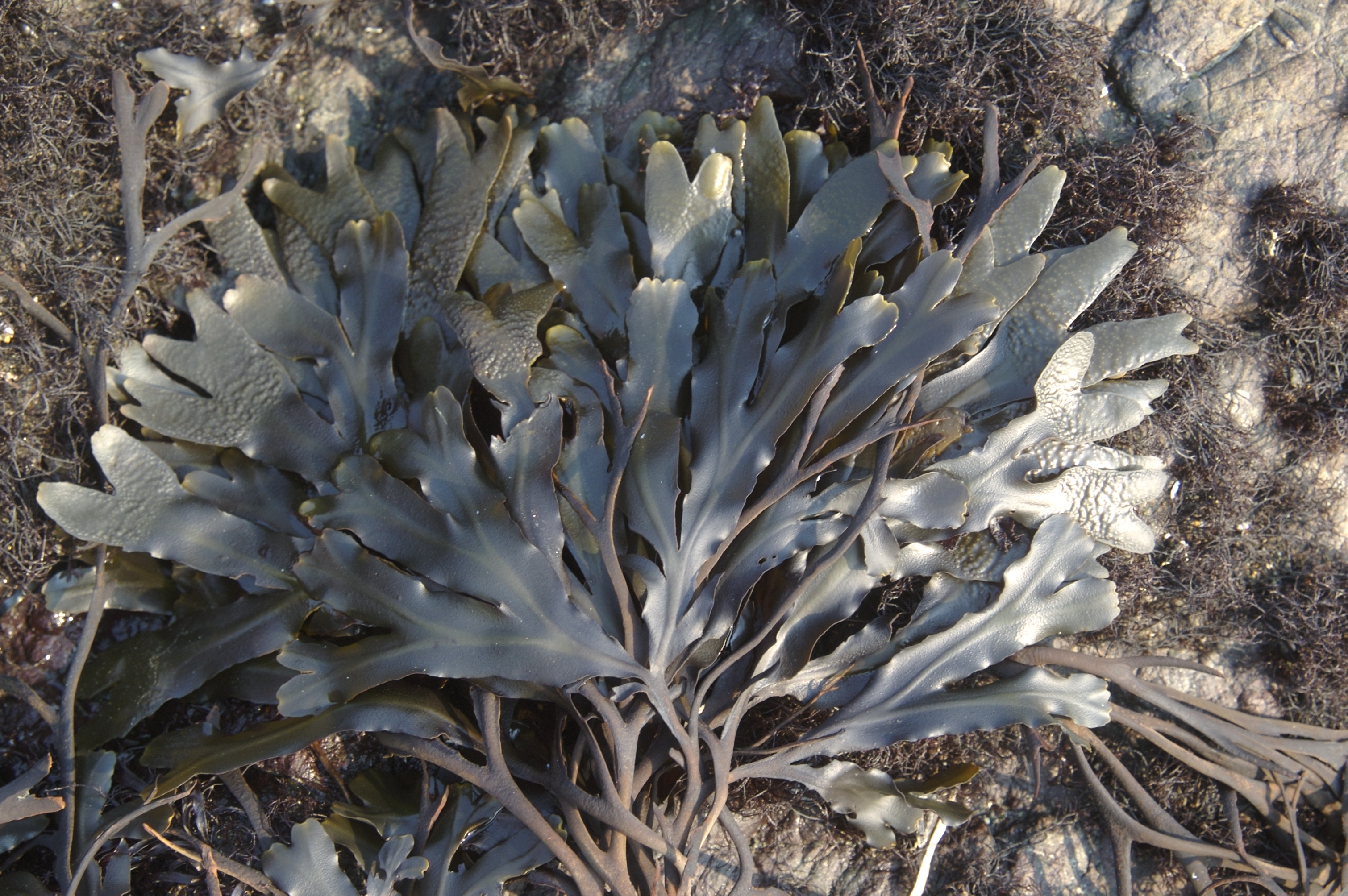
Species profile
Rockweed
Fucus distichus
Identify Rockweed (Fucus distichus) from a photo — free, unlimited, no sign-up — with the CatchRules iPhone app. Plus current fishing rules across 3 jurisdictions.
At a glance
Rockweed (Fucus distichus) is a marine alga regulated in 3 of 66 jurisdictions tracked by CatchRules across the U.S. and Canada.
The strictest bag limit is 1 (Oregon); the most generous is 10 (California).
Confirmed by 13,617 research-grade iNaturalist observations, with British Columbia, California, and Washington the top jurisdictions by observation count.
Notable details
- Fronds branch repeatedly in a forked (dichotomous) pattern, creating a dense, bushy appearance.
- A common brown alga of rocky intertidal zones across both the North Pacific and North Atlantic.
- Gametes are released into open water, where fertilization occurs externally.
- Dense mats provide critical shelter and moisture for intertidal invertebrates stranded at low tide.
- Can tolerate a wide range of salinities, surviving in both full seawater and brackish pools.
Where Rockweed are seen
Jurisdictions with rules for Rockweed
Background
Fucus distichus or rockweed is a species of brown alga in the family Fucaceae to be found in the intertidal zones of rocky seashores in the Northern Hemisphere, mostly in rock pools.
Background excerpt adapted from Wikipedia's Rockweed article (CC BY-SA). Visit Wikipedia for the full entry.
Other brown algae/kelps on CatchRules
Frequently asked questions
What is Rockweed?
Rockweed (Fucus distichus) is a marine alga regulated in 3 of 66 jurisdictions tracked by CatchRules across the U.S. and Canada.
What is the scientific name for Rockweed?
Rockweed is Fucus distichus.
Is Rockweed regulated for fishing?
Yes — Rockweed has fishing regulations in 3 U.S. states and/or Canadian provinces tracked by CatchRules. See the "Jurisdictions with rules" section above for the binding-source links.
How can I identify Rockweed?
Take a photo with the free CatchRules iPhone app — on-device identification recognizes Rockweed along with ~1,500 other species. No sign-up, unlimited use.
Photo credit: iNaturalist / Wikipedia. Identification reference only — verify regulations with the issuing wildlife agency before retaining a catch.