
Species profile
Sucker
Catostomus catostomus
Identify Sucker (Catostomus catostomus) from a photo: try it free in your browser, or get unlimited IDs, no sign-up, with the CatchRules app. Plus current fishing rules across 22 jurisdictions.
At a glance
Sucker (Catostomus catostomus) is an IUCN Least Concern bony-fish species regulated in 29 of 66 jurisdictions tracked by CatchRules across the U.S. and Canada.
The strictest bag limit is 1 (Northwest Territories); the most generous is 100 (Missouri).
Confirmed by 611 research-grade iNaturalist observations, with Alberta, British Columbia, and Ontario the top jurisdictions by observation count.
Notable details
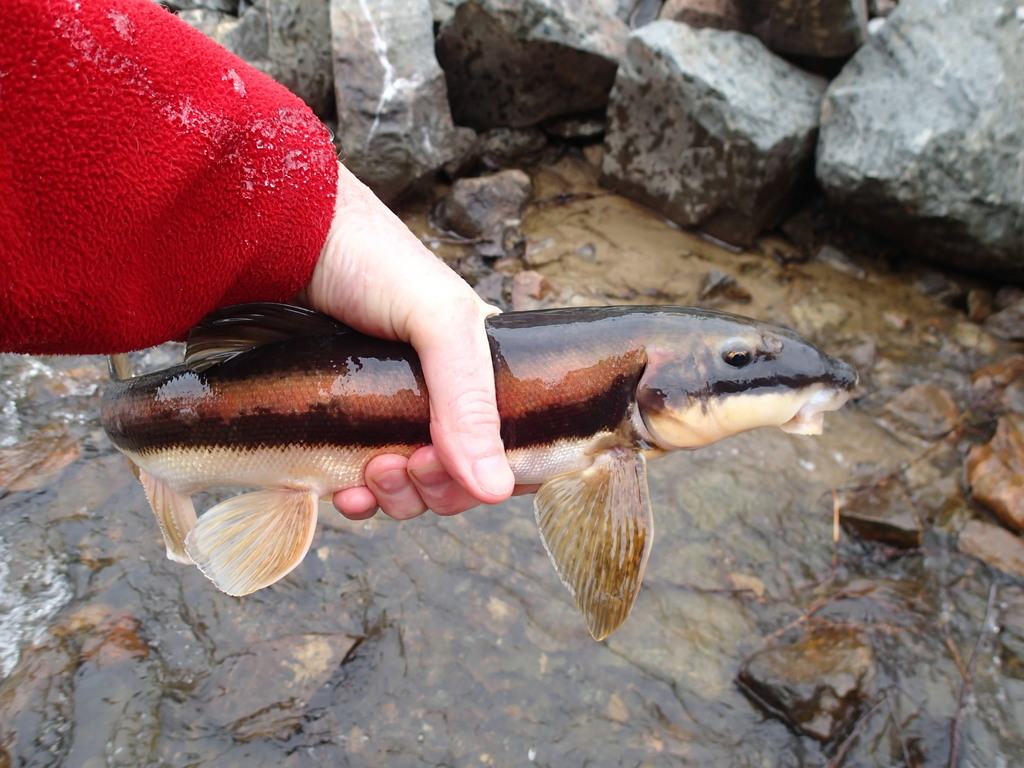
- Its distinctively elongated snout gives the longnose sucker an immediately recognizable profile.
- One of the most widely distributed suckers, ranging from North America into northeastern Siberia.
- Can live up to 17 years, making it one of the longer-lived sucker species.
- Spawns in spring in shallow, gravel-bottomed streams, often migrating upstream to reach breeding grounds.
- Can reach up to 64 cm in length in larger cold-water lakes and rivers.
Where Sucker are seen
Jurisdictions with rules for Sucker
Background
The longnose sucker (Catostomus catostomus) is a species of cypriniform freshwater fish in the Catostomidae family. It is native to North America from the northern United States to the top of the continent. It is also found in Russia in rivers of eastern Siberia, and thus one of only two species of sucker native to Asia (the other is the Chinese Myxocyprinus asiaticus).
Background excerpt adapted from Wikipedia's Sucker article (CC BY-SA). Visit Wikipedia for the full entry.
Other bony fish on CatchRules
Frequently asked questions
What is Sucker?
Sucker (Catostomus catostomus) is an IUCN Least Concern bony-fish species regulated in 29 of 66 jurisdictions tracked by CatchRules across the U.S. and Canada.
What is the scientific name for Sucker?
Sucker is Catostomus catostomus.
Is Sucker regulated for fishing?
Yes — Sucker has fishing regulations in 22 U.S. states and/or Canadian provinces tracked by CatchRules. See the "Jurisdictions with rules" section above for the binding-source links.
How can I identify Sucker?
Take a photo with the free CatchRules app for iPhone or Android — on-device identification recognizes Sucker along with ~1,500 other species. No sign-up, unlimited use.
Photo credit: iNaturalist / Wikipedia. Identification reference only — verify regulations with the issuing wildlife agency before retaining a catch.