
Species profile
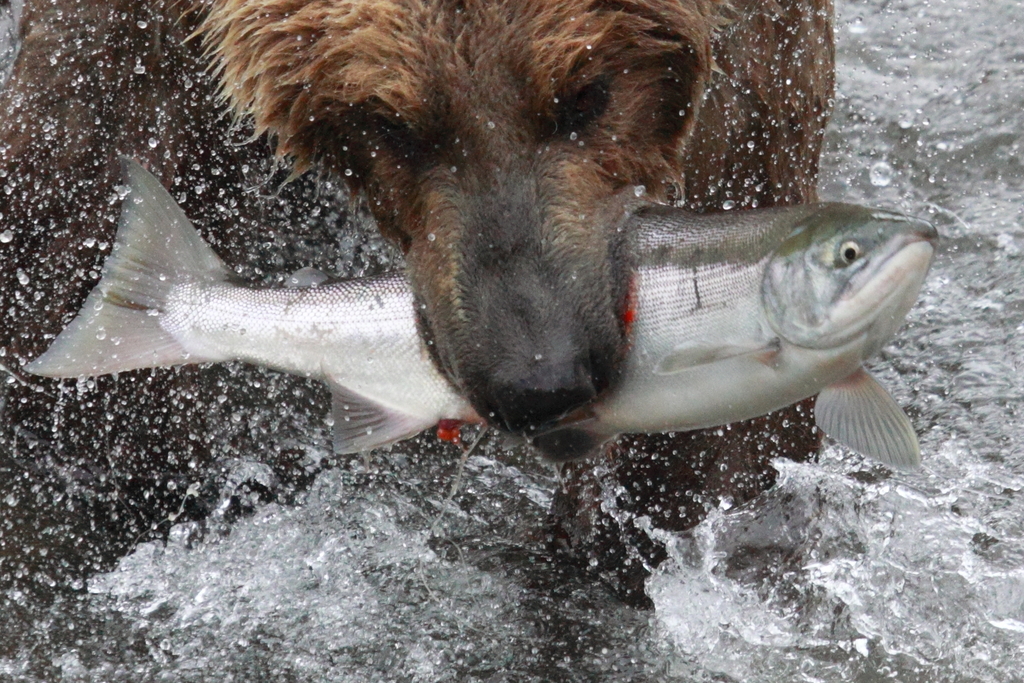
Sockeye Salmon
Oncorhynchus nerka
Identify Sockeye Salmon (Oncorhynchus nerka) from a photo: try it free in your browser, or get unlimited IDs, no sign-up, with the CatchRules app. Plus current fishing rules across 29 jurisdictions.
At a glance
Sockeye Salmon (Oncorhynchus nerka) is an IUCN Least Concern bony-fish species regulated in 21 of 66 jurisdictions tracked by CatchRules across the U.S. and Canada.
The strictest bag limit is 1 (New Brunswick); the most generous is 50 (Montana).
Across 6 jurisdictions with stated minimum sizes, the average minimum is 13.6 in (≈ 1 ft 2 in).
Confirmed by 2,881 research-grade iNaturalist observations, with British Columbia, Alaska, and Washington the top jurisdictions by observation count.
Listed under the U.S. Endangered Species Act — verify protected-species rules with the issuing agency before retaining or handling.
Notable details
- Adults turn vivid crimson with a green head during the spawning season.
- Some populations migrate over 900 miles upriver to reach spawning grounds.
- The landlocked form, called kokanee, completes its entire life cycle in freshwater.
- Dies within days of spawning, its body fertilizing the stream ecosystem.
- Its deep orange-red flesh is among the richest in omega-3 fatty acids of any salmon.
Where Sockeye Salmon are seen
Jurisdictions with rules for Sockeye Salmon
Protected status
- Sockeye salmon.
- Sockeye salmon.
Always verify protected-species rules with the issuing agency before retaining or handling.
Background
The sockeye salmon, also called red salmon, kokanee salmon, blueback salmon, or simply sockeye, is an anadromous species of salmon found in the Northern Pacific Ocean and rivers discharging into it. This species is a Pacific salmon that is primarily red in hue during spawning. They can grow up to 84 cm in length and weigh 2.3 to 7 kg (5–15 lb). Juveniles remain in freshwater until they are ready…
Background excerpt adapted from Wikipedia's Sockeye Salmon article (CC BY-SA). Visit Wikipedia for the full entry.
Other bony fish on CatchRules
Frequently asked questions
What is Sockeye Salmon?
Sockeye Salmon (Oncorhynchus nerka) is an IUCN Least Concern bony-fish species regulated in 21 of 66 jurisdictions tracked by CatchRules across the U.S. and Canada.
What is the scientific name for Sockeye Salmon?
Sockeye Salmon is Oncorhynchus nerka.
Is Sockeye Salmon regulated for fishing?
Yes — Sockeye Salmon has fishing regulations in 29 U.S. states and/or Canadian provinces tracked by CatchRules. See the "Jurisdictions with rules" section above for the binding-source links.
How can I identify Sockeye Salmon?
Take a photo with the free CatchRules app for iPhone or Android — on-device identification recognizes Sockeye Salmon along with ~1,500 other species. No sign-up, unlimited use.
Photo credit: iNaturalist / Wikipedia. Identification reference only — verify regulations with the issuing wildlife agency before retaining a catch.