
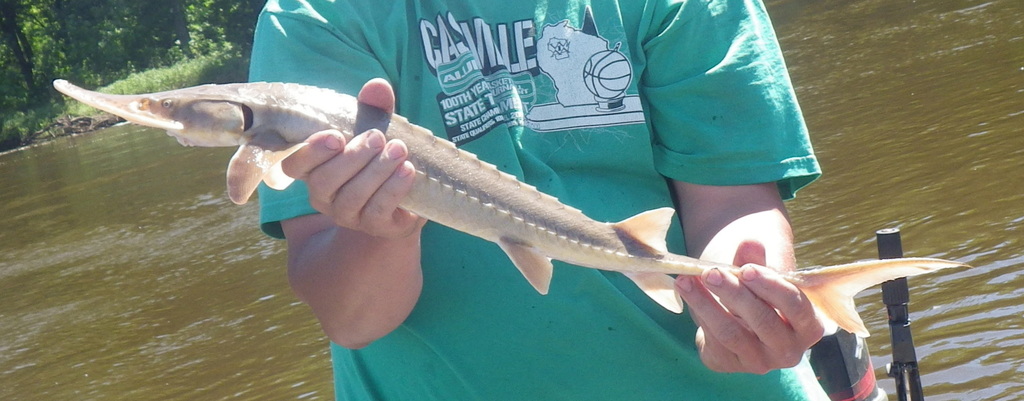
Species profile
Shovelnose Sturgeon
Scaphirhynchus platorynchus
Identify Shovelnose Sturgeon (Scaphirhynchus platorynchus) from a photo: try it free in your browser, or get unlimited IDs, no sign-up, with the CatchRules app. Plus current fishing rules across 10 jurisdictions.
At a glance
Shovelnose Sturgeon (Scaphirhynchus platorynchus) is an IUCN Vulnerable bony-fish species regulated in 13 of 66 jurisdictions tracked by CatchRules across the U.S. and Canada.
The strictest bag limit is 1 (Wyoming); the most generous is 10 (Iowa).
Across 4 jurisdictions with stated minimum sizes, the average minimum is 26.3 in (≈ 2 ft 2 in).
Confirmed by 192 research-grade iNaturalist observations, with Minnesota, Wisconsin, and Illinois the top jurisdictions by observation count.
Listed under CITES — verify protected-species rules with the issuing agency before retaining or handling.
Notable details
- The smallest sturgeon native to North America, typically 18–30 inches long.
- Its flat, shovel-shaped snout gives it both its common name and a bottom-feeding advantage.
- Four fleshy barbels near its mouth detect invertebrates buried in river sediment.
- Can live more than 30 years.
- Its roe is sometimes harvested and processed as a caviar substitute.
Where Shovelnose Sturgeon are seen
Jurisdictions with rules for Shovelnose Sturgeon
Protected status
- CITES Appendix II (all Acipenseriformes not in Appendix I).
Always verify protected-species rules with the issuing agency before retaining or handling.
Background
The shovelnose sturgeon, Scaphirhynchus platorynchus, is the smallest species of freshwater sturgeon native to the United States of America. It is often called "hackleback", "sand sturgeon", or "switchtail." Switchtail refers to the long filament found on the upper lobe of the caudal fin (often broken off as adults).
Background excerpt adapted from Wikipedia's Shovelnose Sturgeon article (CC BY-SA). Visit Wikipedia for the full entry.
Other bony fish on CatchRules
Frequently asked questions
What is Shovelnose Sturgeon?
Shovelnose Sturgeon (Scaphirhynchus platorynchus) is an IUCN Vulnerable bony-fish species regulated in 13 of 66 jurisdictions tracked by CatchRules across the U.S. and Canada.
What is the scientific name for Shovelnose Sturgeon?
Shovelnose Sturgeon is Scaphirhynchus platorynchus.
Is Shovelnose Sturgeon regulated for fishing?
Yes — Shovelnose Sturgeon has fishing regulations in 10 U.S. states and/or Canadian provinces tracked by CatchRules. See the "Jurisdictions with rules" section above for the binding-source links.
How can I identify Shovelnose Sturgeon?
Take a photo with the free CatchRules app for iPhone or Android — on-device identification recognizes Shovelnose Sturgeon along with ~1,500 other species. No sign-up, unlimited use.
Photo credit: iNaturalist / Wikipedia. Identification reference only — verify regulations with the issuing wildlife agency before retaining a catch.