
Species profile
Sauger
Sander canadensis
Identify Sauger (Sander canadensis) from a photo: try it free in your browser, or get unlimited IDs, no sign-up, with the CatchRules app. Plus current fishing rules across 35 jurisdictions.
At a glance
Sauger (Sander canadensis) is an IUCN Least Concern bony-fish species regulated in 35 of 66 jurisdictions tracked by CatchRules across the U.S. and Canada.
The strictest bag limit is 1 (South Dakota); the most generous is 20 (Colorado).
Across 20 jurisdictions with stated minimum sizes, the average minimum is 16.3 in (≈ 1 ft 4 in).
Confirmed by 521 research-grade iNaturalist observations, with Minnesota, Ohio, and Ontario the top jurisdictions by observation count.
Notable details
- Like walleye, sauger have a reflective eye layer giving them excellent vision in murky water.
- They hybridize with walleye to produce a fertile hybrid sport fish called the saugeye.
- Sauger prefer deeper, faster currents and more turbid water than their walleye relatives.
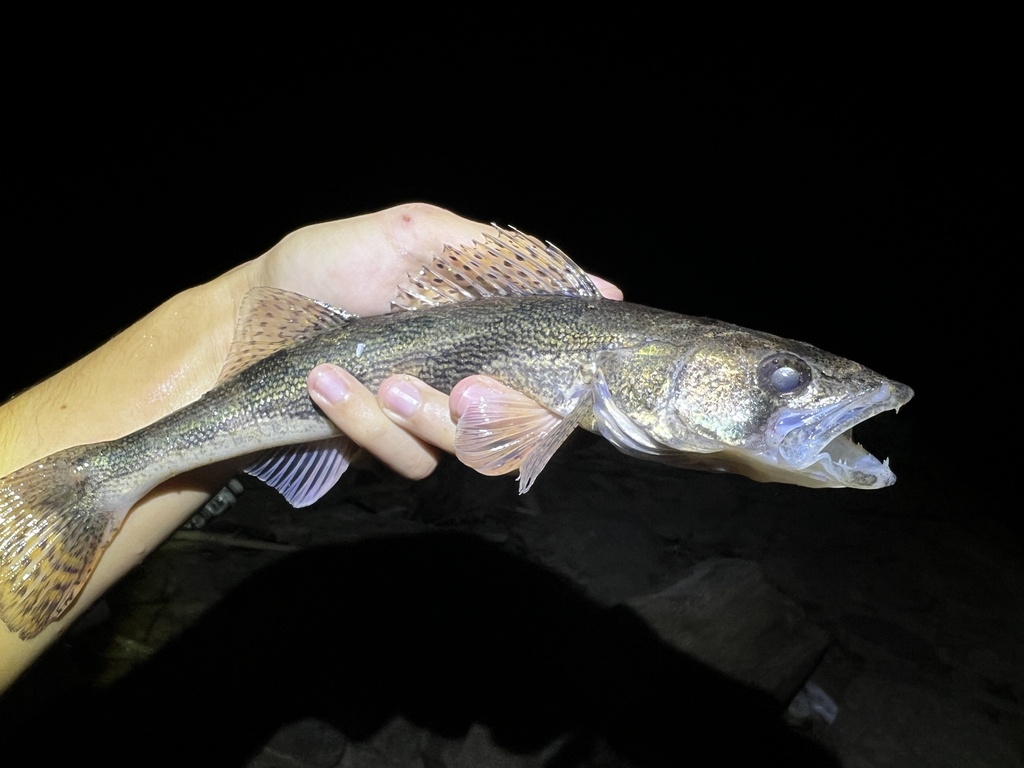
- Dark saddle-shaped blotches on the spiny dorsal fin distinguish sauger from walleye.
- Sauger are typically smaller than walleye, with most anglers catching fish under 2 pounds.
Where Sauger are seen
Jurisdictions with rules for Sauger
Background
The sauger (Sander canadensis) is a freshwater perciform fish of the family Percidae which resembles its close relative the walleye. They are members of the largest vertebrate order, Perciformes. They are the most migratory percid species in North America. Saugers obtain two dorsal fins, the first is spiny and the posterior dorsal fin is a soft-rayed fin. Their paired fins are in the thoracic…
Background excerpt adapted from Wikipedia's Sauger article (CC BY-SA). Visit Wikipedia for the full entry.
Other bony fish on CatchRules
Frequently asked questions
What is Sauger?
Sauger (Sander canadensis) is an IUCN Least Concern bony-fish species regulated in 35 of 66 jurisdictions tracked by CatchRules across the U.S. and Canada.
What is the scientific name for Sauger?
Sauger is Sander canadensis.
Is Sauger regulated for fishing?
Yes — Sauger has fishing regulations in 35 U.S. states and/or Canadian provinces tracked by CatchRules. See the "Jurisdictions with rules" section above for the binding-source links.
How can I identify Sauger?
Take a photo with the free CatchRules app for iPhone or Android — on-device identification recognizes Sauger along with ~1,500 other species. No sign-up, unlimited use.
Photo credit: iNaturalist / Wikipedia. Identification reference only — verify regulations with the issuing wildlife agency before retaining a catch.