
Species profile
Sargo
Anisotremus davidsonii
Identify Sargo (Anisotremus davidsonii) from a photo: try it free in your browser, or get unlimited IDs, no sign-up, with the CatchRules app. Plus current fishing rules across 1 jurisdiction.
At a glance
Sargo (Anisotremus davidsonii) is an IUCN Least Concern bony-fish species with specific harvest rules tracked in 1 of 66 jurisdictions covered by CatchRules.
Confirmed by 547 research-grade iNaturalist observations, concentrated in California.
Notable details
- Sargo produce an audible grunt by grinding their pharyngeal (throat) teeth together.
- They range from Point Conception, California south through Baja California.
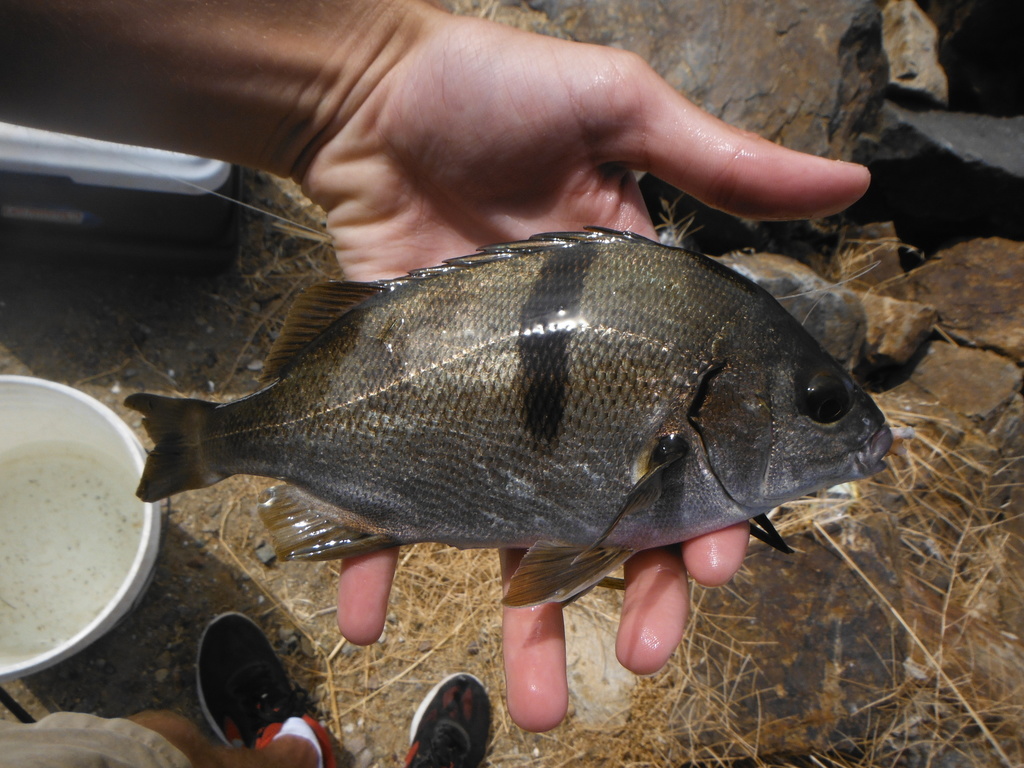
- Adults can reach 22 inches, though most caught from shore run under 15 inches.
- A bold dark vertical bar crosses their silver body just behind the pectoral fins.
- Juveniles shelter in estuaries and bays before moving to rocky reefs and kelp beds as adults.
Where Sargo are seen
Jurisdictions with rules for Sargo
Background
Anisotremus davidsonii, also known as the Xantic sargo or simply the sargo, is a species of grunt native to the eastern Pacific Ocean. They are found from Santa Cruz, California to Baja California, Mexico, with an isolated population located in the Gulf of California.
Background excerpt adapted from Wikipedia's Sargo article (CC BY-SA). Visit Wikipedia for the full entry.
Other bony fish on CatchRules
Frequently asked questions
What is Sargo?
Sargo (Anisotremus davidsonii) is an IUCN Least Concern bony-fish species with specific harvest rules tracked in 1 of 66 jurisdictions covered by CatchRules.
What is the scientific name for Sargo?
Sargo is Anisotremus davidsonii.
Is Sargo regulated for fishing?
Yes — Sargo has fishing regulations in 1 U.S. state and/or Canadian province tracked by CatchRules. See the "Jurisdictions with rules" section above for the binding-source links.
How can I identify Sargo?
Take a photo with the free CatchRules app for iPhone or Android — on-device identification recognizes Sargo along with ~1,500 other species. No sign-up, unlimited use.
Photo credit: iNaturalist / Wikipedia. Identification reference only — verify regulations with the issuing wildlife agency before retaining a catch.