
Species profile
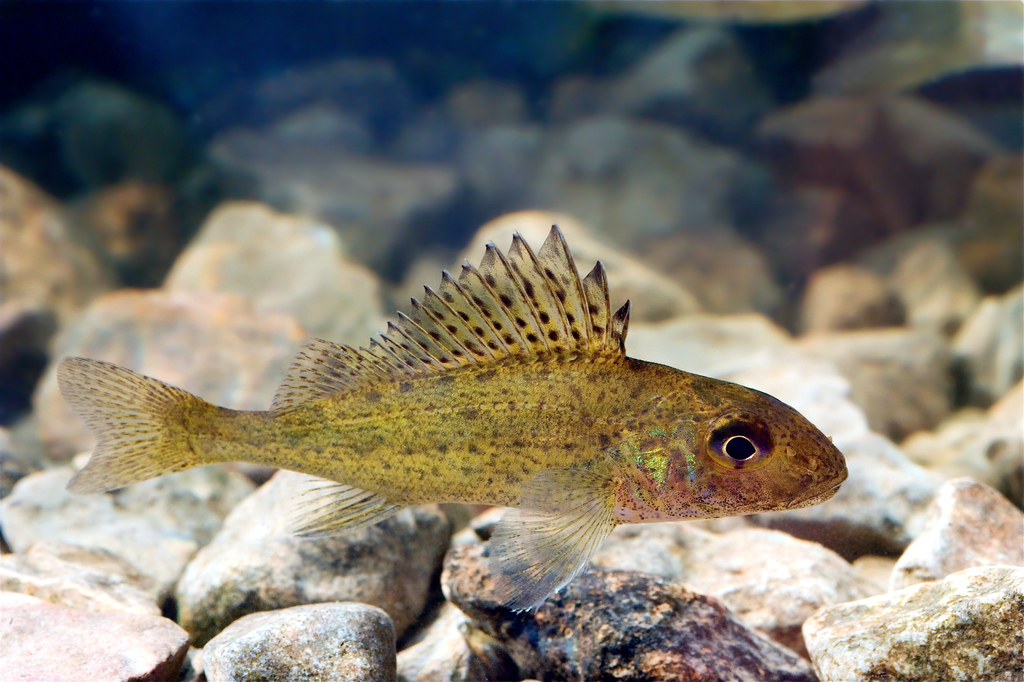
Ruffe
Gymnocephalus cernua
Identify Ruffe (Gymnocephalus cernua) from a photo: try it free in your browser, or get unlimited IDs, no sign-up, with the CatchRules app. Plus current fishing rules across 3 jurisdictions.
At a glance
Ruffe (Gymnocephalus cernua) is an IUCN Least Concern bony-fish species regulated in 6 of 66 jurisdictions tracked by CatchRules across the U.S. and Canada.
Confirmed by 54 research-grade iNaturalist observations, with Ontario, Michigan, and Wisconsin the top jurisdictions by observation count.
Notable details
- An invasive Eurasian species first detected in Lake Superior around 1987, likely introduced via ballast water.
- Adults typically measure just 4–6 inches but dense populations can outcompete native yellow perch and cisco.
- Sharp, stiff dorsal spines make it an unpleasant catch that cuts nets and hands.
- A single female can release tens of thousands of eggs in one spawning season.
Where Ruffe are seen
Jurisdictions with rules for Ruffe
Background
The Eurasian ruffe (Gymnocephalus cernua), also known as ruffe or pope, is a freshwater fish found in temperate regions of Europe and northern Asia. It has been introduced into the Great Lakes of North America, reportedly with unfortunate results, as it is invasive and is reproducing faster than other species. Its common names are ambiguous – "ruffe" may refer to any local member of its genus…
Background excerpt adapted from Wikipedia's Ruffe article (CC BY-SA). Visit Wikipedia for the full entry.
Other bony fish on CatchRules
Frequently asked questions
What is Ruffe?
Ruffe (Gymnocephalus cernua) is an IUCN Least Concern bony-fish species regulated in 6 of 66 jurisdictions tracked by CatchRules across the U.S. and Canada.
What is the scientific name for Ruffe?
Ruffe is Gymnocephalus cernua.
Is Ruffe regulated for fishing?
Yes — Ruffe has fishing regulations in 3 U.S. states and/or Canadian provinces tracked by CatchRules. See the "Jurisdictions with rules" section above for the binding-source links.
How can I identify Ruffe?
Take a photo with the free CatchRules app for iPhone or Android — on-device identification recognizes Ruffe along with ~1,500 other species. No sign-up, unlimited use.
Photo credit: iNaturalist / Wikipedia. Identification reference only — verify regulations with the issuing wildlife agency before retaining a catch.