
Species profile
Rock Bass
Ambloplites rupestris
Identify Rock Bass (Ambloplites rupestris) from a photo: try it free in your browser, or get unlimited IDs, no sign-up, with the CatchRules app. Plus current fishing rules across 21 jurisdictions.
At a glance
Rock Bass (Ambloplites rupestris) is an IUCN Least Concern bony-fish species regulated in 23 of 66 jurisdictions tracked by CatchRules across the U.S. and Canada.
The strictest bag limit is 2 (North Carolina); the most generous is 50 (Pennsylvania).
Across 5 jurisdictions with stated minimum sizes, the average minimum is 8.6 in.
Confirmed by 8,469 research-grade iNaturalist observations, with Ontario, Tennessee, and Michigan the top jurisdictions by observation count.
Notable details
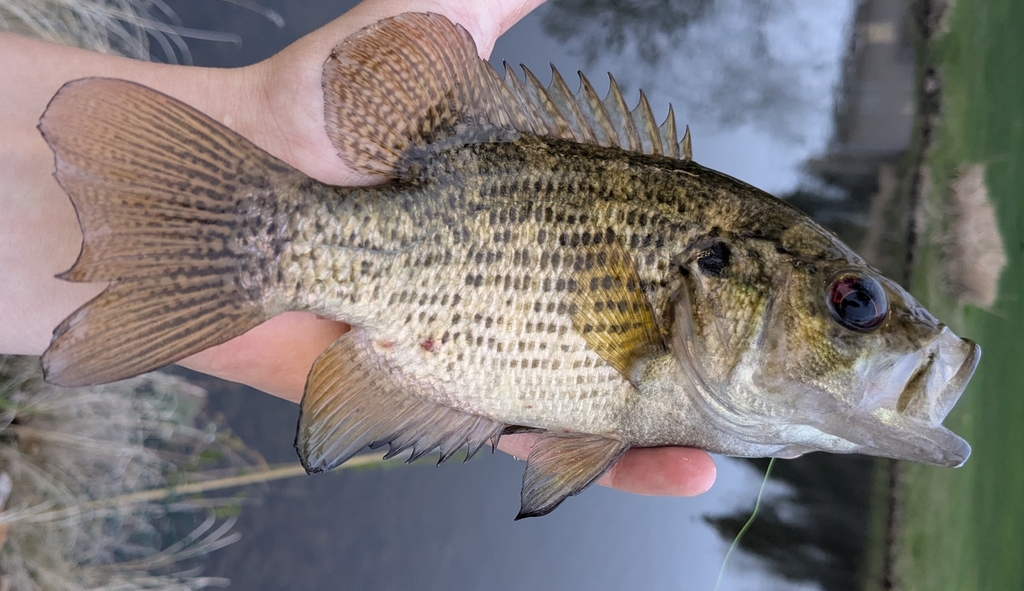
- Rock bass have distinctive red or orange eyes, earning them the common nickname 'redeye.'
- They prefer rocky substrate in clear streams and lakes, which inspired their common name.
- Despite averaging only 6 to 10 inches, rock bass are aggressive, opportunistic predators.
- They can live up to 12 years and rarely exceed 1 pound in weight.
- Rock bass can shift their body coloration to better match rocky or weedy backgrounds.
Where Rock Bass are seen
Jurisdictions with rules for Rock Bass
Background
The rock bass (Ambloplites rupestris), also known as the rock perch, goggle-eye, red eye, is a fresh water fish native to east-central North America. This red eyed creature is a species of freshwater fish in the sunfish family (Centrarchidae) of order Perciformes and can be distinguished from other similar species by the six spines in the anal fin (other sunfish have only three anal fin spines).
Background excerpt adapted from Wikipedia's Rock Bass article (CC BY-SA). Visit Wikipedia for the full entry.
Other bony fish on CatchRules
Frequently asked questions
What is Rock Bass?
Rock Bass (Ambloplites rupestris) is an IUCN Least Concern bony-fish species regulated in 23 of 66 jurisdictions tracked by CatchRules across the U.S. and Canada.
What is the scientific name for Rock Bass?
Rock Bass is Ambloplites rupestris.
Is Rock Bass regulated for fishing?
Yes — Rock Bass has fishing regulations in 21 U.S. states and/or Canadian provinces tracked by CatchRules. See the "Jurisdictions with rules" section above for the binding-source links.
How can I identify Rock Bass?
Take a photo with the free CatchRules app for iPhone or Android — on-device identification recognizes Rock Bass along with ~1,500 other species. No sign-up, unlimited use.
Photo credit: iNaturalist / Wikipedia. Identification reference only — verify regulations with the issuing wildlife agency before retaining a catch.