
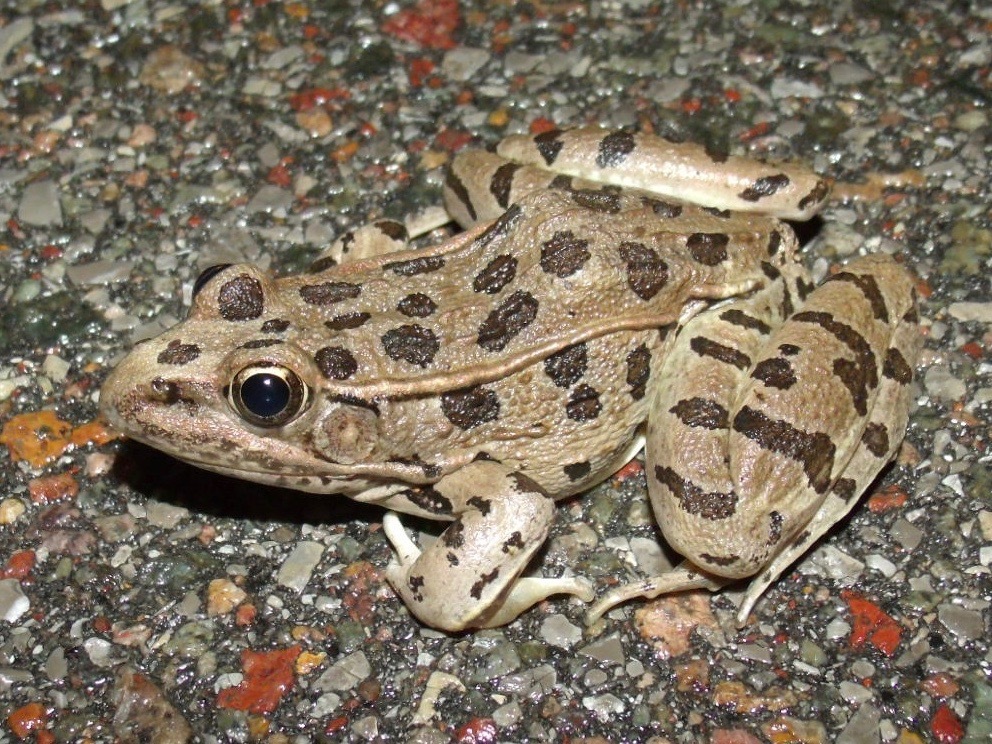
Species profile
Plains Leopard Frog
Lithobates blairi
Identify Plains Leopard Frog (Lithobates blairi) from a photo: try it free in your browser, or get unlimited IDs, no sign-up, with the CatchRules app. Plus current fishing rules across 1 jurisdiction.
At a glance
Plains Leopard Frog (Lithobates blairi) is an IUCN Least Concern amphibian regulated in 2 of 66 jurisdictions tracked by CatchRules across the U.S. and Canada.
Confirmed by 3,235 research-grade iNaturalist observations, with Kansas, Texas, and Oklahoma the top jurisdictions by observation count.
Notable details
- Found across the central Great Plains from South Dakota south to Texas.
- Adults typically reach 2 to 3.5 inches in body length.
- Most active at night, especially after spring and summer rains.
- Overwinters buried in mud at the bottom of ponds.
- Populations have declined significantly due to habitat loss and chytrid fungus.
Where Plains Leopard Frog are seen
Jurisdictions with rules for Plains Leopard Frog
Background
The Plains leopard frog (Lithobates blairi) It is sometimes referred to as Blair's leopard frog, named after the noted zoologist and University of Texas professor, Dr. W. Frank Blair.
Background excerpt adapted from Wikipedia's Plains Leopard Frog article (CC BY-SA). Visit Wikipedia for the full entry.
Other amphibians on CatchRules
Frequently asked questions
What is Plains Leopard Frog?
Plains Leopard Frog (Lithobates blairi) is an IUCN Least Concern amphibian regulated in 2 of 66 jurisdictions tracked by CatchRules across the U.S. and Canada.
What is the scientific name for Plains Leopard Frog?
Plains Leopard Frog is Lithobates blairi.
Is Plains Leopard Frog regulated for fishing?
Yes — Plains Leopard Frog has fishing regulations in 1 U.S. state and/or Canadian province tracked by CatchRules. See the "Jurisdictions with rules" section above for the binding-source links.
How can I identify Plains Leopard Frog?
Take a photo with the free CatchRules app for iPhone or Android — on-device identification recognizes Plains Leopard Frog along with ~1,500 other species. No sign-up, unlimited use.
Photo credit: iNaturalist / Wikipedia. Identification reference only — verify regulations with the issuing wildlife agency before retaining a catch.