
Species profile
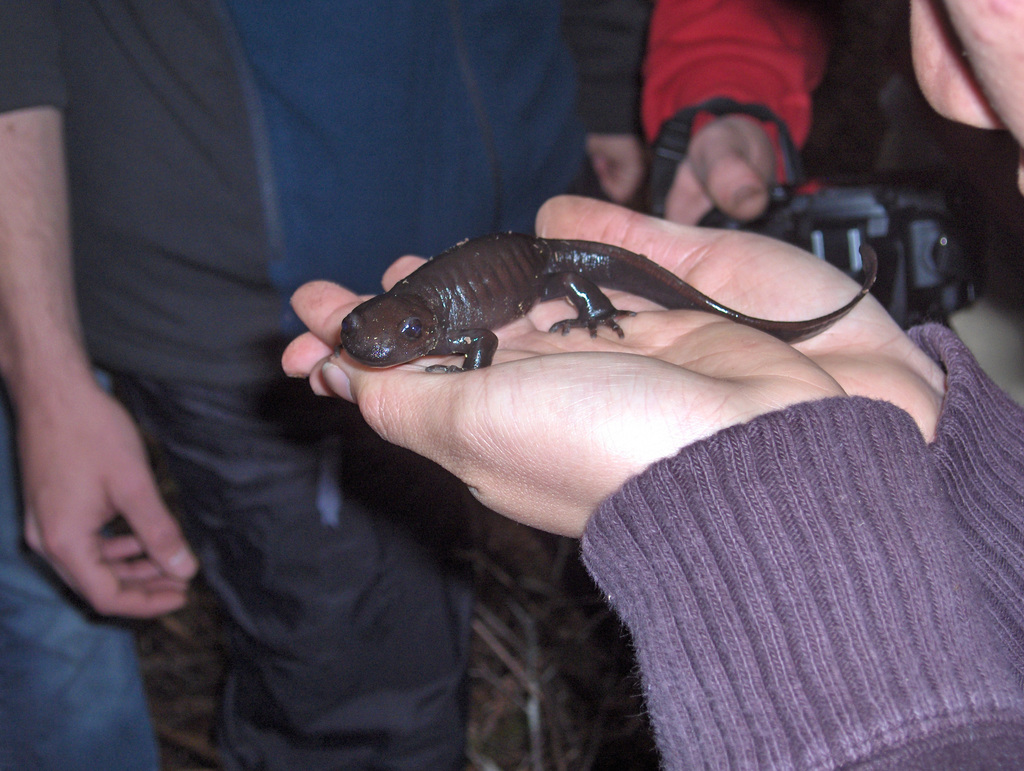
Northwestern Salamander
Ambystoma gracile
Identify Northwestern Salamander (Ambystoma gracile) from a photo: try it free in your browser, or get unlimited IDs, no sign-up, with the CatchRules app.
At a glance
Northwestern Salamander (Ambystoma gracile) is an IUCN Least Concern amphibian with specific harvest rules tracked in 1 of 66 jurisdictions covered by CatchRules.
Confirmed by 7,056 research-grade iNaturalist observations, with Washington, British Columbia, and California the top jurisdictions by observation count.
Notable details
- Adults reach up to 9 inches long, making them one of the largest mole salamanders in the Pacific Northwest.
- Large parotoid glands behind the head secrete a milky, toxic fluid that deters most predators.
- Larvae can be neotenic, retaining gills and living their entire lives without transforming into land adults.
- Egg masses are communal—multiple females deposit eggs into the same large, firm jelly mass.
- Their range extends from southeastern Alaska south to the northern tip of California.
Where Northwestern Salamander are seen
Background
The northwestern salamander (Ambystoma gracile) inhabits the northwest Pacific Coast of North America. These fairly large salamanders grow to 8.7 in (220 mm) in length. It is found from southeastern Alaska on May Island, through Washington and Oregon south to the mouth of the Gulala River, Sonoma County, California. It occurs from sea level to the timberline, but not east of the Cascade Divide.…
Background excerpt adapted from Wikipedia's Northwestern Salamander article (CC BY-SA). Visit Wikipedia for the full entry.
Other amphibians on CatchRules
Frequently asked questions
What is Northwestern Salamander?
Northwestern Salamander (Ambystoma gracile) is an IUCN Least Concern amphibian with specific harvest rules tracked in 1 of 66 jurisdictions covered by CatchRules.
What is the scientific name for Northwestern Salamander?
Northwestern Salamander is Ambystoma gracile.
Are there fishing rules for Northwestern Salamander?
Northwestern Salamander does not currently have published fishing rules in CatchRules' curated jurisdictions. Identification, range, and habitat are still tracked above.
How can I identify Northwestern Salamander?
Take a photo with the free CatchRules app for iPhone or Android — on-device identification recognizes Northwestern Salamander along with ~1,500 other species. No sign-up, unlimited use.
Photo credit: iNaturalist / Wikipedia. Identification reference only — verify regulations with the issuing wildlife agency before retaining a catch.